

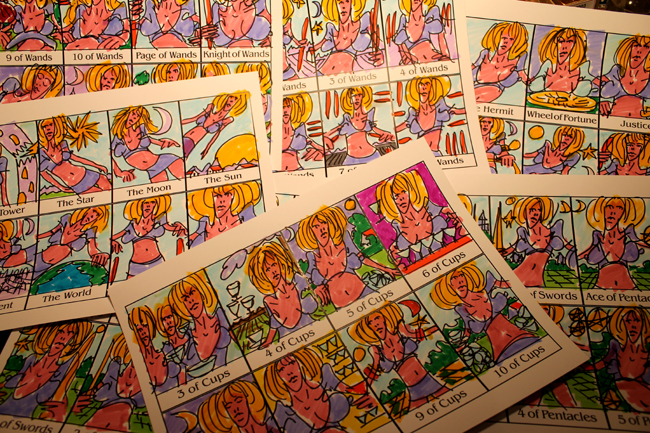
Still more about the artwork. Today at our 6:30 am zoom meeting, we’ll go on a little tour of my art files to see what we want to convert to pencil-signed Dover Paper Prints..
You’ll have an opportunity to acquire pieces never before offered, and all at only one goldback, for a pencil-signed 8 1/2″x11″ full-color Dover Paper print from my personal files.
There are also some unusual photos that may also be considered.
The whole idea is that you won’t be amassing a huge pile of art. You might want to keep some of them for your own collection, but the main thing is to SELL them.
You buy them at one goldback — currently that’d be about $6.50 apiece. There’s no way you could get these at that price if you owned a gallery.
They retail at $35 – $50 unframed, and $150 – $350 framed.
These artworks SELL, but it takes some effort, unless you have a fabulous location and a clientele that has built up trust over the years — not many galleries can say that these days.
You might not sell them fast, in which case, you should only choose pieces with which you can live.
There’s also an opportunity here to interest a higher level buyer in genuine original high-end art by Rembrandt, Renoir, Dali, Degas, Chagall, Matisse and more for the purpose of donating to museums, who would be glad to get hold of these rare works of art.
Okay, treasure hunters—just a quick heads‑up on how to get your Goldbacks if you don’t already have them:
-
If you’re in the U.S., the easiest way is to order online from a trusted dealer. APMEX is one of the best — they stock multiple state-series (Utah, Florida, Nevada, etc.), their pricing is transparent, and they ship fast.
-
If you’re outside the U.S., you can still buy from APMEX (or other dealers like Alpine Gold, BullionMax, or JM Bullion) and have the Goldbacks shipped directly to me here. It’s straightforward. When they arrive, you’ll get full credit toward your art purchase.
-
Bottom line: One Goldback — about $6.50 — and you’re in the game. No confusion, no hoops. Just simple, honest trade.
Shipping is paid in ordinary U.S. dollars to pay the shipper. Don’t worry about this, we’ll cover it well, in the zoom meeting.
Hand-Signed Dover Print – Non-Digital NFT
What you’re getting here is, technically, a kind of NFT — but in the real world. Each print is one-of-a-kind because it’s pencil-signed, and protected from counterfeiters by the fact that it’s printed on Dover paper — which is no longer made. I own the world’s supply of handmade Dover paper, so no one else can produce these. That makes each one a physical token of authenticity — not some code floating on a server, but something you can hold in your hands and pass down.
Think of it as an Original Dover Vault Print — unique, signed, and impossible to counterfeit. Like an NFT, only real. And beautiful.
And just so you know — Dover paper is unmistakable. Once you’ve handled it, you’ll never confuse it with anything else. It’s got a feel, a weight, a personality. Fake Dover paper? Easy to spot. It’s the paper itself that makes these prints so difficult to duplicate. That’s why collectors love it — it protects the integrity of the print without needing tech gimmicks or tracking chips.
✨ Dover Paper: A Rare Breed from England
-
Historic Roots: Dover paper was originally handmade at the Buckland Mill on the River Dour in Dover, England — a mill with papermaking traditions going back centuries.
-
Premium Quality: Known as luxury-grade writing and art paper, Dover was crafted to match the look and feel of traditional handmade sheets. Even among fine papers, it stood out as unusually expensive and prestigious.
-
Laid and Textured: Dover paper is a laid paper — meaning it has fine, visible lines and a ribbed texture from the wire mold used in its formation. It feels different under the fingers — textured, dimensional, unmistakable.
-
High-End Reputation: Throughout the 19th and 20th centuries, Dover was a favorite for artists, calligraphers, and printers who valued quality. It was often used for formal documents, fine art prints, and gallery-quality reproductions.
-
No Longer Made: The original mill eventually shut down, and genuine Dover paper is no longer produced. That makes the real thing extremely rare today. There are similar papers, but not Dover — and they don’t feel the same.
✅ Why It Matters
-
Counterfeit-Proof: The unique fiber pattern, weight, and surface texture make Dover paper incredibly hard to replicate. Any fake is easy to spot once you’ve touched the real thing.
-
Built-In Value: Just like canvas gives weight to a painting, Dover gives weight to a print. It’s not just about what’s on the paper — it’s about the paper itself.
-
Tactile Scarcity: You’re not just offering a limited-edition print. You’re offering something printed on a medium that is already rare and irreplaceable. That adds a second layer of exclusivity and value.
There is no more Dover paper. I own the remaining stock. Nobody else can make prints on this material — and that means every Dover Print you get from me is impossible to duplicate.
🟫 About Dover Paper (What Makes It So Special)
Dover paper is no ordinary stock. It’s a handmade paper from England — rare, textured, and completely unlike modern commercial paper. It was made the same way for centuries, never modernized, never cheapened.
It’s just like the paper used by the Dutch Masters, especially Rembrandt in the 17th century. That same ribbed surface, that laid texture, that incredible way it holds ink and pigment. Dover paper was made to those same old-world standards — and never changed.
I own the world’s supply of Dover paper. That’s not an exaggeration — the mill stopped production years ago, and what’s left is right here in my studio. That means every print I make on Dover paper is, by default, unique and impossible to counterfeit.
If someone hands you a fake, you’ll know instantly. Dover paper has a feel — a presence — that’s unmistakable.
🟫 Dover Prints as Trade Currency
Because Dover paper is no longer made — and I control the entire known supply — these prints cannot be counterfeited. That gives them an intrinsic trade value far beyond ordinary prints.
Each piece is:
-
Pencil-signed, directly by me
-
Printed in full color from my private archives
-
On genuine Dover paper — the same kind of paper used by the Dutch Masters like Rembrandt
-
Non-duplicable — no one else has the paper, no one else can make one
That makes these prints suitable not just for collecting, but for trading. You could trade them to others in your community for goods, services, or even Goldbacks. They have built-in scarcity and authenticity — no need for serial numbers or digital verification.
You get something beautiful, meaningful, and real — and if you choose, you can use it as a portable piece of value in trade situations. And unlike crypto or paper money, this one hangs on your wall.
===========================================================================
⟡ SAMPLE of a DOVER VAULT CERTIFICATE OF AUTHENTICITY ⟡
from the private studio of E.J. Gold
This is a preview of my authentic Dover Vault Print Card Certificate. Don’t forget, the artwork in the Dover Editions has been pencil-signed by the artist.
It has been printed in full color on genuine Antique Dover Paper — a rare, handmade laid stock identical in composition to the paper used by 17th-century Dutch Masters, including Rembrandt.
Dover paper is no longer manufactured. The world’s entire remaining supply is held in private reserve by us, in our paper storage safe, thus making counterfeit or unauthorized reproductions impossible and easily detected.
Each print in this series is:
-
Printed in full color from the artist’s archive
-
Individually pencil-signed by E.J. Gold
-
Produced on authentic Dover paper
-
Issued in extremely limited numbers
-
Certified for use in barter and trade, where accepted
Note: This Work of Art on Dover Paper may be traded for goods, services, or other forms of real value at the discretion of the receiving party. It holds inherent worth due to its rarity, beauty, authorship, and non-duplicability. It is guaranteed authentic.
Date of Issue: ___________
Recipient/Holder: ____________________
Authorized by: _______________________
=========================================================================
🟫 The Dover Paper Backstory
And why Dover Prints are made for trade
Back in the ’80s and ’90s, there were attempts to counterfeit my artwork — low-grade color copies, unsigned forgeries, and even fake signatures. It was sloppy work, but it was enough to cast confusion in the marketplace and cheapen the value of the real thing.
To stop that nonsense, I went hunting for something no one else could fake — a paper so rare, so specific, it would act as a built-in proof of authenticity.
That’s when I discovered Dover paper — a handmade, laid-surface paper from England, produced using techniques dating back to the 17th century. It’s the kind of paper used by Rembrandt and the Dutch Masters — tactile, durable, and visually unmistakable. Once you’ve felt it, you can’t be fooled.
When the mill shut down, I acquired the remaining supply. I now control all of it. That means no one can make new Dover Prints unless it comes directly through me.
These Dover Vault Prints are priced for trade — one Goldback per piece — and are intended to circulate. They’re genuine, collectible, pencil-signed works, printed in full color from my archive.
But for those seeking museum-quality fine art, I also produce a different line of signed prints — created on handmade BFK engraving paper, a premium archival stock used by master printers for etchings, aquatints, and stone lithos. These pieces are far more expensive, and rightly so — they’re made for framing, collecting, and legacy gifting.
In short:
-
Dover Editions = real, tradable, collectible art
-
BFK Editions = high-end, gallery-ready fine art
Both are authentic. Both are signed. But only the Dover Prints are priced for daily trade — and only I can produce them.
==========================================================================
I’ve got two types of prints. The ones you’ll see in this rummage are Dover Editions — real, signed prints on ultra-rare Dover paper, made for trade. But if you’re looking for something more like a gallery piece, I also print on Rives BFK handmade French engraving paper — those are higher-end, and we’ll talk price if you’re interested.
==========================================================================
🟫 The Real Story: How I Found Dover Paper
I first came across Dover paper back when I was working as an antiquarian book dealer. It wasn’t on the art scene yet. It was something we used for book repair — because it looked and felt just like antique paper. The laid lines, the creamy tone, the texture — it matched early printed pages better than anything else we could get our hands on.
That’s what it was used for: repairing 16th, 17th, and 18th-century books without disturbing the look or feel. Dover paper blended right in. It was archival, strong, and had the character of old handmade sheets.
I only started printing on it later — when I realized the mill was shutting down. I moved fast and got everything I could. And that’s why I now own the world’s supply.
It wasn’t made for art prints. But that’s what makes it perfect. It wasn’t part of the printmaking industry — no one else has stacks of this lying around. That’s why it can’t be faked.
Dover paper is no longer needed in the book industry, and it has served well in the realm of artworks on paper.
So when you get a Genuine Dover Vault Print, you’re holding something printed on a rare antique paper that was made to restore the past, and now preserves the present.
===========================================================================
If my eyes do not deceive me, the Bardo bus is upon us now.
===========================================================================
See You At The Top!!!
gorby