

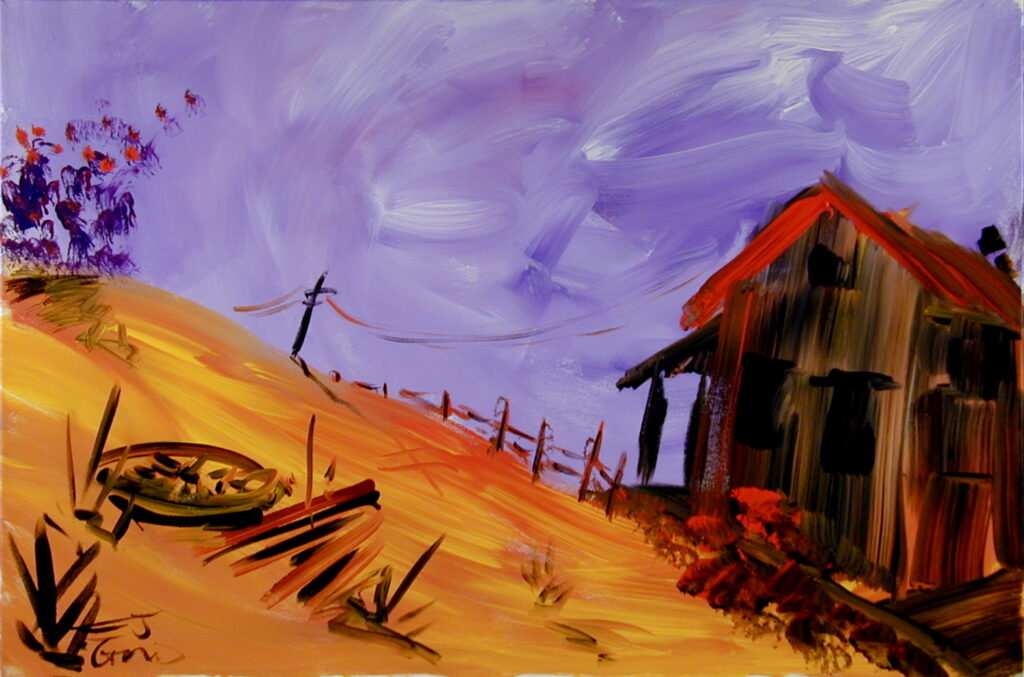
Selling Many Dover Prints With One Frame
Okay, you’ve got some Dover prints. Now what?
You’re holding rare Dover Edition prints by E.J. Gold — created with traditional methods, not algorithms. These aren’t digital files, AI outputs, mechanical paintings, or the standard framer’s gallery random wall fillers.
They’re real art, printed on legendary Dover paper, made by a trained artist with a living human hand, with deep training and purpose.
And you want to sell them? Trade them? Share them with the world?
You only need ONE frame, one clean mat board, your own taste and choice of style and finish, and your own two hands to start.
The secret? Get in the picture. One hand on the art, your face in the shot.
Don’t just photograph the print in the frame. Get yourself into the photograph, holding the frame with the image held in place on the backside of the acrylic protector.
Why should YOU be in the shot???
Because buyers need emotional contact.
Holding the frame up with yourself in the shot shows the buyer how substantial these prints CAN become when framed.
What looks like a medium-sized print on paper turns into a powerful, room-defining piece of wall art the moment you mat it courageously, and lift it into the open place in the center of the matboard and hold it there so the buyer can see the “framed” print’s impact.
You’re not just showing the image, it’s expanded beyond the image. You’re showing what it could become as an art object on the wall in someone’s home, studio, work station, den, or sacred space.
Here’s how to do it — no experience needed!
Set up your favorite frame with a mat or double mat, no backing needed. NO glass — use acrylic ONLY.
Hold the print from behind, flat against the acrylic and the backside of the mat.
Stand facing the camera. Hold the frame up at chest or shoulder height. Make sure the print is centered in the mat. Snap two or three photos: one facing forward, one slightly angled, and maybe a close-up of the paper or signature area. That’s it. This is a “mock-up” only. You’re not offering framed art. You’re demonstrating scale and style and emotional connection, nothing more.
Where to sell:
eBay — Simple, big reach, low stress
Etsy — Great for building a presence
Facebook Marketplace — For local buyers
Instagram — Post your frame selfies, link to listings
Here’s what to say in the listing:
Title:
E.J. Gold Dover Print – Visionary Energy Art – Large When Framed!
Description:
This is an authentic Dover Edition print by E.J. Gold — visionary artist, spiritual teacher, and master of metaphysical design. Printed on rare archival paper, these images are meant to stabilize energy, clarify space, and uplift the human spirit.
Shown here in a mock-up frame to demonstrate presentation and scale. Frame is not included — it’s a display tool only. What you’re purchasing is the unframed print.
These aren’t digital. Not AI. Not downloadable fluff. They’re made by hand, printed on real paper, and they carry presence.
Pricing suggestions:
Unframed prints: $30–$60
No need to sell framed pieces — just show one and direct buyer to Michael’s Art Supply.
Shipping tips:
Use flat mailers or sandwiched cardboard
Avoid tubes — this is fine art, not a poster
Label clearly: “DO NOT BEND – ART PRINT”
Use PirateShip.com for shipping discounts
Bonus tip — add a little story. People love a story. Mention something like:
“This image was part of a private studio archive — we mocked it up in a frame just to show you how it might look once you hang it in your space. What a difference!”
Only One Frame:
You’re not running a gallery. You don’t have to frame everything. Just hold each piece under consideration up behind the frame, and show it, and above all, believe in it — because it’s not just paper. It’s presence.
Let them see the scale, the power, and the beauty in your hands.
Let them picture it on their wall.
And that’s how you move Dover prints.
16″ x 20″ is the perfect size frame for what you’re doing. That gives you a substantial mat border around the 8½” x 11″ print, which not only makes the piece look more important and gallery-ready, but also gives room for that “breathing space” that high-end collectors and decorators just love and appreciate.
Here’s the breakdown:
Print size: 8½” x 11″ (standard letter)
Mat opening: about 8¼” x 10¾” (so it covers the edges just a bit)
Mat board outer size: 16″ x 20″
Frame size: 16″ x 20″
That gives you a border of around 3–4 inches all around the print, depending on mat cut. Looks elegant, upscale, and intentional. Feels like a finished artwork — not a paper scrap.
And just to lock it in:
-
Use off-white or soft ivory mat or double mat, nothing flashy.
-
Black, natural wood, silver frame or carved gold leafed masterpiece frame — anything clean and well-crafted works.
-
Use acrylic, not glass. It’s lighter and safer to handle.
You’ll be shocked how high-end the prints feel with that generous border. And when folks see the piece being held in-frame — with that “WOW“scale — they’ll understand instantly what they’re getting into.
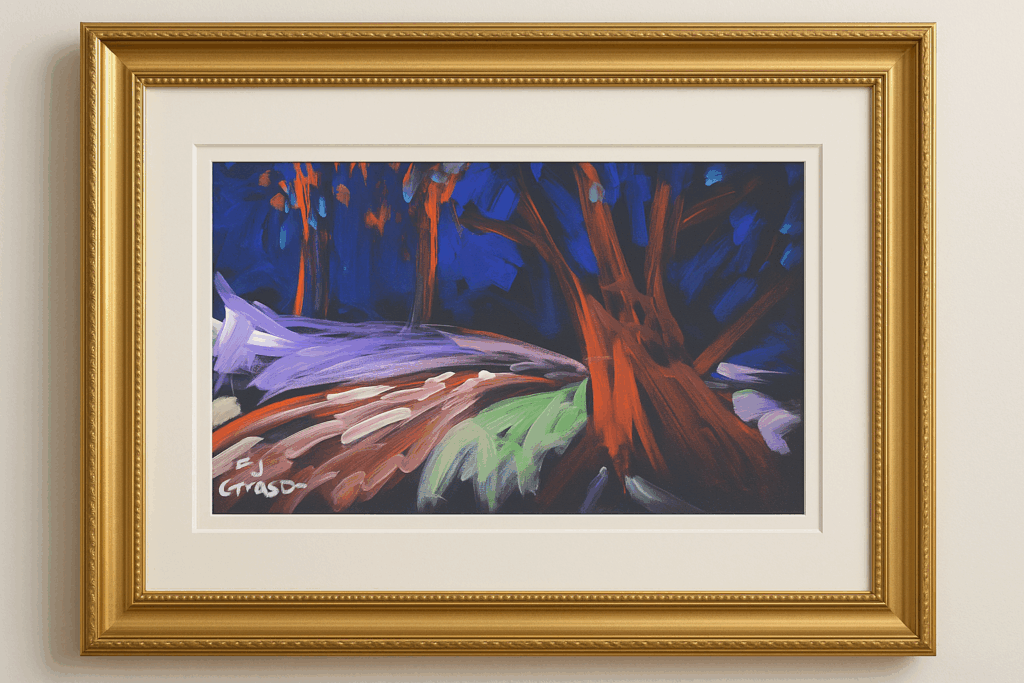
The margins can even be larger in a larger frame, up to 16″x20″, which shows well in a well-designed living space.
The thing is, people just can’t imagine what the print will look like in a frame, so you’ve got to show them a sample, and there’s no better way than with one of these “dummy frames”.
You’re looking at a Dover Edition print by E.J. Gold — shown here in a mock-up frame to give you a sense of scale, presence, and potential.
We don’t actually frame these prints — we’re a working studio, not a framing service. But we’ve taken the time to place each image into a classic 16″ x 20″ gold-leaf style frame with a double mat, just for the photo. This lets you see what the print might look like when professionally presented.
The artwork itself is 8½” x 11″, printed on rare Dover paper — archival, handmade, and impossible to counterfeit. When mounted in a mat and frame up to 16″ x 20″, it becomes a finished piece of wall art with serious visual weight.
What you’re purchasing is the unframed print. The frame in the image is a display mock-up, included to help you visualize how it might look in your own space.
Each print by E.J. Gold carries intention — designed not just to be seen, but to stabilize energy in a room and to feng-shui the space for protection and harmony.
These aren’t digital downloads, AI images, or mass reproductions. They’re made from PAINTINGS created by world-class artist E.J. Gold’s HAND, holding a BRUSH, loaded with PAINT. Something you rarely see these days.
Our Dover prints are grounded in decades of art practice and spiritual discipline.
If you decide to frame yours, we recommend a 16″ x 20″ frame with a generous double mat and a super-wide “museum style” border. But how you choose to display it is part of the journey. The art will do the work — wherever you place it.
===========================================================================
Woodstock Artists 1950s Collection by E.J. Gold:

Artist Biography — E.J. Gold
Born into a family at the crossroads of America’s cultural and labor revolutions, E.J. Gold was raised in the creative current of the 20th century. His father, Horace L. Gold, was the founding editor of Galaxy Science Fiction, a pioneering force in speculative literature. His mother was a dancer in Billy Rose’s Broadway productions and later served as Assistant Director of the Children’s Art Carnival at MoMA, placing young E.J. at the epicenter of postwar New York’s artistic awakening.
During his formative years, Gold moved through spaces few ever glimpse from the inside — visiting the Screen Directors Guild, Writers Guild of America, and IATSE halls with his mother, while witnessing the real engine rooms of stage, film, and television. At the same time, his maternal grandfather, Herman, ran Evie Porter Fashions in NYC, where the seamstresses were proud members of the ILGWU — grounding Gold’s upbringing not only in high culture but also in working-class solidarity and union power.
As a junior member of the Art Students League, Gold began exhibiting early, eventually becoming the only member of the Cedar Bar School known to have shown work at the Cedar Bar itself, in the presence of key New York School artists. He later lived at the Zena Mill in Woodstock, NY, where family guests included Jackson Pollock, John Cage, Merce Cunningham, and many others. His art — whether through painting, performance, or teaching — continues to carry that same lineage of living presence, spiritual inquiry, and fearless engagement with the real.
For Sale:
Miniature Masterworks from the Woodstock, WPA and New York School Circles
Curated by E.J. Gold
This is a rare, framed collection of 1950s–60s miniature paintings, gathered by artist and cultural insider E.J. Gold — son of Galaxy editor Horace L. Gold, junior member of the Art Students League, and a member of the Cedar Bar School who uniquely exhibited at the Cedar Bar itself alongside New York School artists.
All original frames. Authenticity Guaranteed.
Collected during Gold’s time while living at the historic Zena Mill in Woodstock, NY, where family guests included Jackson Pollock, John Cage, Merce Cunningham, Ferdi Grofe and many others, these works reflect the intimate scale and raw energy of postwar American art. Gold’s mother was the lead dancer in Billy Rose’s Broadway shows, and after the Second World War, she served as Assistant Director of the Children’s Art Carnival at MoMA for six years, placing the family in the direct current of 20th-century art history.
Each piece carries not just aesthetic value — but living provenance.
price on request
==========================================================================
Bardo bus alert! Hop on board and get a seat!
==========================================================================
See You At The Top!!!
gorby