Why Are There Prescription Drug Commercials in the USA?
If you’ve ever watched American television for more than twelve minutes, you’ve seen it: smiling retirees dancing through fields, couples holding hands on the beach, someone doing yoga in an impossibly neat and spotless kitchen… and then the voice-over slides in like a grim reaper with a clipboard:
“May cause diarrhea, stroke, suicidal thoughts, liver failure, and death.” (slight pause) “these are not all the side-effects”.
Then they tell you to consult their website for additional disasters. And meanwhile, you’re sitting there thinking, how in the world is this allowed? Why is this happening?
The blunt answer is: because the United States allows it. Almost nobody else except New Zealand allows drug companies to blast commercial space with their advertisements.
Most countries ban advertising prescription drugs directly to the public. The U.S. and New Zealand allows that “ask your doctor about…” brand of personal television marketing. To most humans of Planet Earth, it’s just plain bizarre. To Americans it’s perfectly normal — which is even stranger and more inexplicable (unexplainable).
So what happened?
The key year is 1997.
That’s when the FDA loosened the rules about how TV and radio ads could handle the requirement to disclose risks. Before that, it was hard to run an ad because you’d have to cram a long risk list into a short commercial. It didn’t fit the medium.
But after 1997, the FDA allowed what amounts to a workaround: mention the major risks briefly, and then point people to a website, a phone number, or a print ad for the full details. This loophole has a polite name — “adequate provision” — but what it really did was open the floodgates.
The result: prescription drug advertising exploded everywhere.
And why do drug companies do it?
Because it works.
These commercials don’t just “inform the public.” They manufacture demand. They create patients who walk into the doctor’s office with a brand name already in their head.
Even if doctors don’t always prescribe the exact drug being requested, these ads still accomplish the bigger goal: they push people to make appointments, to seek diagnoses, to identify themselves as having something treatable, something correctable, something needing a branded solution.
That effect is real and documented. A giant portion of modern pharma marketing is built around it.
So why does the U.S. allow this when most of the world doesn’t?
It’s a very American cocktail.
One ingredient is free speech culture — the U.S. is unusually permissive about commercial speech compared to other countries. Another ingredient is our market-based healthcare system, where competition and advertising are treated as normal tools, even when the “product” is medicine. And the third ingredient is obvious: pharma lobbying. It’s not the only reason, but it’s a major reason this practice stays legal and entrenched.
And why do people hate these ads so much?
Because they’re not harmless.
They encourage brand-name drugs over generics. They increase costs. They can push inappropriate demand and overuse. They turn the medical system into a consumer vending machine: “I saw a commercial, I want that one.”
And the ads themselves have a specific psychological flavor — they don’t just sell relief. They sell anxiety.
Here’s the basic pattern:
First: here’s a terrifying condition you never knew you had.
Then: here’s the branded solution you can request immediately.
Then: here’s a whispered list of horrors that the medicine might do to you.
Then: back to smiling people kayaking or baking bread.
It’s surreal.
My own take is simple: prescription drug commercials in the U.S. are where late-stage capitalism meets medical anxiety.
They’re not “health information.” They’re desire engines — and sometimes fear engines — delivered with production values, soft lighting, and a chorus of carefully selected happy people who don’t exist in real life.
But in America, it’s normal.
Which may be the weirdest part of all.
===========================================================================
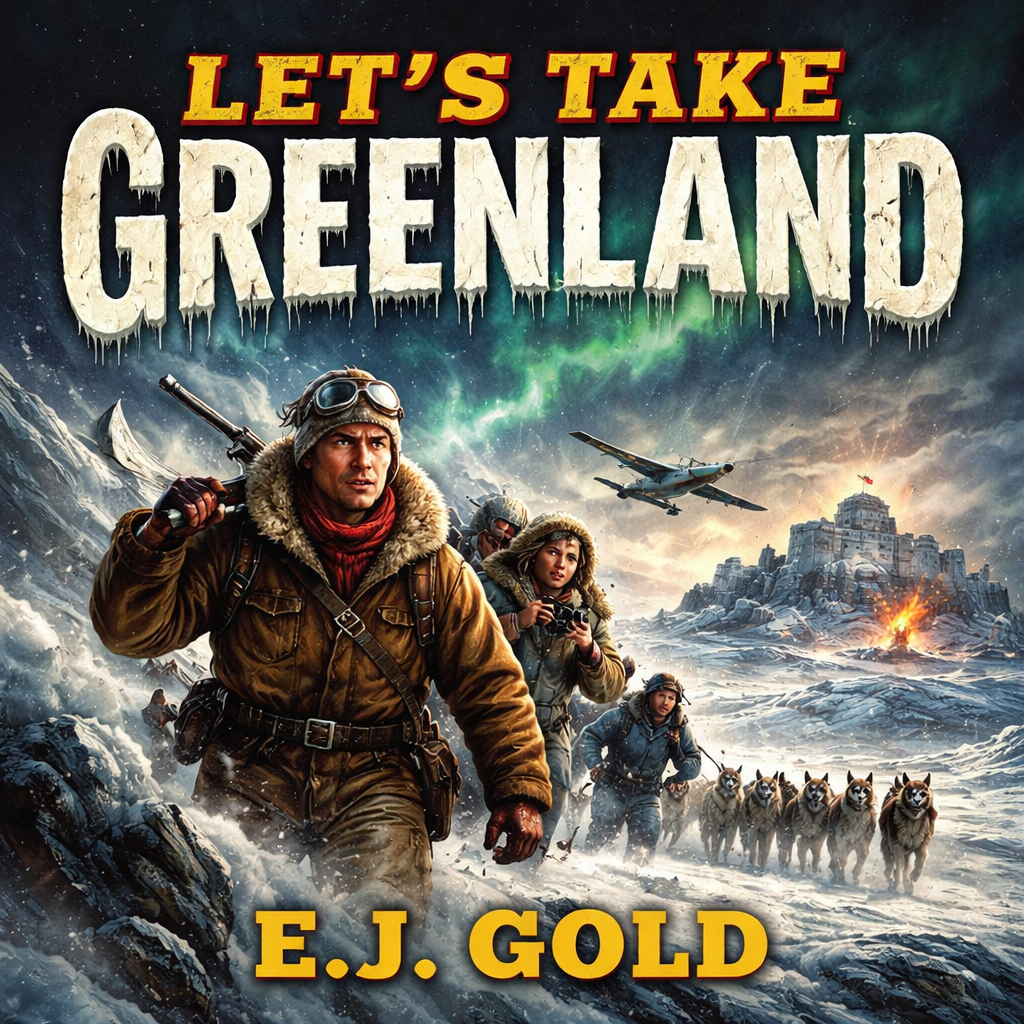
SONG: Let’s Attack Greenland
[Verse 1]
Let’s attack Greenland, why not try?
It’s a steal beneath that icy sky.
We’ll build some condos, drill for gold,
A Nordic paradise to have and hold.
[Chorus]
Oh, we’re taking over everywhere,
and we’re dreaming something grand,
Stretching borders with a wave of the particularly tiny hand.
From the Arctic Circle to a dozen different lands,
Oh, the world’s a game, nobody cares, it’s ours to command!
[Verse 2]
Canada’s next, they’ve got that style,
Friendly folks and maple by the mile.
We’ll take their moose and hockey, too,
And make the Rockies red, white, and blue!
[Chorus]
Oh, we’re making deals, and we’re dreaming grand,
Stretching borders with a wave of the hand.
From the Arctic Circle to Panama’s sand,
Oh, the world’s a game, and it’s ours to command!
[Verse 3]
Let’s march to Panama, dig it wide,
Build a rollercoaster canal on the side.
The tropics call, we’re feeling bold,
Banana republics with hearts of gold.
[Bridge]
Now Mexico, we see you there,
Tequila and tacos—we’ll share, we swear!
Let’s toss a fiesta, we’ll all unite,
Under one big sombrero tonight!
[Chorus]
Oh, we’re making deals, and we’re dreaming grand,
Stretching borders with a wave of the hand.
From the Arctic Circle to Panama’s sand,
Oh, the world’s a game, and it’s ours to command!
[Outro]
So let’s buy, invade, and conquer the scene,
With a wink and a laugh, it’s all routine.
We’ll rename the planet, call it “Us-A,”
And rule the world in a funny way!
===========================================================================
Hooray, here’s the Bardo bus coming around the corner!
===========================================================================
It’s true that crystal is the lowest energy state of the mineral, but that’s not what it’s used for. Resonance and Vibration are what they do.
See You At The Top!!!
gorby