

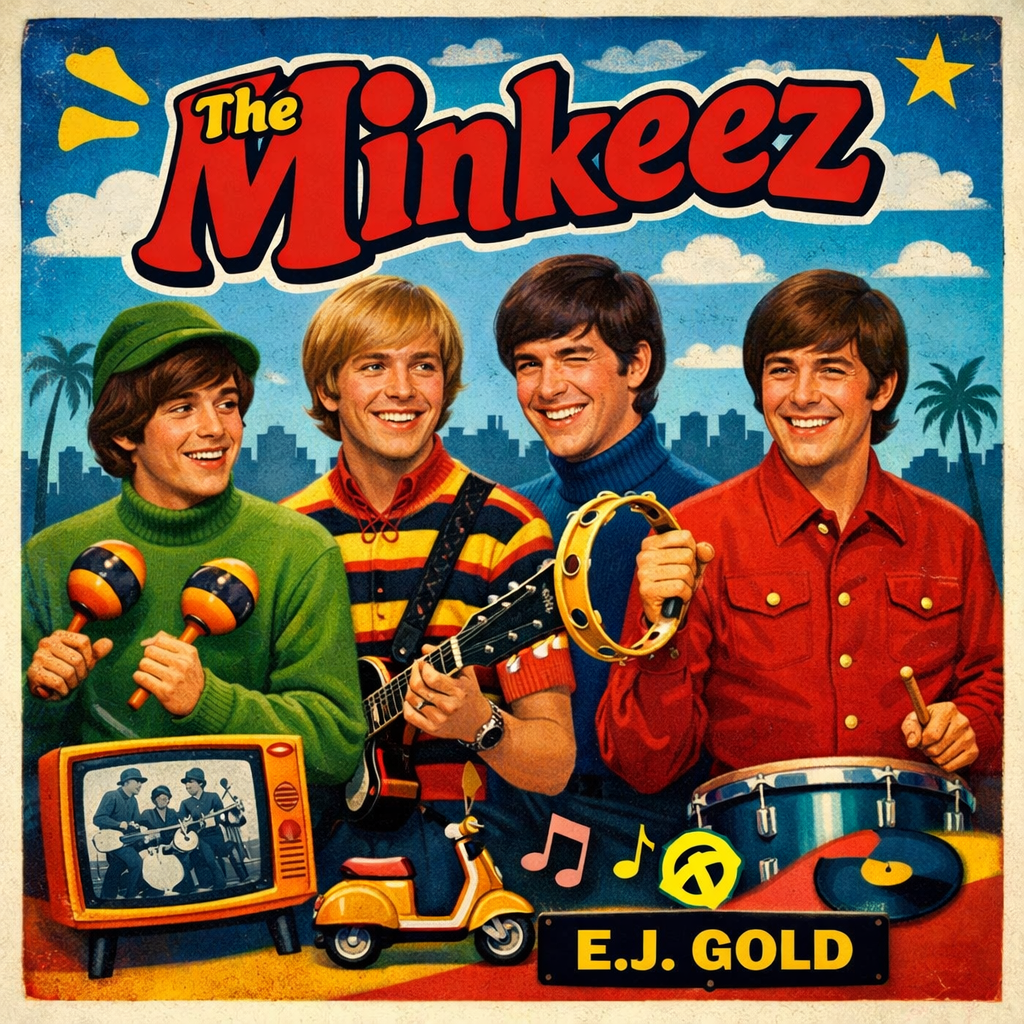
THE MINKEEZ
An Unauthorized Biography, Authorized by Nobody
The Minkeez did not form the way bands are supposed to form.
There was no garage.
No high school talent show.
No moment where someone said, “Hey, we should start a band.”
Instead, The Minkeez were assembled, the way weather is assembled, or dreams, or a parade that suddenly turns down the wrong street and becomes legendary.
The First Sighting
The earliest confirmed appearance of The Minkeez occurred on a Tuesday that several witnesses later described as “vaguely orange.” Four young men were seen exiting different doors of the same building at precisely the same moment. None of them remembered entering the building. Two were carrying instruments they did not own. One was wearing a hat that belonged to someone else entirely. The fourth was humming a melody that would later appear, fully formed, on side two of this album.
When asked if they knew each other, all four replied, simultaneously, “Not yet.”
This was noted at the time as unusual.
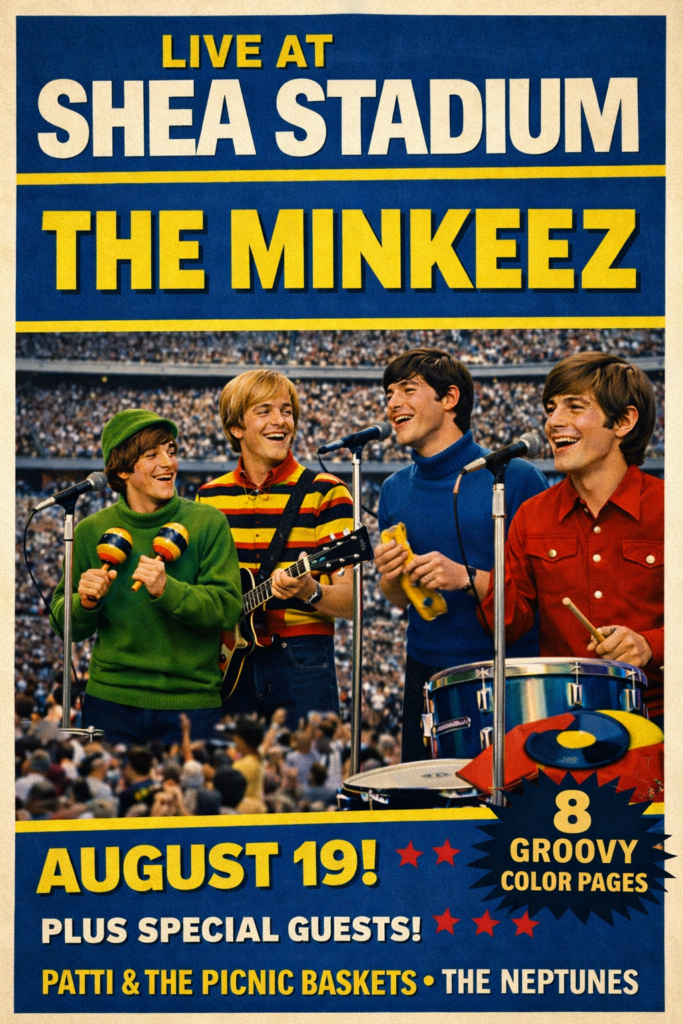
The Audition That Never Happened
Rumors persist that The Minkeez were “cast.” These rumors are false, though they are emotionally accurate.
There was, allegedly, an audition. However, no one can agree on where it took place. Some say a television studio. Others say a dentist’s waiting room. One persistent account places the audition inside a moving bus that never stopped, where the boys were required to sing harmony while holding onto overhead straps and avoiding eye contact with destiny.
What is known is this: nobody passed the audition, nobody failed the audition, and yet contracts were signed anyway. The paperwork appears to have filled itself out.
The Instruments
Each Minkee received an instrument perfectly unsuited to their personality.
-
The guitarist wanted to play drums and never stopped mentioning this.
-
The drummer believed he was a poet and insisted on reading between takes.
-
The bassist tuned constantly but was always somehow out of tune with reality.
-
The keyboardist claimed not to exist and refused to appear in rooms with mirrors.
This imbalance proved essential. Any attempt to correct it caused songs to collapse into polite competence, which everyone agreed was unacceptable.
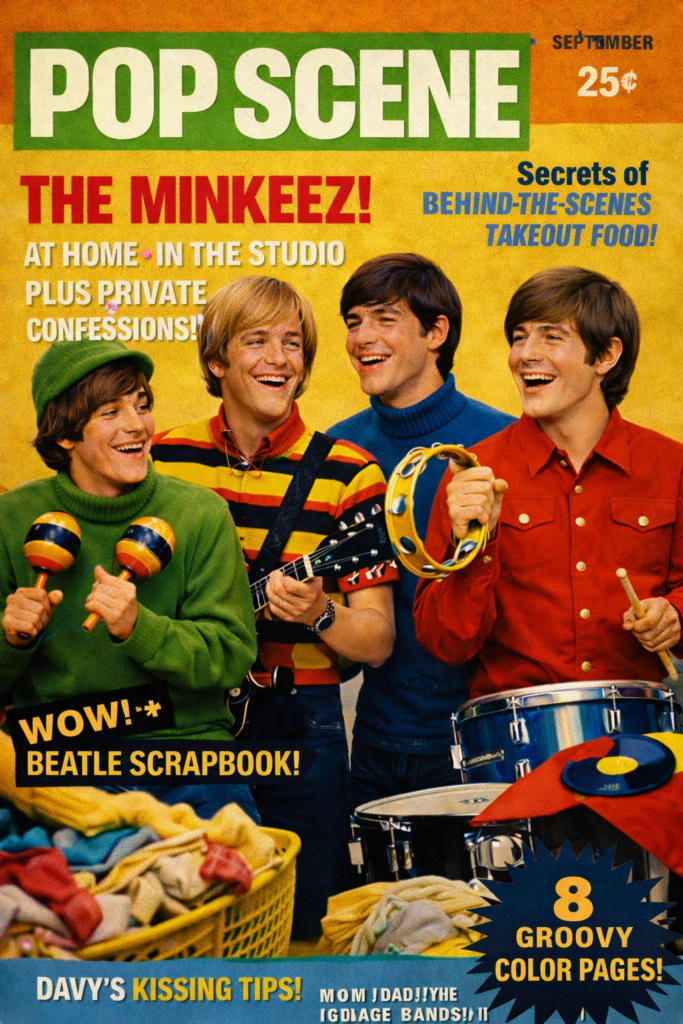
Television Years (Which May Have Been Radio)
During what historians call “the televised period,” The Minkeez appeared weekly in short episodes depicting a band that bore a suspicious resemblance to themselves. These episodes featured slapstick misunderstandings, improbable jobs, and a complete absence of adults who knew what was going on.
The Minkeez chased runaway ideas.
They argued with props.
They escaped from situations no one remembers them entering.
Between scenes, songs would break out. Not performances — outbreaks. Music would erupt, usually at inconvenient moments, and resolve nothing.
Viewers learned quickly that plot was not the point. There was no point.
The Songs
The songs of The Minkeez arrived fully dressed.
Lyrics appeared on napkins, ticket stubs, dream margins, and once on the inside of a hat. Choruses repeated themselves until everyone agreed they were important, though no consensus was reached on why.
Musically, the band occupied a precise zone between sincerity and goofing off. They played like they meant it, which confused critics who preferred their irony announced in advance.
The Minkeez did not write protest songs.
They wrote accidental protest songs.
They did not write love songs.
They wrote romantic misunderstandings set to a beat.
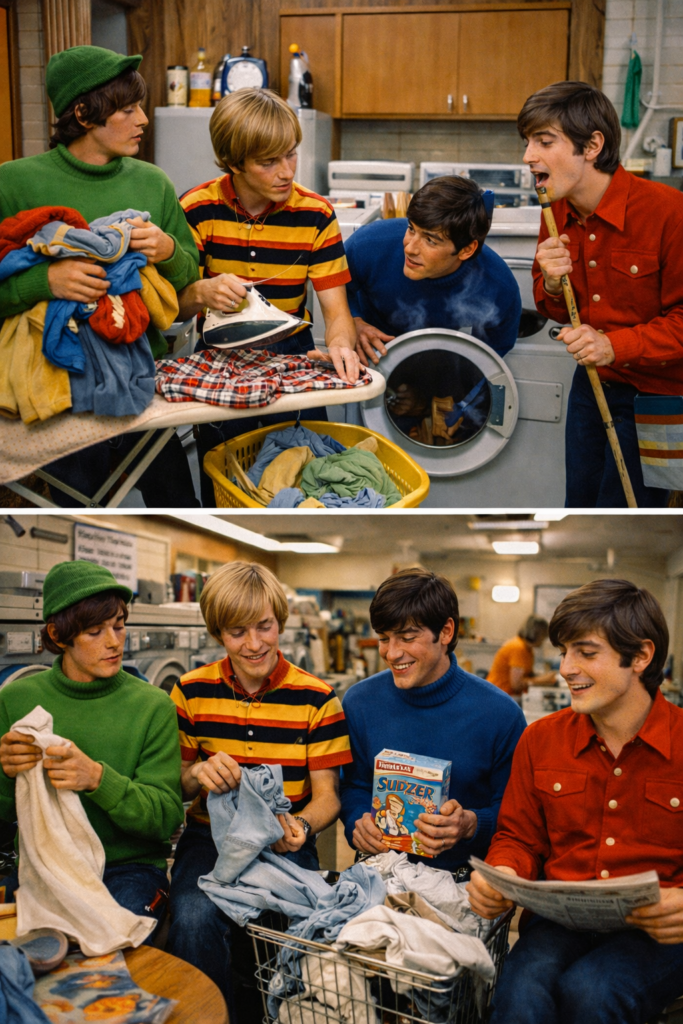
The Fame Problem
Fame arrived early and stayed late.
Crowds screamed for reasons unrelated to melody. The Minkeez waved back, grateful but confused. One member attempted to count the screams and gave up at thirteen.
Merchandise appeared without authorization. Lunchboxes, buttons, socks, dreams. A board game was proposed and immediately withdrawn after no one could explain the rules.
The Minkeez became famous for being famous for being The Minkeez, a self-sustaining loop that powered several summers and at least one cultural shift.
The Existential Phase
Midway through their run, The Minkeez entered what scholars call “the existential phase,” marked by longer hair, shorter patience, and songs that asked questions without waiting for answers.
During this time, the band experimented with:
-
backward sounds
-
sideways lyrics
-
themes involving time, identity, and sandwiches
One album from this period was rumored to be “too weird.” Another was declared “not weird enough.” The Minkeez responded by releasing both albums simultaneously.
The Breakup That Wasn’t
The Minkeez did not break up.
They disassembled, like a clock dropped gently into water.
Each member drifted into side quests: acting, producing, thinking, vanishing. Occasionally they would reappear together, smiling as if they had just remembered a joke that no longer needed explaining.
Reunions occurred when needed, or when the universe nudged them with a check.
Why This Record Exists
This album is not a revival.
It is a reappearance.
The Minkeez return whenever conditions are right: a little chaos, a little innocence, and a strong suspicion that pop music should be fun even when it’s secretly doing something else.
Listen closely and you may hear echoes of television studios that never existed, laughter trapped in tape hiss, and songs that know they’re songs and don’t apologize.
The Minkeez are not here to teach you anything.
They are here to remind you that joy is allowed, confusion is productive, and sometimes the best bands are the ones that didn’t quite mean to happen.
===========================================================================
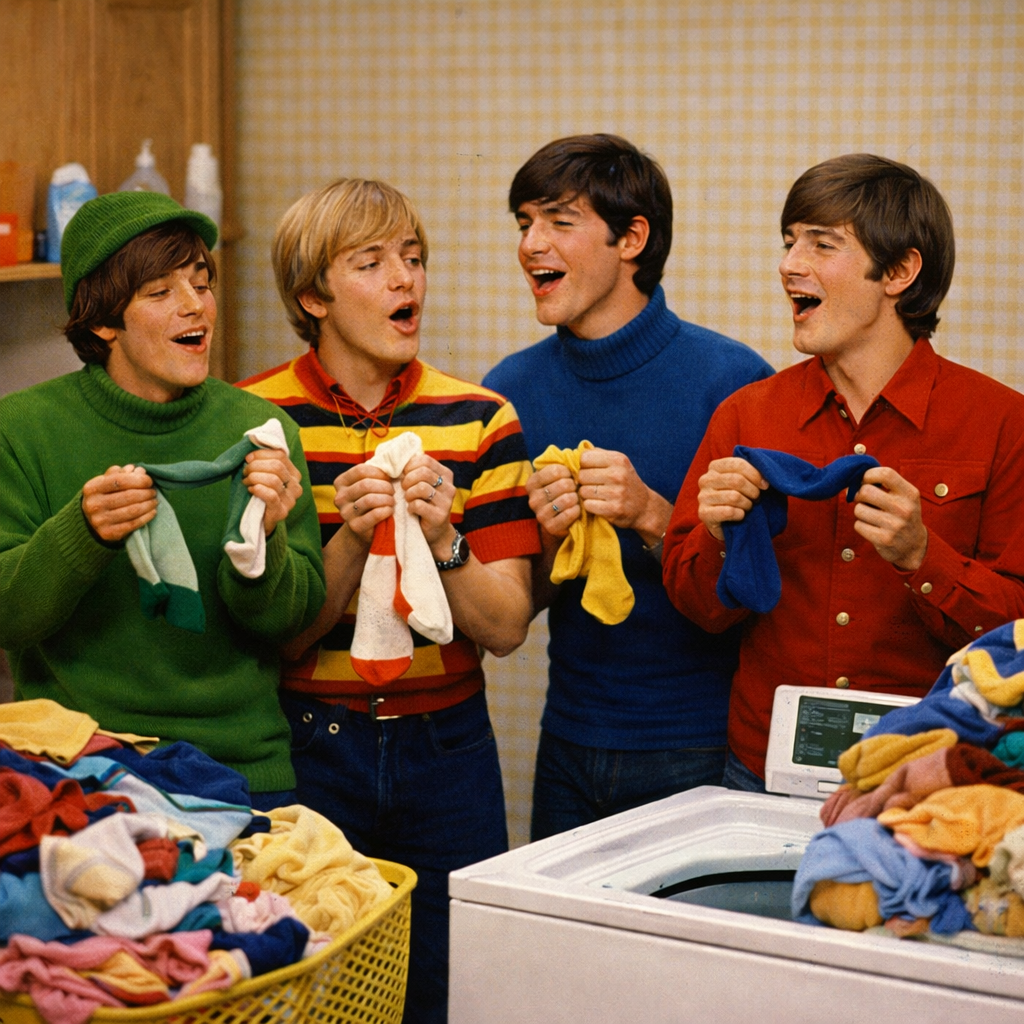
THE MINKEEZ: FOUR HEADS, EIGHT HANDS, ONE VERY CONFUSED DECADE
by someone who was definitely there, or at least dressed like it
Yes, yes, yes — the Minkeez play their own instruments.
But more importantly, the instruments play them.
Each guitar has a memory problem. Each drum believes it’s in charge. The bass knows things it refuses to say out loud. The keyboard is doing something subtle and possibly illegal.
This record doesn’t so much begin as arrive, like four people entering a room already mid-conversation. You don’t catch the first thought — you catch the momentum. That’s the Minkeez trick: they start where most bands end, somewhere past explanation.
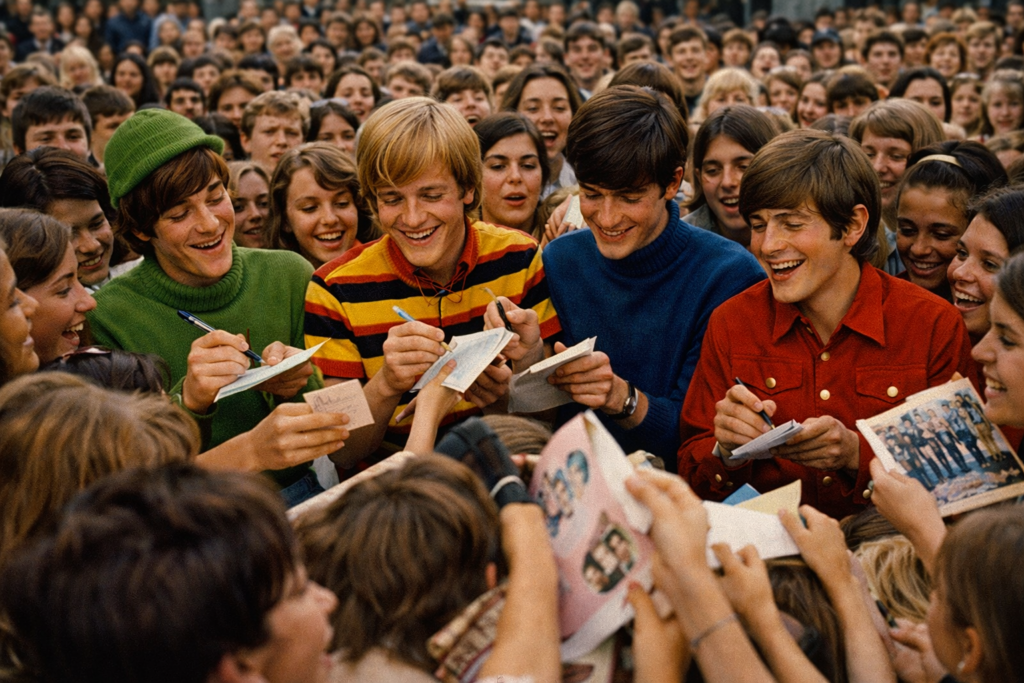
Side One opens with a song that sounds like it was written in a hurry but rehearsed by destiny. The melody smiles at you. The lyrics don’t explain themselves. The chorus repeats until it becomes a fact of nature. By the second spin, you find yourself agreeing with it, though you’re not sure what “it” is.
The Minkeez sing the way people talk when they’re trying to sound normal while something extraordinary is happening nearby.
This is not protest music, though something is clearly being resisted.
This is not love music, though something is definitely at stake.
This is music for people who suspect the decade is lying to them but are still having a good time.
One Minkee sings like he’s remembering something he hasn’t done yet.
Another sings like he’s already apologized and moved on.
Harmony appears suddenly, locks in, and refuses to leave, like a joke that keeps getting funnier because no one explains it.
The rhythm section behaves suspiciously well, which makes you nervous. They hold the songs together while the melodies wander off, check the scenery, and come back with stories. The drummer plays as if every fill is a small philosophical question. The bassist answers none of them.
Midway through the record, there is a song that should not work. It changes direction, tone, and possibly time signature without warning. Somehow, it lands exactly where it meant to. This is the Minkeez in miniature: chaos wearing a good jacket.
The production is clean enough to pass inspection, messy enough to feel human. Someone cared, but not so much that they got in the way. You can hear air. You can hear space. You can hear the moment where somebody almost laughs and decides not to.
Side Two is where things get interesting.
Here the Minkeez stop pretending they’re just having fun and admit they’re curious. The songs stretch. The lyrics look around. There’s a sense that the band has noticed the room is larger than expected. Psychedelia is implied, not announced. Nobody tells you to turn on, tune in, or drop anything. You’re trusted to find your own door.
By the final track, you realize something odd has happened: you feel lighter, but not dumber. Amused, but not dismissed. The Minkeez have pulled off the rare feat of making pop music that respects the listener without demanding homework.
This is a band that understands television, records, fame, and the joke — and still chooses the song.
If the decade survives itself, records like this will explain how.
If it doesn’t, at least we had the Minkeez.
===========================================================================
Hooray, here’s the old reliable Bardo bus! Hop on board, it’s heated!
===========================================================================
See You At The Top!!!
gorby