


The Song Matrix
Threading the Needle
Imagine a large rather cubic creative grid.
Across the top are ten lyric sheets.
Each lyric sheet contains the same words every time it is processed, but those words are not yet tied to any musical identity.
Down the side are ten style sheets.
Each style sheet represents a different musical personality — genre, arrangement logic, vocal character, production atmosphere, emotional stance.
Now something important happens.
Each lyric sheet is passed through each style sheet.
But each pass produces two realizations — two musical interpretations generated from the same instruction set.
So instead of a simple 10 × 10 grid, we now have:
10 lyric sheets × 10 style sheets × 2 realizations
Result:
200 finished musical works
This becomes a 10 × 20 matrix. Try to visualize this rectangular cubic thing hanging in space.
What the Matrix Really Contains
At first glance, it looks like variation.
But it is actually something deeper:
Every lyric exists simultaneously in ten musical universes.
Each universe answers the question:
Who would sing this song if an entirely different band performed it?
The words stay constant.
Meaning shifts.
Emotion shifts.
Identity shifts.
The listener begins to discover that a song is not a fixed object — it is a field of possibilities.
Threading the Needle
Now comes the artistic act. You do not discard songs. You do not choose winners.
Instead, you thread the needle.
You move diagonally through the matrix, listening for family resemblance:
-
similar vocal attitude
-
compatible groove logic
-
related emotional temperature
-
shared production character
-
believable artistic identity
Across different lyrics, certain versions begin to sound as though they belong to the same performer or musical group.
You isolate those.
One from Lyric 1.
One from Lyric 2. That’s two song tracks.
…and so on.
When twenty compatible realizations or “finished songs” are gathered into a single album with a well-designed cover and supporting magazine exposure (generated by you in the invention process of the band formation, which we’ll talk about later at some length) something unexpected appears:
A digital creation exists in the form of — not the band itself, but the musical droppings left in the path of the threaded needle.
A performer emerges as a lead singer, which helps identify the band and create publicity.
An album reveals itself, and all that’s necessary is to market it on the internet.
The Result
From one matrix:
Ten distinct performers or groups appear.
Each receives:
-
20 coherent tracks
-
consistent sonic identity
-
believable artistic continuity
-
a complete album catalog
The prompt (style) created the compositions for that performer, and also in the process created the performer and band, which has a definite identity and pattern.
This identity was created by the composer.
Why This Matters
Traditional music production starts with an artist and searches for songs.
This process reverses the flow.
You create a field large enough for artists to emerge naturally.
The albums are not automatically pre-assembled. They are found inside the matrix.
Level One of the Practice
And this is only the first level.
Level One trains perception.
It teaches the practitioner to hear:
-
identity inside variation
-
coherence inside randomness
-
personality emerging from process
The practitioner stops asking:
“Which version is best?” It doesn’t matter, unless you’re creating a playlist. Listen to both the “A” side and the “B” side.
Begin asking:
“What instruments am I hearing?” Identify the instruments in the cut.
That question opens the next level of work.
A Note on the Modern Invention of the Playlist
One of the quiet revolutions in music listening is something so ordinary that we barely notice it anymore: the playlist.
For most of recorded history, listeners had almost no control over sequence. A record album played in the order determined by the artist or the record company. If there was a track you didn’t care for, you still had to sit through it, lift the needle, or fast-forward a tape. The listening experience was largely fixed.
The arrival of digital music changed this completely.
With the invention of the playlist, the listener became an active participant in composition itself. YOU, the buyer/listener, create the playlist. You decide what to listen to, and when.
You no longer have to listen to a track that doesn’t resonate with you. You can assemble your own pathway through the material. Out of hundreds of mp3s, each listener can construct a personal journey — calm tracks, driving tracks, humorous tracks, mystical tracks, late-night tracks, morning awakening tracks — whatever serves the moment.
In effect, every listener becomes a curator.
This connects directly to the Song Matrix practice. When we distribute large bodies of related works, we are not delivering a single fixed album experience. Instead, we are offering a musical landscape from which listeners may “thread their own needle,” selecting pieces that speak to them and arranging them into entirely new listening realities.
Two people receiving the same collection may end up hearing completely different albums.
The playlist represents a profound shift: music is no longer only authored by the creator. Meaning now emerges through collaboration between creator and listener. The final form of the work exists not just in production, but in selection.
In this sense, the playlist may be one of the most important musical inventions of the modern era — quietly transforming listening from passive reception into creative practice.
===========================================================================
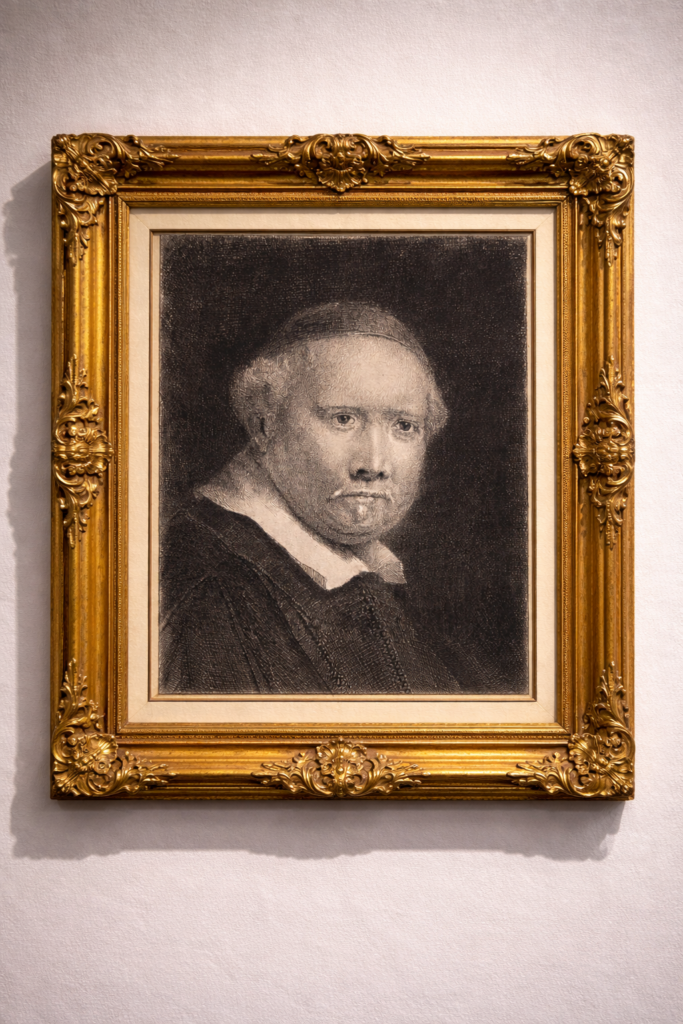
Fine Art, Artifacts, and the Quiet Transformation of Money
At a certain level of wealth, cash becomes inconvenient.
Currency fluctuates. Banks fail. Governments change policy. Digital systems evolve or disappear. Ordinary money, which functions perfectly well for daily life, begins to look fragile when measured across decades or generations.
Historically, wealthy individuals solved this problem in a remarkably simple way:
They converted money into objects.
Not just any objects, but objects possessing three important qualities:
-
rarity
-
cultural recognition
-
portability of value
Fine art and historical artifacts quietly became alternate forms of currency.
A Rembrandt etching, an ancient coin, a Renaissance drawing, a Ming bowl, a tribal sculpture, or a signed manuscript can function as stored wealth without ever resembling finance. To casual inspection, these are merely possessions — decorations on a wall or items resting in a cabinet.
But within certain circles, they operate very much like money.
They can be pledged, traded, collateralized, transported across borders, or exchanged privately. Ownership transfers value without wires, accounts, or institutional permission. The object itself becomes the ledger.
Unlike currency, art also carries narrative value. A painting does not merely store purchasing power; it stores history, prestige, authorship, and cultural legitimacy. Wealth expressed through art appears civilized rather than transactional.
This is why major fortunes often migrate into collections.
Art survives inflation because its worth is not tied to production cost. It survives political change because cultural recognition transcends national systems. A masterpiece recognized in Amsterdam is recognized in New York, Tokyo, or Geneva without translation.
In effect, art becomes a kind of slow money.
It moves deliberately. It appreciates unevenly. It resists panic. And most importantly, it hides in plain sight.
A framed print on a wall may represent years of accumulated capital while appearing to be nothing more than taste.
For centuries, collectors understood something modern finance is rediscovering: value attached to human creativity tends to outlast value attached to policy.
Among the wealthy, money often undergoes a final transformation.
It becomes beauty.
And once wealth becomes beauty, it can travel through time almost unnoticed.
===========================================================================
Hola! It is the Bardo bus, here already! Climb aboard!
===========================================================================
See You At The Top!!!
gorby