

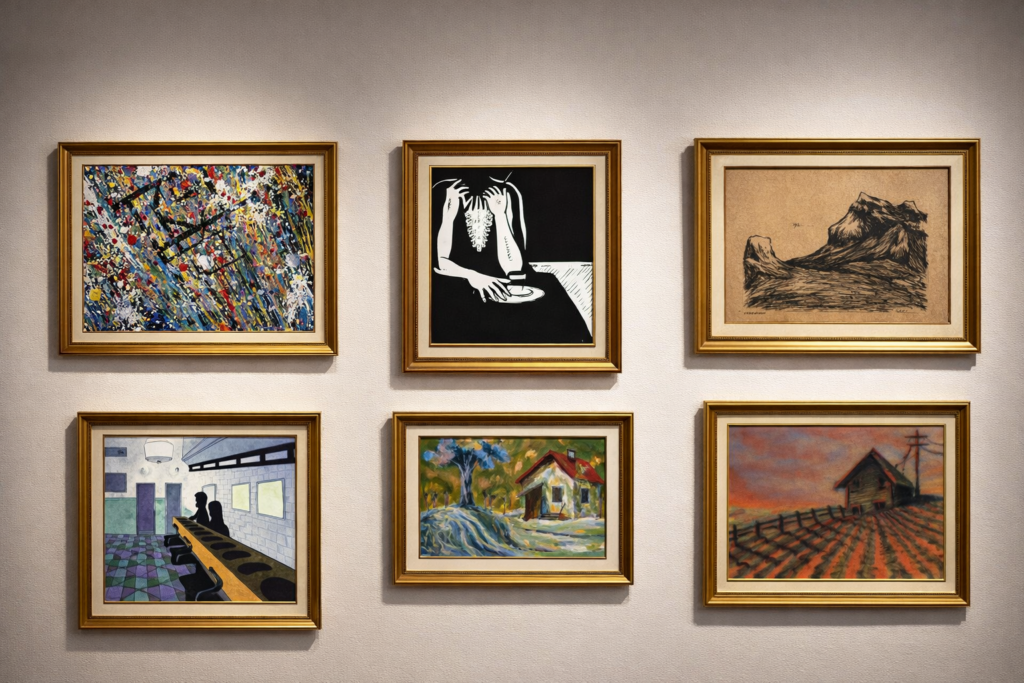
As the reliability of the U.S. dollar as a store of value continues to erode, it becomes increasingly important to understand where value actually holds. Currency now functions more as a temporary measuring device than as something stable enough to carry meaning across time. In contrast, certain forms of fine art have demonstrated, again and again, that they not only retain value but often improve it—especially during periods of monetary uncertainty.
This is particularly true of original works on paper: prints, drawings, etchings, engravings, lithographs, and related media. However, dealing in fine art at a serious level requires an understanding that goes far beyond the image itself. In works on paper, value is carried not just by what is depicted, but by how, when, and on what it exists.
One of the most critical factors is the concept of states. A state represents a specific moment in the evolution of a print matrix—an etched plate, woodblock, or stone—as it was worked, altered, refined, or rethought by the artist. Early states often reveal the artist’s original intent, experimentation, and decision-making process. Later states may reflect commercialization, simplification, or changes introduced after demand increased. Some states are rare because the matrix was altered or destroyed, making earlier impressions impossible to reproduce. Without identifying the state of a work, it is impossible to accurately place it in art history, price it responsibly, or defend it to a knowledgeable buyer or institution. State tells you which moment of the artist’s mind you are actually holding.
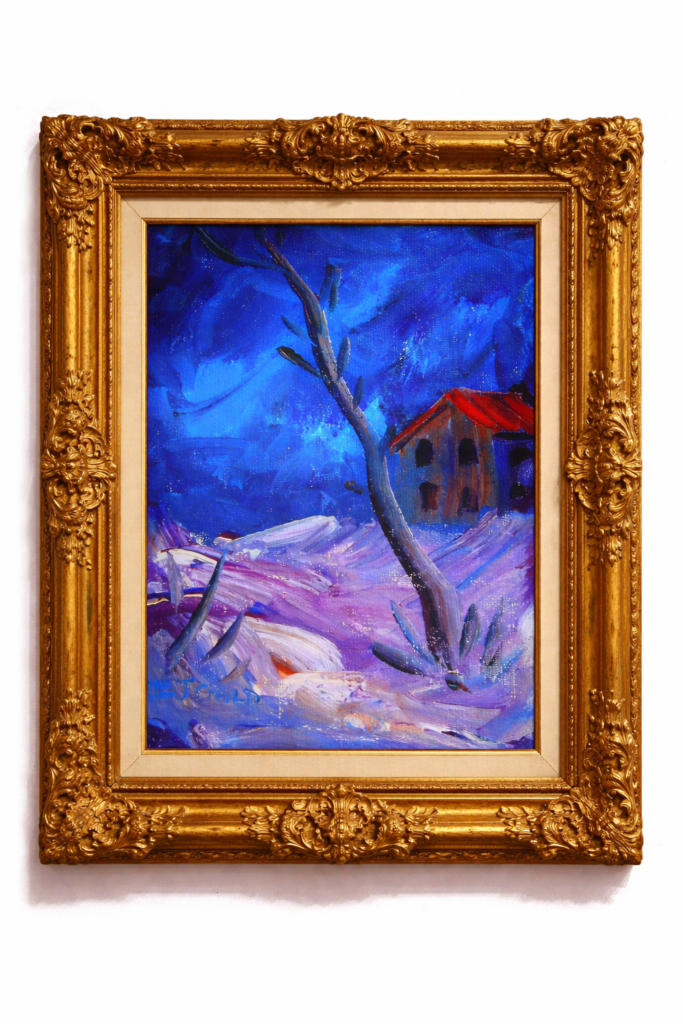
Margins are equally essential and are often misunderstood by casual collectors. Margins are not decorative extras; they are evidence of survival and integrity. Full margins indicate that the sheet has not been trimmed to hide damage or improve wall appeal. They preserve the plate mark and confirm that the work remains whole as it left the artist or printer. Trimmed margins often signal past damage, cosmetic intervention, or a prioritization of appearance over scholarship. Institutions frequently reject trimmed impressions outright, and market value can drop dramatically when margins are compromised. Full margins quietly testify that the work has passed through history without being mutilated.
Paper itself is one of the most reliable witnesses to authenticity. Period paper reveals geographic origin, date range, workshop practice, and economic context. Specialists immediately look at whether the paper is laid or wove, the spacing of chain lines, thickness, fiber composition, color, and aging patterns. If the paper postdates the artist, the impression must be later—possibly posthumous, restruck, or misleadingly presented. Even a visually perfect image loses authority if the paper tells the wrong story. Paper often answers questions that signatures never can.
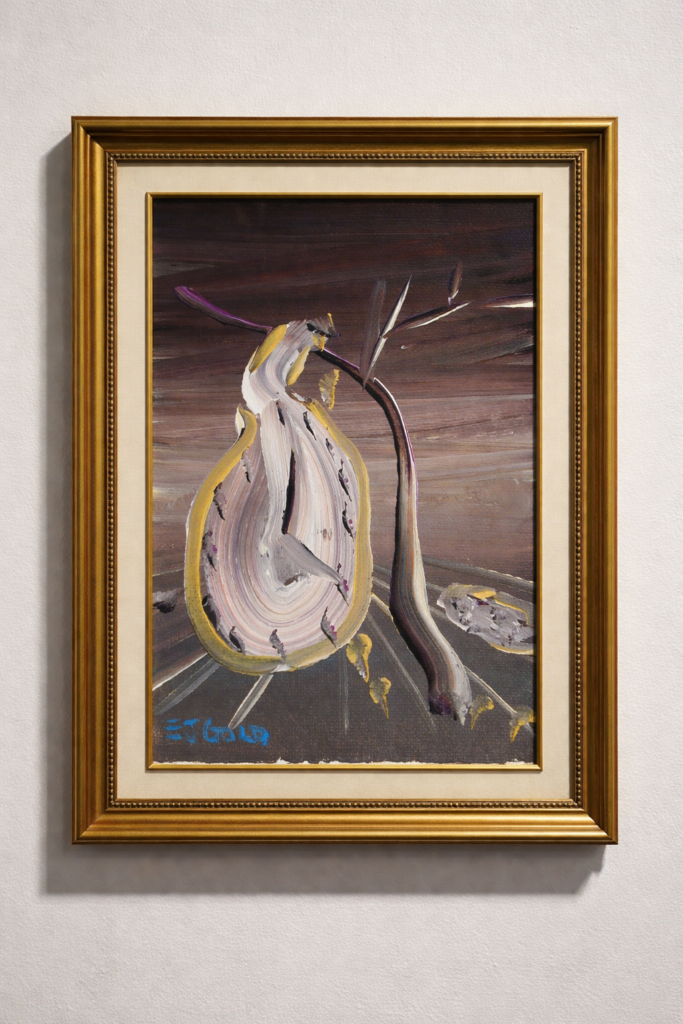
Watermarks function as forensic evidence. They can identify the paper mill, narrow production dates to a decade or even a few years, and confirm geographic origin. Watermarks are difficult to fake convincingly and are highly persuasive to scholars, curators, and serious collectors. A documented watermark can instantly elevate a work into a higher tier by anchoring it firmly in time and place.
Signatures, while desirable, are ultimately secondary. A signature can be added later, printed rather than written, applied by a workshop, or forged outright. An unsigned early impression on correct paper with full margins and a rare state will always outrank a signed late impression on inferior paper with trimmed edges. Serious buyers understand this, even if casual ones do not.
Taken together, these elements form the foundation of real value in works on paper. State tells you when the work exists in the artist’s process. Paper tells you where and how it was made. Watermarks confirm origin and date. Margins show how the work survived. The image alone tells only part of the story; the rest is embedded in the object itself.
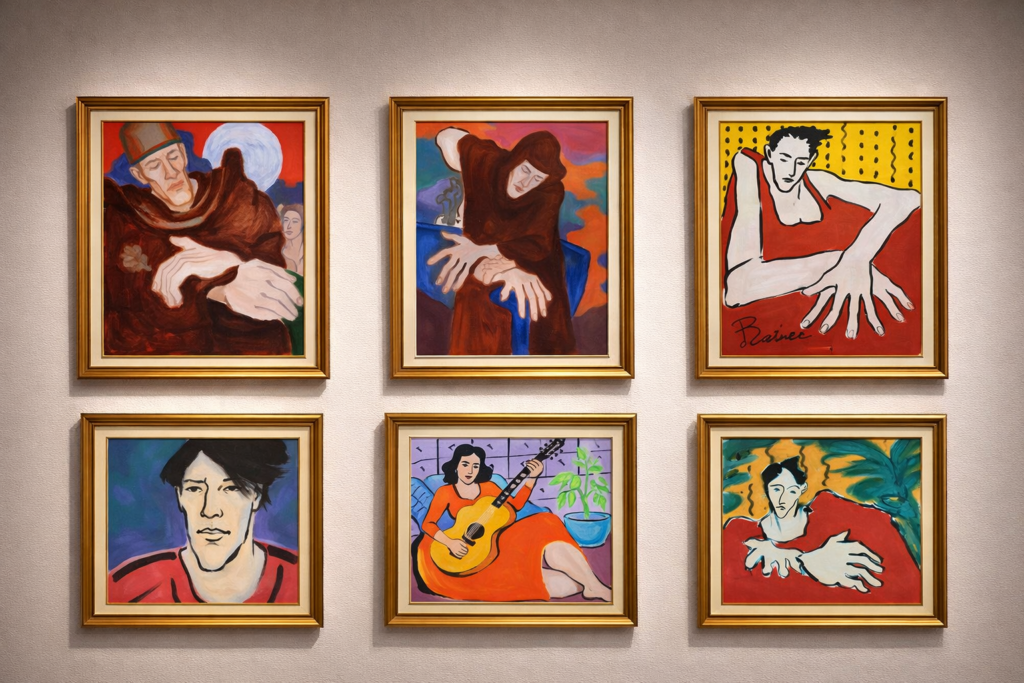
Alongside historic works, original paintings by a living artist with an established market form another powerful category of value. Having sold works for up to $100,000 in the past is not aspirational—it is documented market reality. That history establishes price discovery, reputation, and precedent. It means the artist’s name already functions as an asset, and their body of work represents a finite, controlled supply.
An artist with a long, coherent career who also understands provenance, materials, condition, and historical context occupies a rare position. Their archive is not merely inventory; it is future scholarship. Early works, transitional pieces, and experimental phases often become keystones later, precisely because they reveal development rather than polish. Documentation—dates, materials, exhibition history, and sales records—quietly compounds value over time.
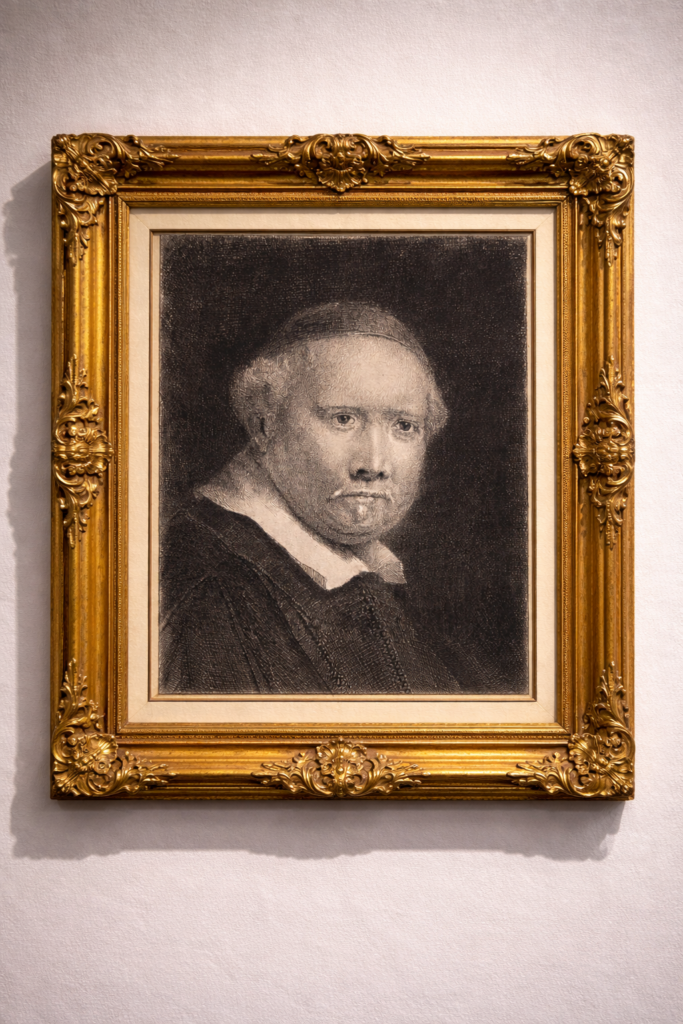
When original contemporary work is held alongside Dutch and Flemish prints and high-end post-Impressionist and modern works, it is implicitly framed as continuity rather than novelty. That contextual pairing matters. It situates the living artist within a lineage of human achievement rather than a fleeting market trend.
Ultimately, fine art operates as a parallel value system—portable, borderless, and largely invisible to those without trained eyes. A folio of prints may appear insignificant to an untrained observer while quietly carrying centuries of labor, consensus, and cultural memory. Unlike currency, art does not require permission to exist. It cannot be frozen, diluted, or redefined overnight. It simply remains.
For those who understand states, margins, paper, and provenance, fine art is not speculation. It is stored human intelligence, capable of moving through time when other systems lose coherence.
===========================================================================
Bardo bus? Why, yes, as a matter of fact, here it comes now! Jump on or lose it!
===========================================================================
See You At The Top!!!
gorby