

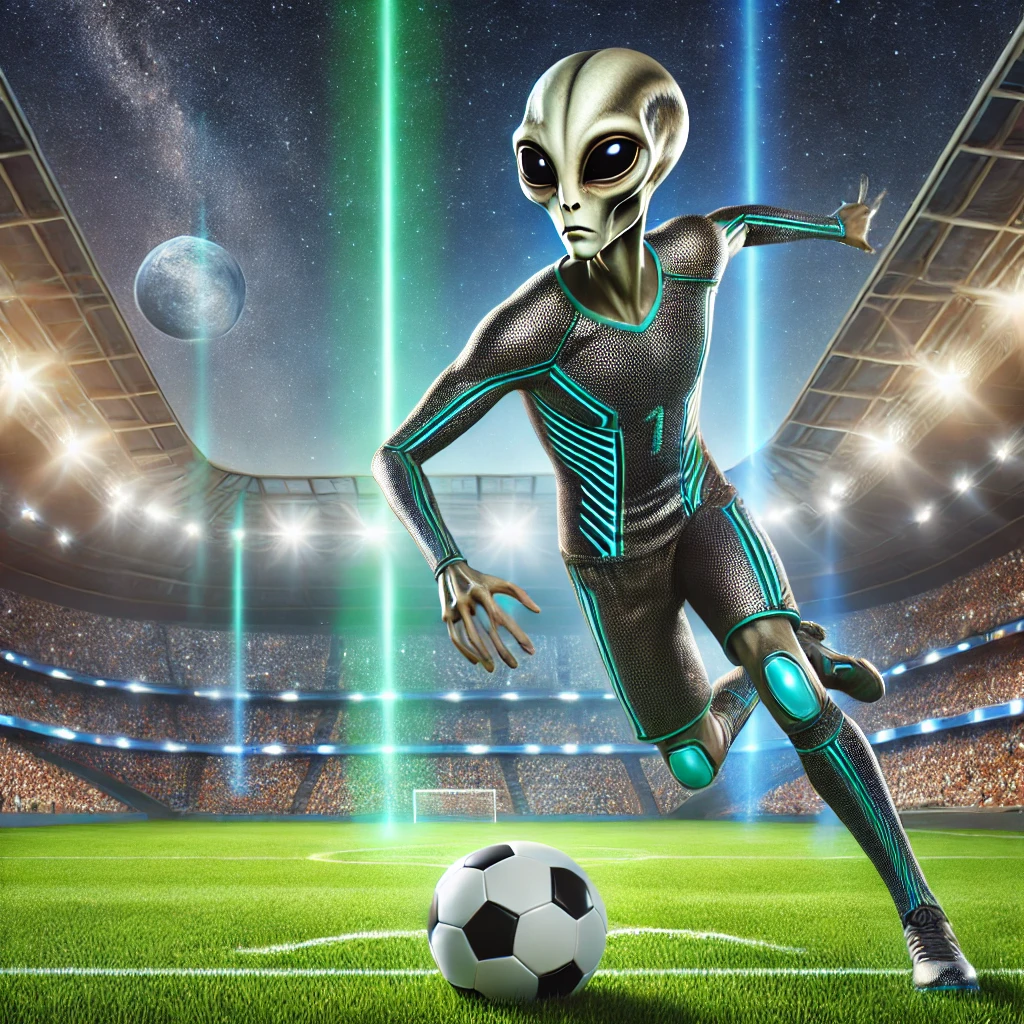
Roswell, Aliens, and the Front Lawn Test
Every few years the Roswell story floats back into public conversation. The original headlines, the sudden retraction, the weather balloon explanation, the secrecy, the speculation — it’s all still with us. And like most long-lived mysteries, it has layered itself into culture far beyond whatever actually happened in that New Mexico field in 1947.
Let’s begin with something simple and reasonable: it’s hard to believe we’re alone in the universe.
We now know there are hundreds of billions of stars in our galaxy. We know planets are common. We know many of them sit in habitable zones. When you scale that up across billions of galaxies, the math starts to lean heavily toward the idea that life — perhaps even intelligent life — exists somewhere else.
That conclusion doesn’t require flying saucers. It doesn’t require secret bases. It doesn’t require crash retrieval programs. It only requires big numbers and basic probability.
Where things become tangled is when probability meets narrative.
Roswell is a perfect example. The Army initially announced they had recovered a “flying disc.” Within a day, the story changed to a weather balloon. That reversal created a permanent fracture in public trust. Whether the debris was from a classified balloon program or something else entirely, the rapid shift in explanation ignited the myth engine.
And once the myth engine starts, it does not run on evidence. It runs on imagination, secrecy, and emotional charge.
Over time, additional layers were added. Stories of strange materials. Symbols. Bodies. Trenches in the earth. Slash marks. Craters. Each retelling added texture. Some accounts were firsthand. Many were secondhand. Some were told decades later. Memory is not a fixed recording device; it’s a living reconstruction.
The important distinction is this: believing that aliens probably exist somewhere is not the same as believing every UFO story.
It’s entirely possible to say:
Yes, intelligent life likely exists in the universe.
And at the same time:
Most crash stories are probably misinterpretations, classified technology, folklore, or honest human error.
Those two positions are not contradictory. They’re simply careful.
There’s a tendency in human psychology to rush into speculation when confronted with uncertainty. If something unexplained appears — debris in a field, lights in the sky, secretive military behavior — we feel a pressure to complete the story. Gaps are uncomfortable. The unknown is unsettling. Narrative fills the space.
But there’s another approach.
One can acknowledge the vastness of the cosmos, the real scientific search for life, and still refuse to emotionally invest in every dramatic claim. There is strength in waiting for clarity rather than chasing mystery.
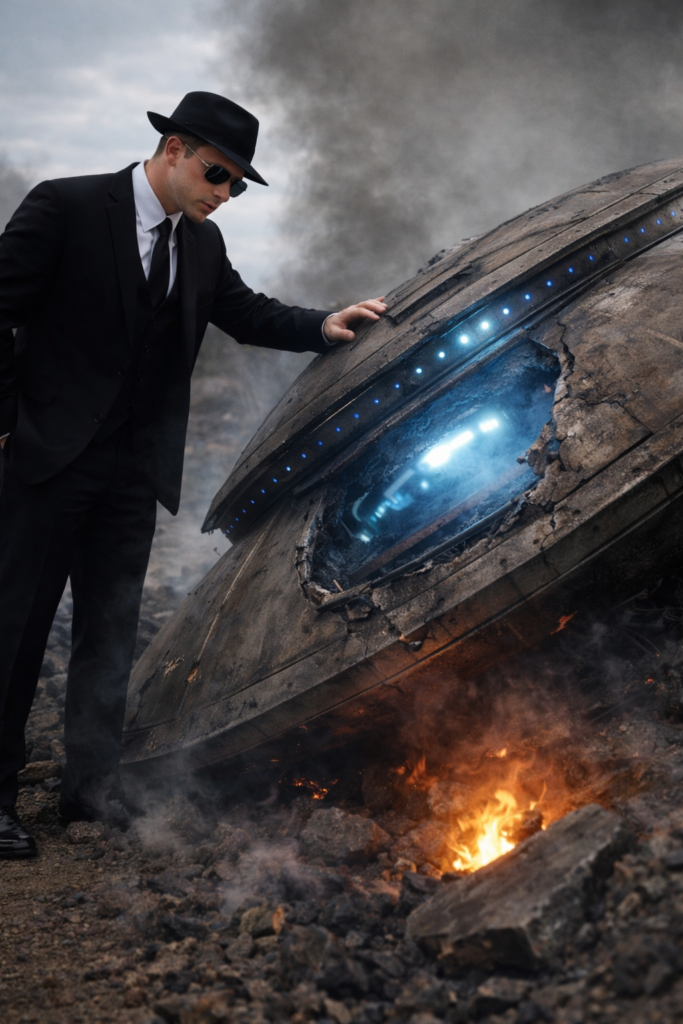
And that leads to what might be called the Front Lawn Test.
Until something lands in the yard — physically, undeniably, interactively — there is no practical reason to rearrange one’s worldview around speculation.
Grainy footage is not enough.
Secondhand testimony is not enough.
Government ambiguity is not enough.
If an advanced civilization has mastered interstellar travel and decides to visit, it will not be subtle in a way that leaves the entire event debatable for eighty years. It will be unmistakable. Observable. Verifiable.
If a craft sets down on the grass and beings step out, that changes the conversation.
Until then, daily life continues.
There are songs to write. Blogs to compose. Workshops to conduct. Jewelry to make. Eggs to gather. Computers to fix. Files to organize. The sky can hold its mysteries without demanding constant interpretation.
Historically, every era has projected its technology into its sky myths. In the late 1800s, mysterious airships were reported. During World War II, pilots saw “foo fighters.” In the 1950s, saucers dominated. In the 1980s and 90s, abductions filled headlines. Today, drones and advanced military craft often fill that role. The unknown tends to borrow the imagery of the times.
This does not mean there are no mysteries. It simply means human perception and storytelling are powerful forces.
A grounded stance is not denial. It is patience.
One can hold a quiet confidence that the universe is alive beyond us while declining to be swept into narrative inflation. One can appreciate cosmic possibility without surrendering to every dramatic account.
There is something psychologically healthy about saying: “If it’s real enough to matter, it will be obvious.”
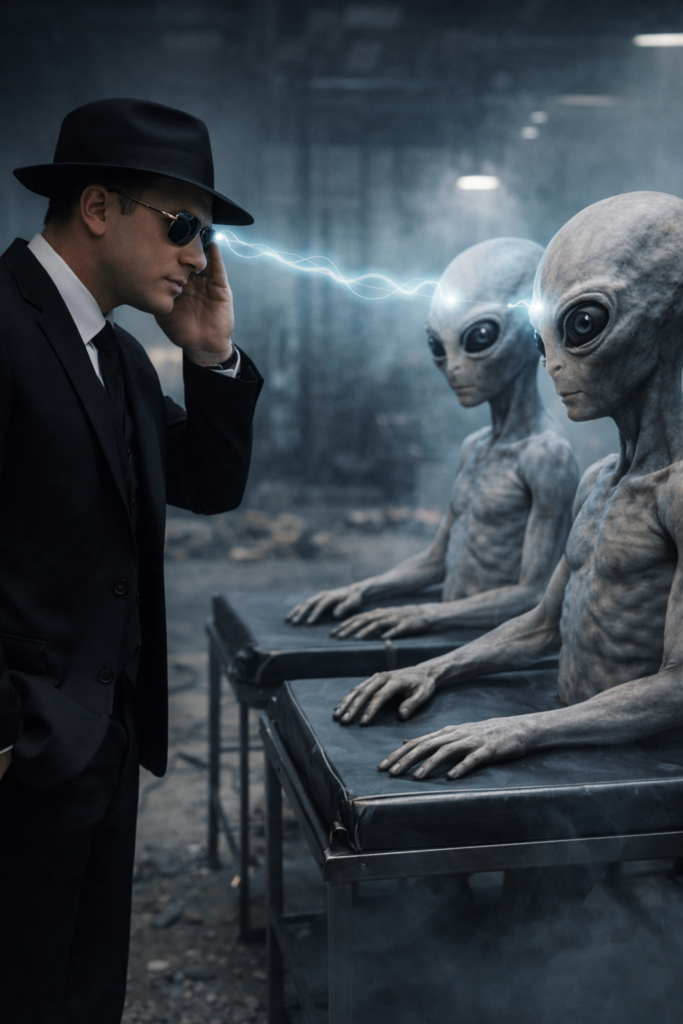
That approach preserves curiosity without sacrificing stability.
And if one day something does land on the front lawn?
Then the conversation becomes very practical.
Tea or no tea.
Communication methods.
Intentions.
Music preferences.
Perhaps even whether they sing in ancient Sumerian.
Until then, the cosmos remains vast, mysterious, and probably populated — and everyday life remains beautifully immediate.
The universe can keep its secrets for now.
When it’s ready to introduce itself formally, we’ll know.
In the meantime, stay tuned.
===========================================================================
The Bardo bus approacheth! Get thy butt on board!
===========================================================================
See You At The Top!!!
gorby