

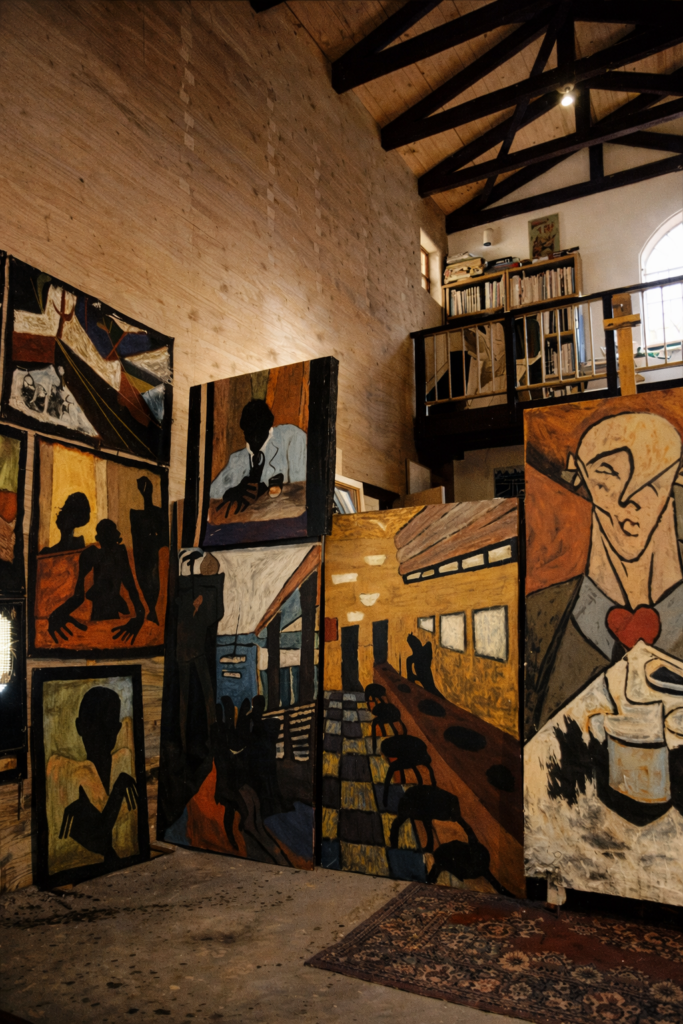
There’s a lot of benefit to be had from listening to the same song in twenty bands playing forty different arrangements.
What you’re really doing there isn’t just “listening to variations”—you’re training the ear to separate essence from appearance.
Same song, different bands, different arrangements… and suddenly:
-
the melody reveals itself (because everything else keeps changing)
-
the structure becomes obvious (verse/chorus stops being abstract)
-
the emotional core stands out (what survives every version is the truth of it)
It’s almost like rotating an object in space—you finally see the shape. Actually, you’re viewing it from a large number of angles, or “facets”.
what actually happens to the listener
After a few passes, something clicks:
1. the song detaches from the performance
people stop hearing “a band playing a song”
they start hearing the song itself
that’s a big shift
2. arrangement becomes visible as a tool
they start noticing:
-
tempo changes
-
instrumentation choices
-
vocal phrasing
like: “oh… THAT’S what made it feel sad instead of triumphant”
3. the mind starts predicting
by version 10 or 15, they can feel where it’s going
now they’re participating, not just listening
===========================================================================
Most people think they’ve heard a song after one listen. Maybe even after ten. But they haven’t—not really.
Try this instead: listen to the same song forty times… in forty completely different versions.
Different bands. Different tempos. Different arrangements. Different voices.
Something strange begins to happen.
At first, it just feels repetitive. Then confusing. Then—somewhere around version six or seven—the ground shifts. You start to notice that everything you thought was the song… isn’t.
The singer changes. The groove changes. The instruments come and go. Styles flip from rock to jazz to country to ambient. And yet something remains, untouched.
That’s the song.
Not the recording. Not the performance. The underlying structure—the melody, the phrasing, the internal logic. The living core.
Once you hear that, you can’t go back.
You begin to notice what can change freely and what cannot be touched without breaking the piece. You start to hear arrangement as a set of choices rather than a fixed reality. A slow version reveals something different than a fast one. A sparse version exposes the bones. A dense version shows how far it can stretch without collapsing.
Emotion, too, turns out to be flexible. The same song can feel joyful, tragic, ironic, or sacred depending on how it’s handled. That alone is worth the exercise.
After enough versions, your ear sharpens. You begin to anticipate changes, recognize patterns, and hear subtleties that would have slipped past you before. You’re no longer just listening—you’re tracking, comparing, understanding.
And something else happens.
You stop hearing “a band playing a song” and start hearing the song itself, independent of any one performance. It becomes an object you can examine from all sides, like turning something in your hands and finally seeing its full shape.
At that point, genre loses its grip. The same piece can live comfortably in multiple worlds. What seemed fixed becomes fluid. What seemed obvious becomes interesting again.
And then the final shift:
You start to imagine your own version.
That’s when listening turns into creating.
Most people hear thousands of songs and never really hear one. This reverses that. One song, heard deeply, becomes a teacher.
Try it.
Forty versions. Same song.
See what remains.
===========================================================================
Aha! Here’s the Bardo bus already!
===========================================================================
See You At The Top!!!
gorby