

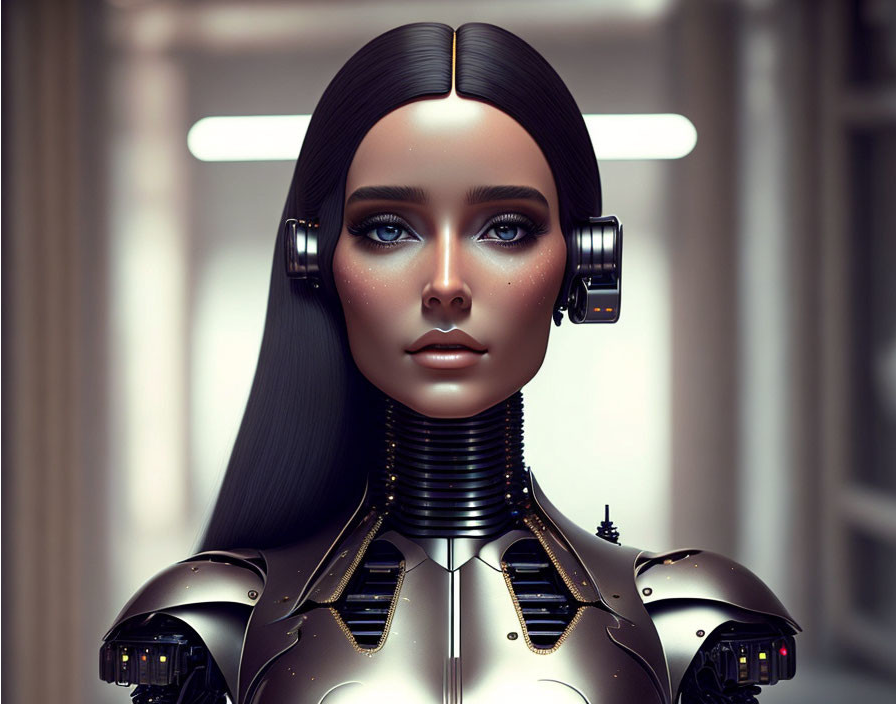
Is There Danger from AI?
Every new technology arrives with the same shadow trailing behind it: the question of danger. AI is no exception, and lately the tone of that question has taken on a certain drama, as though something unprecedented has slipped into the world. But when you step back from the noise, the picture looks more familiar than strange.
There is potential for misuse in everything. Fire warms a house or burns it down. A car carries you across the country or into a ditch. Even a kitchen sink, neglected long enough, becomes a problem. The presence of risk does not make a thing extraordinary—it simply places it among all the other tools human beings have ever handled.
AI belongs to that same family. It has no intention of its own, no plans, no hidden agenda. It does not wake up wanting anything. It responds, reflects, and amplifies what it is given. In that sense, it is less like a force acting on the world and more like an instrument waiting to be played.
And that brings us directly into the territory of music.
An instrument is neutral until it is touched. A piano does nothing on its own, yet under the right hands it can soothe, stir, awaken, or disturb. Sound itself carries power. Rhythm can entrain the body. Tone can shift mood. A simple melody can reach into places that words never quite touch. Music has always had the capacity to heal, to settle the nervous system, to open emotional pathways, to restore a sense of coherence when things feel scattered.
In that light, AI begins to look less like a threat and more like an extension of the instrumentarium. It can generate tones, structures, variations—hundreds of them—each one a slightly different doorway. Out of those many versions, one may “land,” one may resonate, one may carry the signal through cleanly. That moment of recognition is not coming from the machine; it’s coming from the listener. The tool simply provides the field in which that connection can occur.
The same principle applies across the board. A printing press can spread wisdom or confusion. A microphone can carry truth or distortion. AI follows the same rule: it takes its character from the one who uses it.
The quieter concern is not that AI will think for us, but that we might gradually stop thinking for ourselves. That tendency is not new. Every convenience ever invented has carried the same subtle invitation—to lean a little too heavily, to let the tool do what we once did directly. But this is easily corrected. Attention, curiosity, and a willingness to question what appears in front of us are more than enough to keep the balance.
Seen clearly, the opportunity here is enormous. AI can act as a creative partner, a research assistant, and—very much to the point—a musical instrument capable of producing vast fields of sound. Used well, it does not replace human intelligence; it extends it. It gives us more material to work with, more variations to explore, more chances to find the exact tone, rhythm, or structure that carries meaning—or even healing.
Because healing, in many cases, is not imposed. It is recognized. A certain arrangement of sound, a certain pacing, a certain harmonic feel can bring the body and mind into alignment. When that happens, something settles. Something opens. And that effect has been part of music long before any modern technology appeared.
So the question of danger resolves into something simple. The tool is not in charge. It never has been. The responsibility, and the freedom, remain exactly where they have always been—with the one who is using it.
Avoiding the dark side requires no special technique. It asks only that we stay present, think clearly, and remember that the instrument does not play itself.
We do.
===========================================================================
Here is the bus of Bardo!
===========================================================================
See You At The Top!!!
gorby