

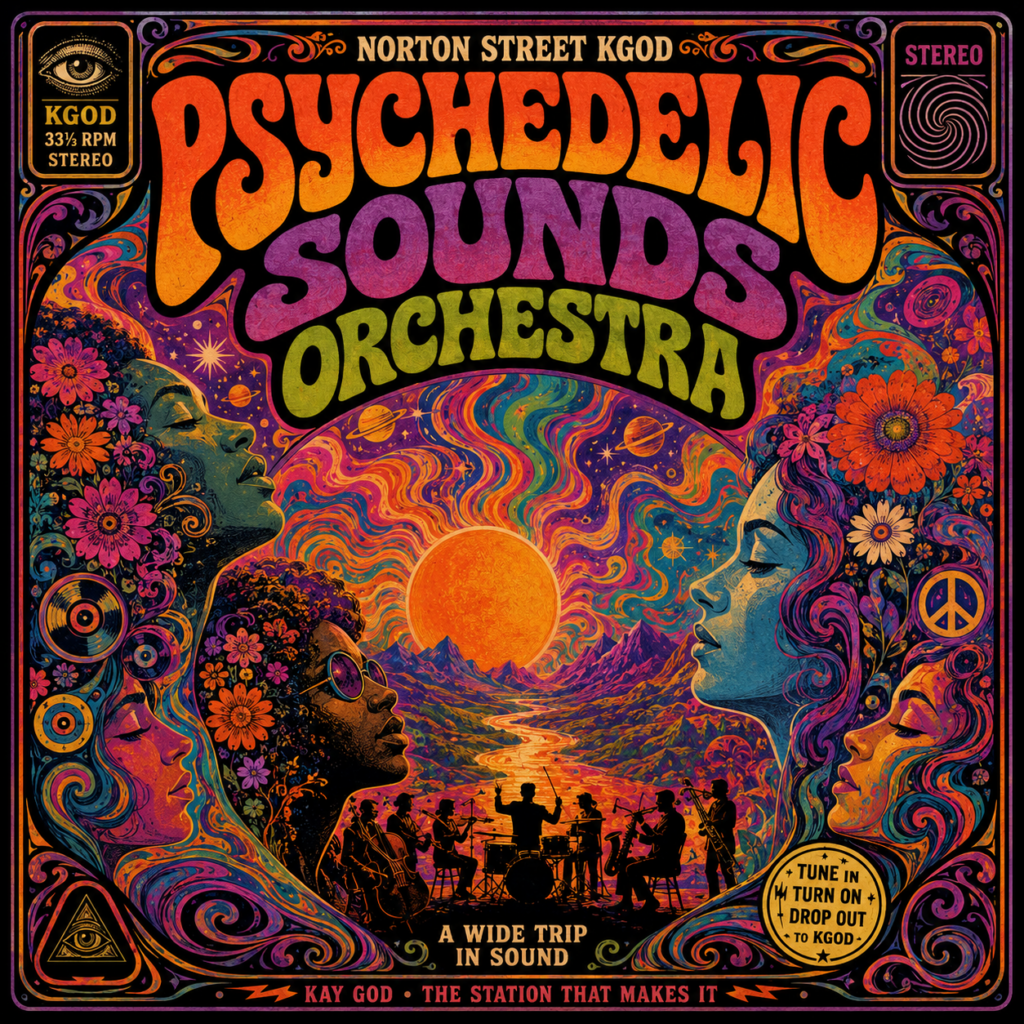
A Clinical Application of Norton Street
What happens if we stop treating Norton Street as entertainment for a moment and treat it as an instrument?
Not a medical instrument. We’re not proposing to cure arthritis, remove your gallstones or straighten your teeth with a three-hour performance of Norton Street. We’re talking about an instrument for the observation of attention, automatic behavior and momentary waking.
In other words, instead of studying Norton Street, we use Norton Street to study you.
Ordinarily, when you listen to a play, your attention is directed outward. What’s happening? Who is speaking? What does that mean? What’s going to happen next? Did I miss something?
But suppose those questions aren’t the point. Suppose the important event is taking place on the other side of the speakers.
You’re sitting in a chair listening. For a while, you’re following perfectly well. Then you’re thinking about breakfast. A few moments later you’re back in the play.
When did you leave? Why did you leave? What brought you back? Most importantly: Where were you while the play continued without you?
Now we have something worth investigating.
A Very Simple Experiment
Sit comfortably and play Norton Street. Don’t try especially hard to concentrate. Don’t attempt to enter a special state. Don’t meditate. Don’t improve yourself. Just listen.
Eventually something will happen. Your attention will wander.
That’s not a failure of the experiment. That’s the experiment.
At some point you may suddenly notice: I haven’t heard the last thirty seconds.
Excellent. Don’t worry about what you missed. Instead ask: What noticed that I wasn’t listening?
For thirty seconds, the machinery was perfectly capable of sitting in the chair while thoughts, memories, fantasies and associations ran through it. Then something changed.
Suddenly: I’m here.
That little transition is potentially much more interesting than whatever happened in the play during those thirty seconds.
Norton Street as a Diagnostic Mirror
A mirror doesn’t tell you what your face should look like. It merely gives you an opportunity to see it. Norton Street can function in much the same way.
Boredom appears. Interest appears. Confusion appears. Recognition appears. Impatience appears. Amusement appears. You like one character and dislike another. You anticipate the next line. You remember something from twenty years ago. You decide the scene is brilliant. You decide the scene is stupid.
Then perhaps you notice something rather peculiar: All of this is happening automatically.
You didn’t sit down and announce: “At minute seventeen I shall now become irritated.” The irritation simply appeared. So did the boredom. So did the amusement. So did the thought about lunch. So did the judgment.
The laboratory is getting interesting.
Change the Music
Now listen to the same Norton Street material performed in two radically different musical forms. Perhaps one is gospel and another is calypso. Or noir and grand opera. Or brass band and psychedelic rock.
The words may be substantially the same, yet somehow the scene doesn’t seem the same. One version feels profound. Another feels ridiculous. Another feels threatening. Another makes you laugh.
So where exactly is the meaning? Was it contained entirely in the words?
Apparently not.
Some portion of what you call the meaning of the scene is being manufactured inside the listener. Change the musical environment and the internal machinery produces a different result.
That’s useful information.
Repeat the Dose
Listen to exactly the same piece twice. The second time, you already know what’s coming, so presumably there should be less to discover.
Oddly enough, the opposite may happen.
You hear a line you don’t remember hearing the first time. How did you miss it? It was there. The recording didn’t change. Then perhaps another line suddenly has an entirely different meaning.
Again, the recording hasn’t changed. Something on the receiving end has changed.
Now we’re getting somewhere.
The Moment of Return
For our purposes, one of the most useful events is not losing attention. Everybody does that. The useful event is coming back.
You’re gone. Then you’re here. Gone. Here.
Usually we pay no attention to this transition. We immediately return to the story and try to figure out what we missed. But for this experiment, forget the story for a second.
Study the return.
There was apparently a period during which you were not aware that your attention had wandered. Then suddenly you were aware of it. Something became visible that had been invisible one second earlier.
We can call that many things. For the purposes of this experiment, let’s simply call it a waking moment.
No fireworks are required. No heavenly choir. No secret knowledge of the universe. Maybe just: Oh. I’m here.
And then you’re gone again. Fine. That’s another observation.
Why Norton Street?
Almost anything could theoretically be used for this kind of work. So why Norton Street?
Because Norton Street refuses to remain comfortably in one category. It can be theater, music, comedy or apparent nonsense. A moment later it can sound disturbingly precise. The same words can be sung by completely different voices in completely different musical worlds.
Just when you’ve established what sort of thing you’re listening to, it becomes something else.
The automatic machinery likes to know what’s happening. It identifies things, labels them and goes back to sleep.
Norton Street has an annoying habit of pulling the label off.
The Clinical Application
So here’s the basic procedure. Play Norton Street. Observe the listener. Don’t interfere.
Notice when attention is present and when it disappears. Notice emotional reactions. Notice automatic judgments. Notice expectations. Notice the body responding to music. Notice when the words disappear behind the music and when the music disappears behind the words.
And above all: notice the moment you notice.
That’s the event we’re looking for.
We aren’t trying to maintain it. We aren’t trying to become enlightened before the end of the album. We’re gathering observations.
One flash is enough to demonstrate something extraordinary:
There is a difference between automatically having an experience and knowing that you’re having it.
Once you’ve seen that difference for yourself, even briefly, Norton Street has done something considerably more interesting than entertain you.
It has become an instrument.
And you’re the laboratory.
===========================================================================
Here’s the Bardo bus now!
===========================================================================
See You At The Top!!!
gorby