

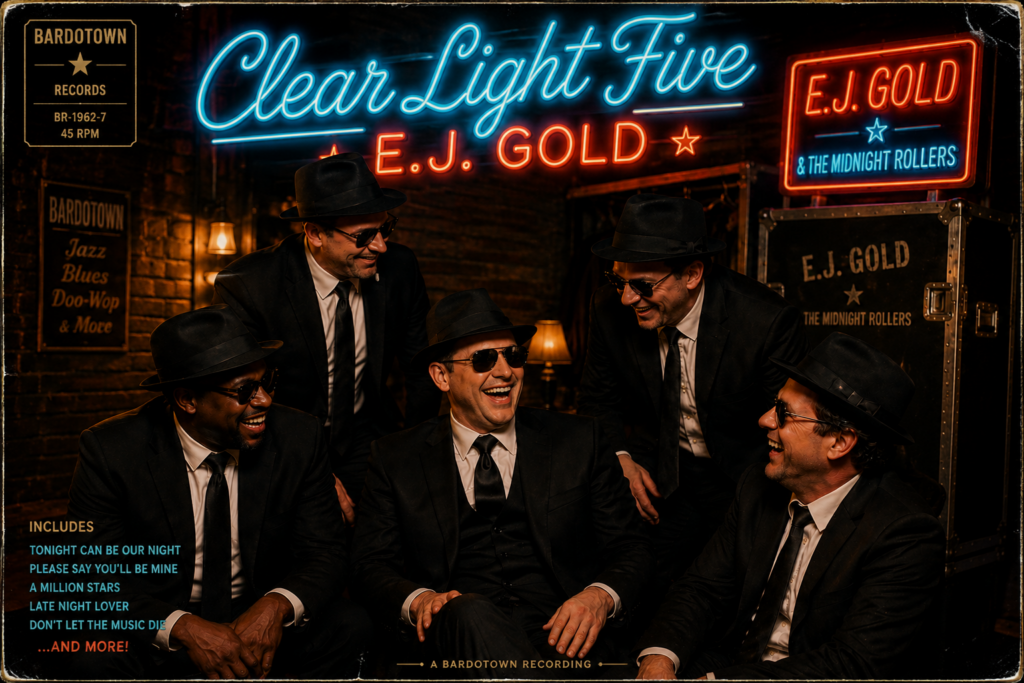
The story of The Clear Light Five begins, naturally, in the places where all dangerous harmonies begin: hallways, rooftops, alley echoes, and cheap coffee after midnight.
Nobody can quite agree where they first came from. Some people say Newark. Others insist South Philly. A few old-timers swear they first heard them drifting out of a parked Cadillac near a boardwalk somewhere along the Jersey coast in the summer of 1961.
What everybody does agree on is this:
when the five voices locked together, something happened.
Not flashy. Not theatrical. No screaming teenagers climbing over barricades. The Clear Light Five worked differently. They specialized in a softer kind of takeover. Their records didn’t explode into your life — they seeped into it. Somebody would put one on late at night, and suddenly the room felt different.
Their sound sat halfway between street-corner doo wop and smoky after-hours jazz. They wore dark suits, narrow ties, black hats, and carried themselves more like mysterious nightclub operators than pop stars. Reportedly they refused matching choreography because, as one member supposedly said:
“We’re not dancing. We’re transmitting.”
That line alone became legendary among collectors decades later.
The lead singer — always identified only as “Ray” in surviving interviews — had a voice critics described as “a man smiling while remembering heartbreak.” The group’s harmonies floated around him like neon reflections on wet pavement.
Unlike the cleaner commercial groups of the period, The Clear Light Five left imperfections in their recordings:
- breath sounds
- room echo
- fingers snapping slightly off-beat
- somebody chuckling in the background
- a chair squeaking during a take
Fans later insisted those flaws were the secret ingredient. The records sounded alive.
Their biggest regional hit was supposedly “Tonight Can Be Our Night,” followed by cult favorites like:
- “Late Night Lover”
- “Please Say You’ll Be Mine”
- “A Million Stars”
- “Don’t Let the Music Die”
Most of the original pressings vanished into jukeboxes, diner collections, and private parties. By the late sixties the group had already become rumor more than reality.
Then came the strange part.
Collectors began noticing that nobody could locate reliable documentation about the band. Photos existed. Records existed. Radio station playlists existed. But contracts, management paperwork, and touring records were mysteriously thin.
That only deepened the mythology.
Some claimed the group dissolved after a disastrous nightclub fire.
Others said they moved into session work under different names.
One persistent Bardotown rumor claims they never broke up at all, but simply kept performing in hidden lounges, private clubs, and stations “just off the dial.”
Which, honestly, explains why people still swear they hear them sometimes around closing time in old diners, just beneath the hum of the neon signs.
===========================================================================
Here’s the Bardo bus now, coming around the bend! Grab hold and brace yourself!
===========================================================================
See You At The Top!!!
gorby