

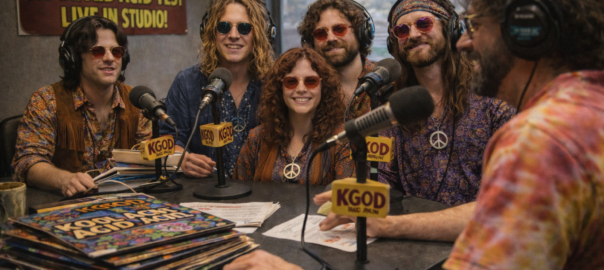
Music can be used as an instrument of personal transformation if you listen to yourself as carefully as you listen to the music.
For your entertainment, I have for you several experiments you might like to try:
1. The Before-and-After Experiment
Before playing a track, spend maybe thirty seconds noticing yourself in the following way:
How are you sitting?
What are you thinking about?
What mood are you in?
What seems important right now?
How does the room feel?
Then play the track.
Don’t try to change anything. Above all, don’t try to have an experience.
Afterward, ask the same questions.
What changed, if anything?
The change might be enormous—or almost ridiculously small. Both count.
2. Listen to the Same Song Three Ways
This could be especially useful because you’ve already developed these listening modes.
First, play it while doing something else.
Later, play it lying down with eyes closed.
Finally, sit still and give it your complete attention—perhaps even with the help of the SuperBeacon.
Now compare the three experiences.
Same recording. Same listener.
Was it actually the same music?
3. The Stranger Experiment
Choose music you normally wouldn’t select.
If you’re a jazz person, try gospel. If you love rock, try Victorian comic opera. If country makes you run screaming from the building, that’s an especially interesting candidate.
The purpose isn’t learning to like it.
It’s catching the machinery saying:
“I don’t like this.”
That’s valuable because suddenly the reaction itself becomes observable.
4. Catch the Moment You Leave
Start a song and attempt to remain present for the entire thing.
Sooner or later you’ll discover that you’ve been thinking about breakfast, an argument from 1973, tomorrow’s appointment, or whether the roof needs fixing.
The interesting moment isn’t getting distracted.
It’s:
“Oh! I was gone.”
There’s our waking experiment again.
5. The Different-Version Experiment
This may be the strongest one for the Norton Street material.
Take essentially the same words or dramatic material presented as gospel, blues, opera, psychedelic rock, cabaret, calypso, barbershop, whatever.
Don’t ask which one is better.
Ask:
Who am I when I hear this version?
One version might make memories appear. Another might produce humor. Another resistance. Another energy. Another unexpected familiarity.
The words haven’t substantially changed.
Something in the listener has.
6. Don’t Look for the Big Experience
This might be the heart of the whole blog.
Personal transformation doesn’t necessarily announce itself with thunder, visions and celestial trumpets.
Maybe after listening you suddenly telephone somebody you’ve been meaning to call.
Maybe you finish something you’ve avoided.
Maybe an old skill unexpectedly comes back.
Maybe you’re slightly kinder to somebody.
Maybe you catch an automatic reaction before acting on it.
Maybe for half a second:
“Oh. I’m here.”
And I think there’s your result:
Don’t ask whether the music transformed you.
Listen.
Then watch what happens next.
===========================================================================
Here’s the Bardo bus now!
===========================================================================
See You At The top!!!
gorby