

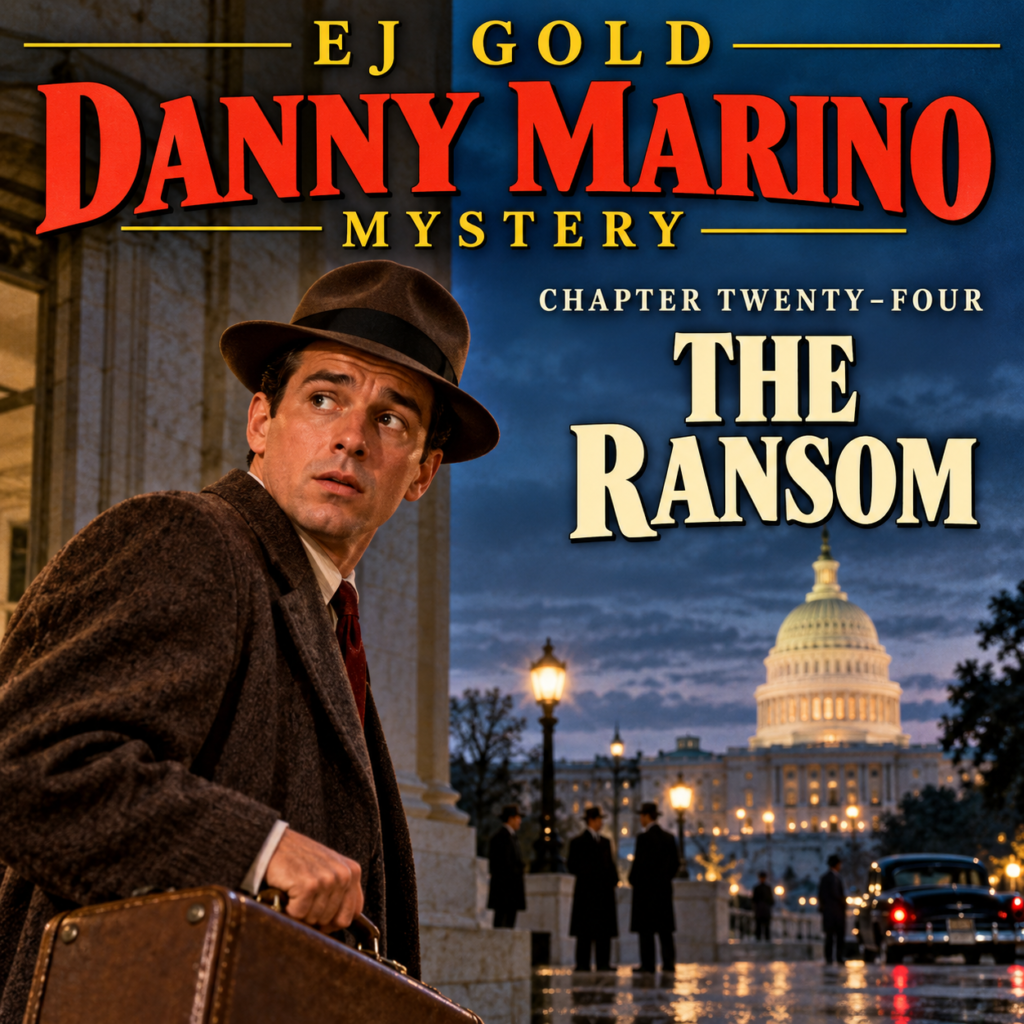
CHAPTER TWENTY-FOUR
THE RANSOM
Danny Marino was beginning to understand that getting rid of something was not the same as knowing where it went.
He was at home when he thought of this.
Home, in Danny’s case, was the second floor of an old warehouse in the meatpacking district, not far from Washington Street.
The place had once been used for storing cheese.
It had not stored cheese for a very long time.
It still smelled like cheese.
Danny had been there long enough that he no longer noticed it unless he went away for a few days. Then he would come back, open the door and remember.
The apartment was enormous.
Nobody called places like this apartments. It was simply a loft, a bare floor in a building that somebody had divided into three bedrooms, a large kitchen and an enormous bathroom.
The rest was one tremendous room. The ceiling was high enough to make changing a light bulb a serious undertaking requiring a more or less permanent scaffolding.
Iron pipes crossed overhead. The floor was dark, heavy wood, scarred by things considerably heavier than furniture. At one end were windows large enough to make Danny wonder why anybody had bothered building a wall around them.
In the middle of the enormous living room was a parrot in a cage.
The parrot’s name was Charlie. Danny had not named him. The parrot had arrived with the cage and the cage had arrived with the apartment. Danny wasn’t entirely certain who owned either one. Charlie was green, suspicious and considerably older than Danny had originally been told.
Danny was sitting at the kitchen table drinking coffee.
Charlie watched him from the center of the room.
“Don’t start,” Danny said. Charlie tilted his head. Danny drank his coffee. “Danny!” Charlie squawked loudly.
Danny looked at the bird. “What?”
“Danny.” “That’s me.”
Charlie climbed sideways along his perch. Danny returned to his coffee. “Where’s the money?”
Danny looked up. Charlie stared at him.
“That’s a good question,” Danny said.
“Where’s the money?” the bird persisted.
“I don’t know.”
“Danny.”
“What?”
“Where’s the money?”
Danny stood up and carried his cup to the sink. “You find out, let me know.”
Charlie whistled.
Danny put on his coat. Danny had no idea why. Every few years somebody with a badge that said “building inspector” came around and looked at the place as though a terrible mistake had been made. Then they went away.
Danny had learned not to ask questions. He crossed the enormous room.
“Danny,” Charlie said.
Danny stopped at the door.
“What?”
“Where’s the money?”
Danny looked around the warehouse.
Three generously large and well-furnished bedrooms.
A commercial-sized kitchen with a Wolf range and hood..
A bathroom with a deep wide tub and two sinks.
A well-furnished living room big enough to hold a prizefight. Three Eames chairs sat in the middle, with an Eames footstool to match. A self-portrait of Fritz Schwaderer was mounted on the far wall.
And somewhere underneath everything, even after all these years of emptiness, there was always the overpowering odor of millions of pounds of cheese.
Danny looked at Charlie. “Where’s the money? That’s what everyone would like to know.”
Charlie said nothing. Danny went downstairs. By early afternoon he was at the Downtown Athletic & Bridge Club earnestly doing nothing. This was not unusual.
Tony Spada was behind the desk reading the racing form. Nicky Bellomo was at the card table eating a roast beef sandwich and dropping small pieces of it onto his shirt.
Danny had been watching one particular piece of roast beef for several minutes. It had landed just below Nicky’s left lapel. Nicky hadn’t noticed it. Danny wondered how long it would stay there.
The telephone rang. Tony picked it up. “Yeah.”
He listened. “No.”
Another pause. “Where?”
Tony put down the racing form. Danny stopped watching the roast beef.
Tony listened for a long time. “You’re sure?”
Another pause. “All four?”
Tony looked at Danny.
Danny didn’t like that.
Whenever Tony looked at him during a telephone conversation, Danny usually wound up taking a subway somewhere.
Tony turned away.
“How’d they get there?” He listened.
“I don’t care who drove.” Another pause.
“I’m asking how they got there.” Tony listened again.
Then he said: “Washington?”
Danny sat up. Tony held the telephone away from his ear for a moment and stared at it. Then he put it back. “Washington, D.C.?”
Another pause. “I know there’s only one.”
Tony listened. Nicky had found the roast beef on his jacket. He picked it off and ate it.
Tony said: “All right.”
He hung up. Nobody spoke. Tony picked up the racing form. Danny waited. Nicky took another bite of his sandwich.
Finally Danny said: “Washington?”
Tony didn’t look up. “Washington.”
“All four cases?”
Tony turned a page. “All four.”
Danny considered this.
“That sounds good.”
Tony looked at him.
“Why?”
“They’re not here.”
Tony looked back at the racing form.
“That part’s good.”
Danny waited.
There was apparently another part.
After a while Tony folded the paper.
“They made a demand for money.”
“What demand?”
“They’re demanding a ransom for the city of Washington, D.C.”
Danny stared at him.
“The cases? They must be somewhere in Washington. Maybe they can find them.”
“They won’t blow up Washington if the ransom is paid.”
Danny thought about that.
“How much?”
“Fifty trillion dollars.”
Nicky stopped chewing.
“Fifty trillion?”
Tony looked at him.
Nicky resumed chewing.
Danny said, “Who’s supposed to pay it?”
Tony looked at Danny for several seconds.
“That seems to be the problem.”
The telephone rang again.
Tony picked it up.
“Yeah.” He listened.
“No.” Another pause.
“When?” He listened. “What’d they say?”
Tony’s expression didn’t change.
Danny had learned that Tony’s expression not changing was sometimes more significant than somebody else’s expression changing.
Tony said: “They said they’d get back to you?”
Pause.
“And did they?”
Pause.
“All right.”
He hung up.
Danny waited.
Tony picked up the racing form again.
“What did they say?”
“Nothing.”
“Nothing?”
“They haven’t answered.”
“Who hasn’t?”
Tony lowered the paper.
“Washington. The government. The mayor. The House Speaker. Everybody.”
Danny wasn’t sure how an entire city could answer a telephone, but he decided not to ask.
Nicky said, “Maybe they’re getting the money.”
Tony looked at him.
“Fifty trillion dollars takes time.”
Tony continued looking at him.
Nicky took another bite.
The telephone rang.
Tony answered. “Yeah.”
He listened. “No.”
Another pause. “No, don’t do anything.”
He listened. “I said, don’t do anything.”
Pause. “Because I said so.”
He hung up. Danny said, “What happened?”
“They lowered it.”
“What, the ransom?”
“Now they only want Forty trillion.”
“That was fast.”
Tony didn’t answer.
Nicky said, “Maybe that’s smart.”
Tony turned toward him.
Nicky shrugged.
“Guy offers thirty, settle at thirty-five, split the difference.”
“Nobody offered thirty.”
“Okay, I get it.” Tony went back to his paper. Twenty minutes passed.
Danny began watching a mustard stain gradually develop on Nicky’s right cuff.
The telephone rang. Tony didn’t move.
It rang again. On the third ring he picked it up. “Yeah.”
He listened. “How much now?”
Pause. Tony closed his eyes. “All right.”
He hung up. Danny waited.
“They’ll settle for three million,” Tony said.
Nicky nodded.
“See?”
Tony stared at him.
Nicky concentrated on his sandwich.
Danny said, “Maybe nobody believes them.”
“They believe them.”
“Then why don’t they pay?”
Tony opened the racing form.
“That is presently under discussion.”
Another half hour passed.
A man Danny had seen twice before came into the club, whispered something to Tony and left.
Tony didn’t react.
Danny waited.
Finally he asked:
“What did he say?”
“Washington. Nobody wants to pay the ransom. They say it’s not worth it, no matter what they say.”
Danny whistled. Tony looked at him. Danny stopped whistling. Nicky finished the sandwich and carefully folded the wax paper.
“You know what the problem is?”
Nobody asked him.
Nicky continued anyway. “They started too high.”
Tony stared at him.
“You start at ten, maybe they give you five.”
“Nicky.”
“Yeah?”
“Go get coffee.”
Nicky stood up.
“For everybody?”
“No. Just go get coffee.”
Nicky put on his coat and left.
Danny watched the door close.
“Was that so he’d stop talking?”
“Yes.”
“Okay.”
The telephone rang.
Tony answered.
This conversation lasted less than ten seconds.
Tony hung up.
“They brought it down to a hundred thousand.”
Danny leaned back in his chair.
“This isn’t going very well.”
Tony gave him a long look.
“You think?”
“I mean for them.”
“I know what you mean.”
“Maybe Washington isn’t worth a hundred thousand.”
Tony stared at him.
Danny reconsidered the sentence.
“I mean to whoever’s supposed to pay.”
Tony continued staring.
“Yeah. That’s what I meant.”
Tony picked up the racing form.
Nicky came back carrying one very scalding cup of coffee.
Tony looked at it. “Where’s ours?”
“You said get coffee.”
“I meant get coffee.”
Nicky looked at the cup.
“This is coffee.”
Tony rubbed his forehead. “Sit down.”
Nicky sat. The telephone rang again. Tony didn’t answer it. It rang five times.
Stopped.
A minute later it rang again. Tony picked it up.
“What?” He listened. His expression changed slightly. Danny noticed.
“How much?” Tony listened.
“You’re kidding.” Another pause.
“No. I believe you.” He hung up.
Danny waited. Tony didn’t say anything.
Nicky drank his coffee.
Finally Danny asked:
“How much?”
“Now it’s down to twenty-five thousand.”
“From trillions of dollars?”
Tony nodded.
Danny thought about that.
“They came down from trillions?”
“Yes.”
“In one afternoon?”
“Yes.”
Nicky said, “Like I said. They should’ve started at ten.”
Tony looked at him. Nicky drank his coffee. The telephone rang. Tony picked it up immediately.
“Yeah.” He listened.
Then he said: “What do you mean, counteroffer?”
Danny leaned forward.
Tony listened.
His face became completely blank.
“How much?”
Long pause.
“You sure that’s what he said?”
Tony listened.
“All right.”
He slowly put down the receiver.
Danny waited.
Even Nicky was watching him now.
Tony stared at the telephone.
Finally Danny said:
“Well?”
Tony looked at him.
“They got a counteroffer.”
“From Washington?”
“Apparently.”
“How much is their counteroffer?”
Tony didn’t answer immediately.
Then he said: “Two hundred and fifty dollars.”
Nicky frowned. “That’s insulting.”
Tony ignored him. Danny said, “Two hundred and fifty dollars for the city of Washington?”
“No.”
Tony leaned back in his chair. Danny waited. Tony looked at the ceiling.
“They’ll pay two hundred and fifty dollars if somebody comes and takes the bomb away.”
Nobody spoke. Nicky slowly lowered his coffee cup.
Danny thought about this for a while.
“So now what? What are we supposed to do now?”
Tony looked at him. That look again.
Danny sighed. He knew another errand was the next step. “Where am I going?”
Tony opened the desk drawer. He took out an envelope and slid it across the desk.
Danny looked at it. He didn’t touch it. “What’s that?”
“Train fare.” Danny looked at Tony.
“Where?” Tony picked up the racing form.
“Washington.” Danny looked at the envelope. Then at Tony. Then at the envelope again. “What am I supposed to do when I get there?”
Tony turned a page.
“Find out if they’ll take a check.”
===========================================================================
CHAPTER TWENTY-FOUR BREAKDOWN
THE RANSOM
Chapter Twenty-Four takes the nuclear threat that has been hanging over New York and turns it completely inside out.
The four cases have finally made it to Washington, D.C.
From the point of view of Tony Spada and the New York people, this ought to be good news. Whatever else may happen, the cases aren’t in New York.
But in Danny Marino’s world, solving one problem merely creates another.
The people holding the device demand fifty million dollars in ransom. The threat is simple: pay the money or Washington goes.
Then something unexpected happens.
Nobody pays.
The ransom begins dropping.
Fifty million becomes forty million.
Forty becomes thirty.
Then twenty-five.
Then fifteen.
Finally the demand falls all the way to five million dollars.
Still nothing.
This reverses the normal structure of a kidnapping story. Usually the kidnappers possess something so valuable that the victim will pay almost anything to get it back.
Here, the kidnappers discover that they may have acquired something nobody particularly wants returned.
The joke echoes the structure of O. Henry’s The Ransom of Red Chief, in which kidnappers discover that their captive is such a burden that the transaction eventually reverses direction.
Washington finally makes a counteroffer.
Two hundred and fifty dollars.
But the two hundred and fifty dollars isn’t a ransom.
Washington will pay the money if somebody comes and takes the bomb away.
The entire extortion scheme has now turned backward.
Throughout the chapter, however, nobody behaves as though anything funny is happening.
That is important.
Tony remains Tony. He reads his racing form. Telephone calls arrive. Information is passed in fragments. Nobody explains more than necessary.
Nicky remains Nicky.
He eats.
He gets roast beef on his jacket.
He gets mustard on his cuff.
He offers completely unnecessary advice about how the kidnappers should have negotiated the ransom.
When Tony sends him out for coffee simply to stop him talking, Nicky returns with exactly one cup of coffee because Tony said, “Go get coffee.”
The comedy isn’t delivered as comedy.
It simply happens.
Danny occupies his usual position in the middle.
He understands enough to realize that the situation is absurd, but not enough to know why any of it is happening.
Most importantly, Danny is still nobody.
That makes him useful.
At the end of the chapter, Tony slides an envelope across the desk containing train fare.
Danny already knows what that means.
Another errand.
Another city.
Another situation nobody has bothered to explain.
Danny asks what he’s supposed to do when he gets to Washington.
Tony gives him the assignment:
“Find out if they’ll take a check.”
And the story continues.
There is no approach toward a final resolution here.
The bomb does not need to be disposed of. The conspiracy does not need to be uncovered. The mysterious people behind it do not need to be identified.
Every apparent solution can simply create the next problem.
The cases can move.
They can disappear.
They can be stolen, recovered, misplaced, exchanged, delivered to the wrong person or sent somewhere nobody expected.
Meanwhile Tony still has messages that cannot be sent by telephone.
Nicky still needs lunch.
Men who cannot be seen together still need to communicate.
Umbrellas can still be wrong.
Nickels can still matter.
And Danny Marino can always be sent somewhere.
That is becoming the underlying mechanism of the Danny Marino Mystery:
Nothing ends. Something else happens.
===========================================================================
Hooray, here’s the Bardo bus!!!
===========================================================================
See You At The Top!!!
gorby