

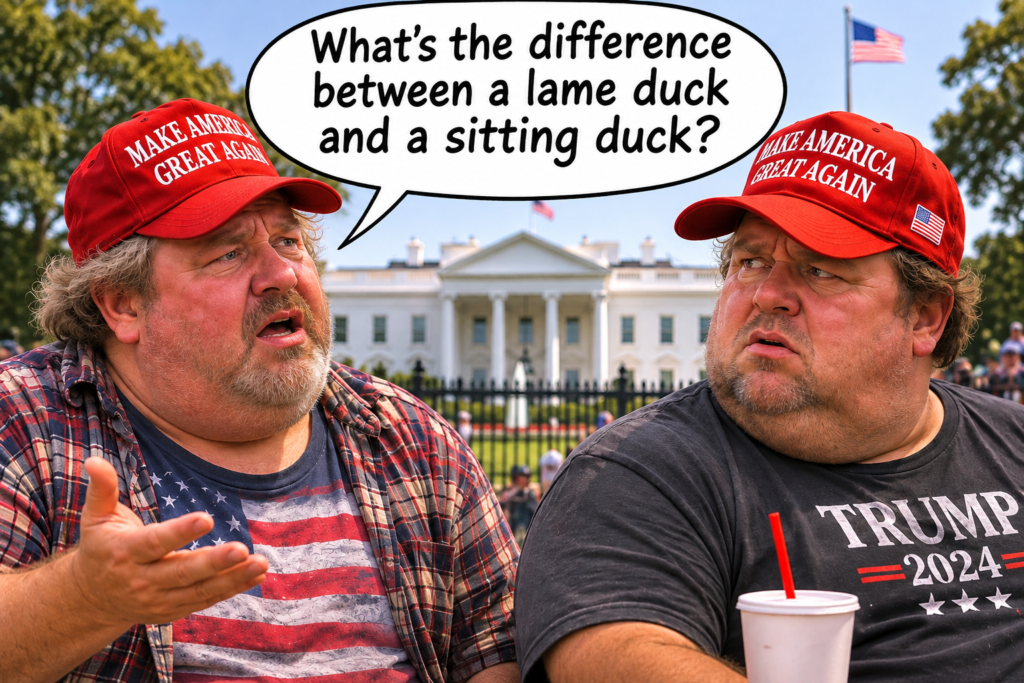
I’m using these characters as commentators. This evening, it occurred to me to construct the following amusing cartoon:
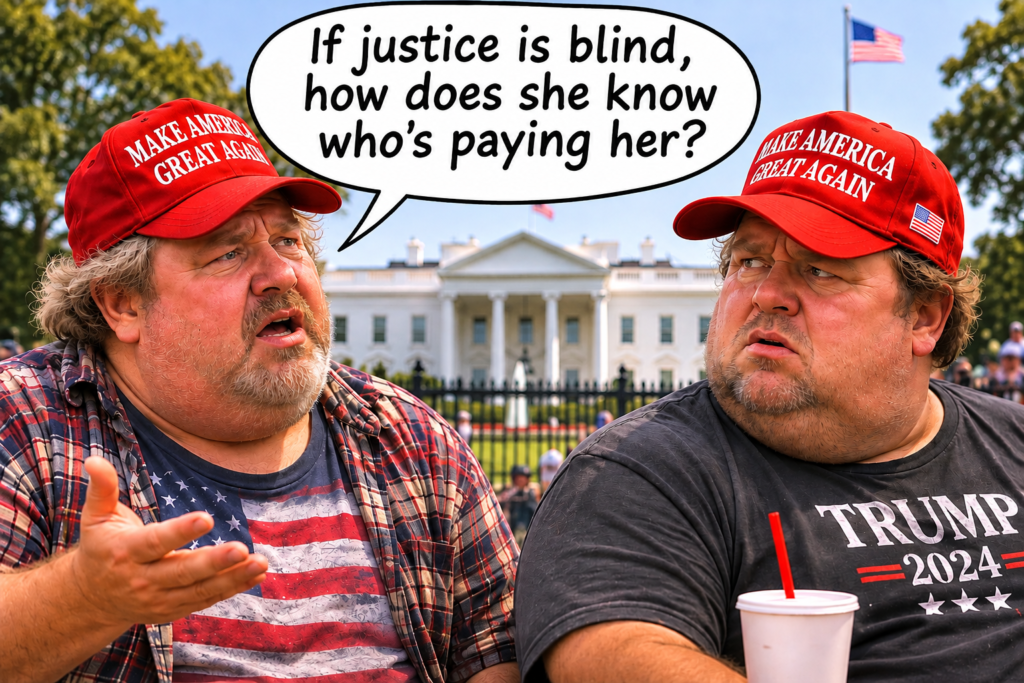
then i worked it a little more…
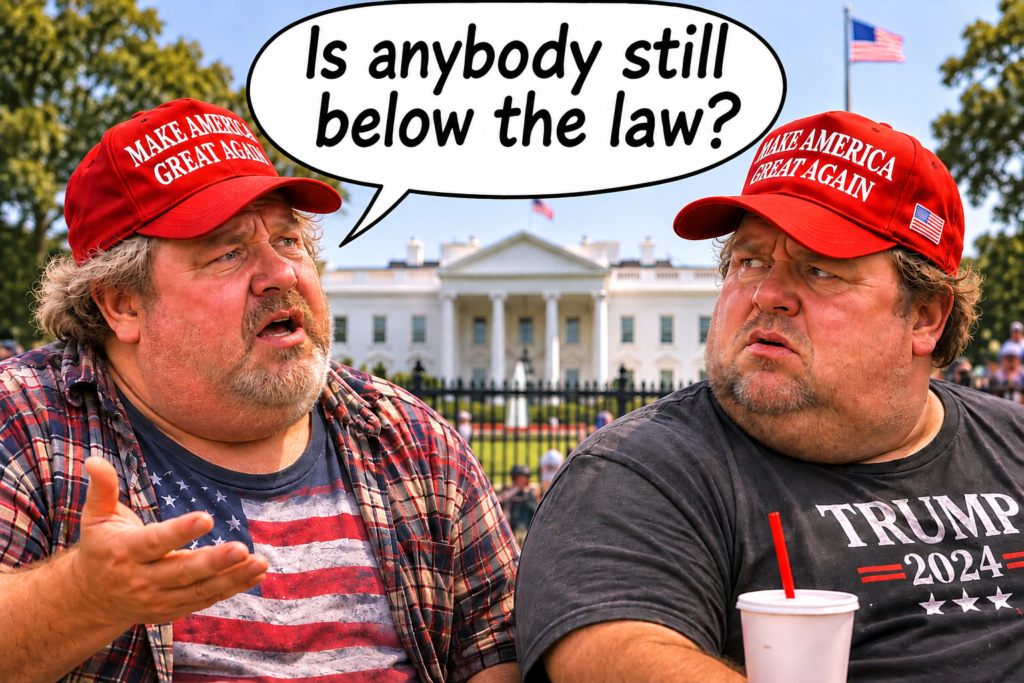
and another shot over the bow:
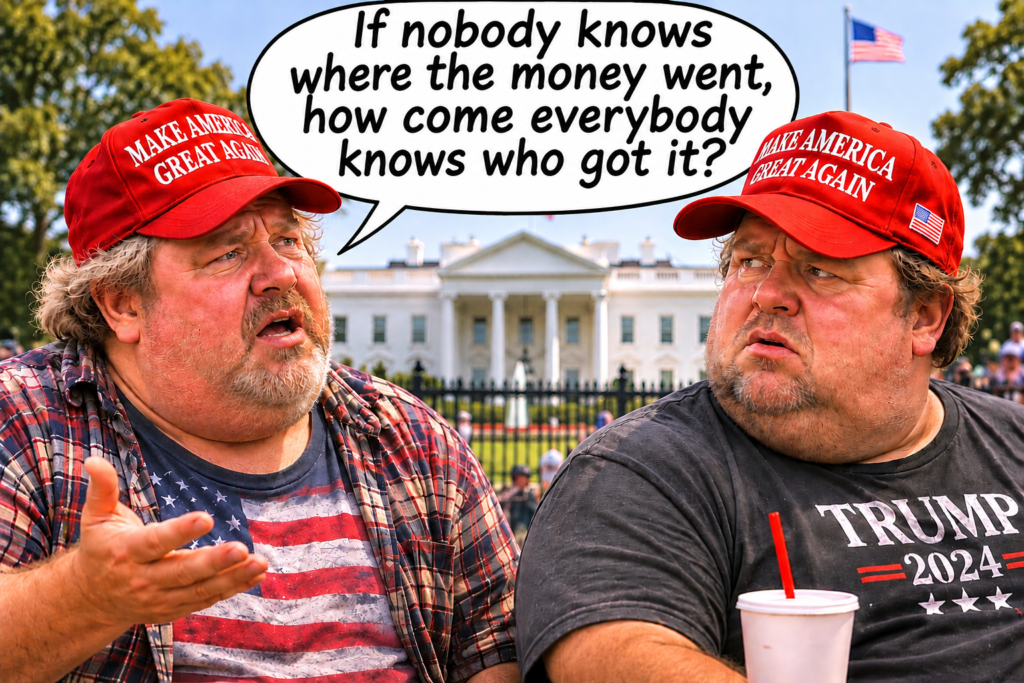
and then i wrote:
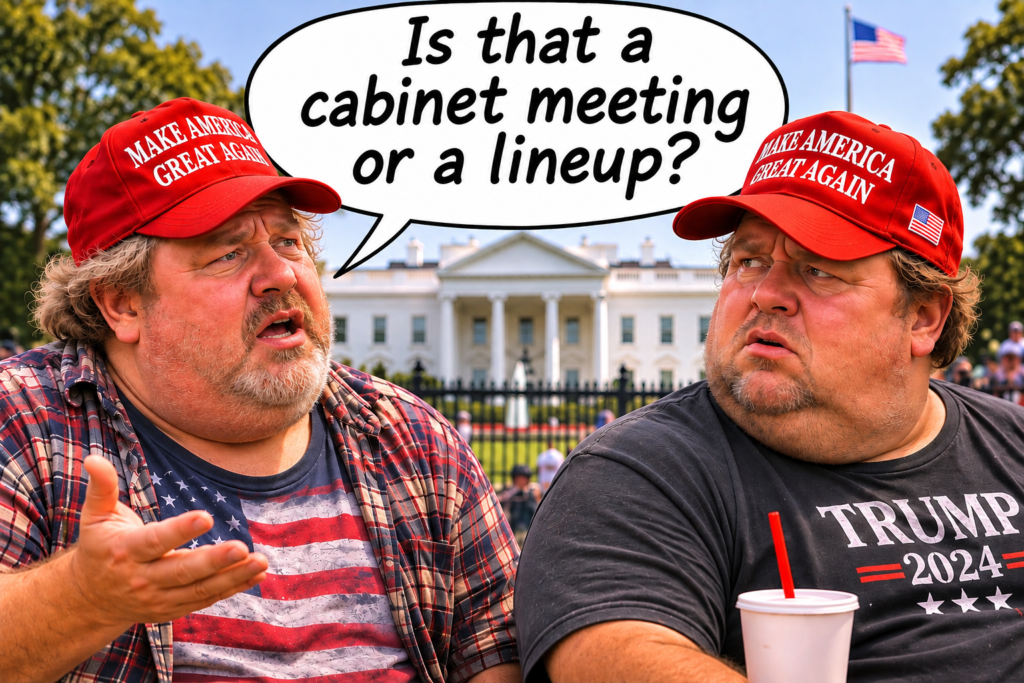
I’m working with these two characters to develop a cartoon jokebook. Hope you like it.
===========================================================================
CARTOONING OUR TIMES WITH CHATGPT
A New Way to Practice an Old Art
Political cartooning has always been one of the sharpest instruments of free expression. A single picture and a few carefully chosen words can accomplish what a thousand-word editorial cannot.
Now, with ChatGPT and AI image generation, almost anyone with a sense of humor, an opinion, and a little imagination can become a political cartoonist.
You don’t have to know how to draw.
Drawing skills are not necessary. If you have them, by all means use them. You don’t need expensive equipment, a publisher, or an editorial staff. You only need an idea, a computer, and a willingness to experiment.
The secret is collaboration.
You don’t need special comedy skills, either.
Start by asking ChatGPT to examine current headlines, political developments, and the absurdities of public life. Ask for twenty possible cartoon punchlines. Don’t expect all twenty to be winners. You’re prospecting for gold, and sometimes the best nugget is buried among a dozen ordinary rocks.
It’s up to you to supply the “Gezertenplat” — meaning your own twists, editorial concepts, your own judgment, and here’s how you do that:
You choose the lines that make you laugh. Better yet, choose the ones that make you laugh and think at the same time.
Then develop your characters. Describe your characters to your chatbot and let the gpt produce a sample. I went through several possible choices to get my characters. I always use the same characters, always at the white house — make that mostly at the white house.
My own experiment with this practice began with two bewildered fellows wearing red MAGA hats, standing around Washington D.C. asking perfectly reasonable questions.
They’re not particularly bright, but they’re not entirely stupid, either. Their special talent is accidentally noticing things that more sophisticated people carefully avoid mentioning.
Once you’ve established your characters, save a good example of their appearance. Upload that image to ChatGPT whenever necessary, to maintain visual continuity.
Now you have a recurring cast.
Place them in front of the White House, the Capitol, the Supreme Court, or anywhere else that provides an appropriate background.
Give them one line.
One line is usually enough.
For example:
“What’s the difference between a lame duck and a sitting duck?”
No answer is necessary. In fact, an answer might ruin the cartoon. Note that I have used part of a riddle to create a one line gag. It can be any one line, and please keep in mind the secret of comedy: a riddle is not a joke and a professional joke is a gag.
That’s one of the great secrets of humor: Let the audience finish the joke.
Work with ChatGPT as you would with a fellow cartoonist sitting across the table. Reject weak ideas. Improve promising ones. Ask for alternatives. Change a word or two. Try a different setting.
The human supplies judgment, taste, experience, and editorial direction. ChatGPT supplies rapid variations, suggestions, and visual possibilities.
Neither partner needs to get everything right on the first attempt.
Political cartoons should also distinguish between documented events and imaginative exaggeration. Satire can be outrageous without presenting invented accusations as established facts.
And don’t overlook the importance of freedom of expression.
Throughout history, political cartoonists have been censored, threatened, imprisoned, and occasionally killed for making powerful people look ridiculous. The freedom to ridicule public officials is an extraordinary privilege, and one worth exercising and defending.
Today, a person working at home can create and publish a cartoon within minutes of encountering a news story.
No printing press. No editorial approval. No permission from the people being criticized.
The technology is new, but the principle is ancient. The court jester has merely acquired a computer, and the emperor still isn’t wearing any clothes.
So open ChatGPT, look at today’s headlines, and ask your chat GPT a dangerous little question:
What’s so funny about what’s going on right now??? (or today).
You might be surprised at the answer. And it could be really funny.
===========================================================================
Hooray, here comes the Bardo bus now!
===========================================================================
See You At The Top!!!
gorby