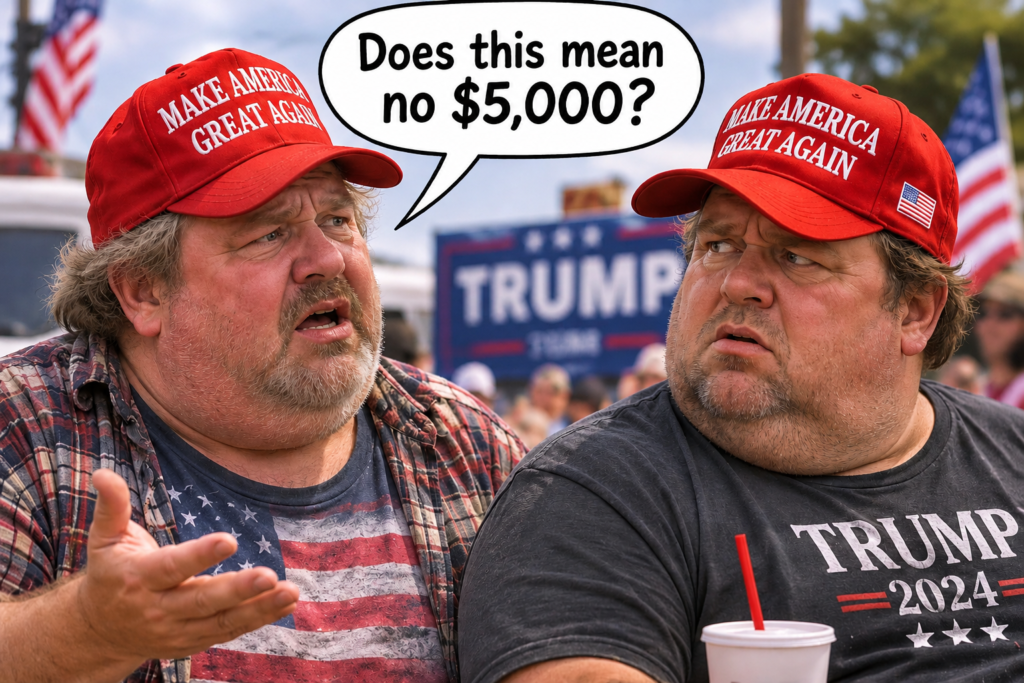
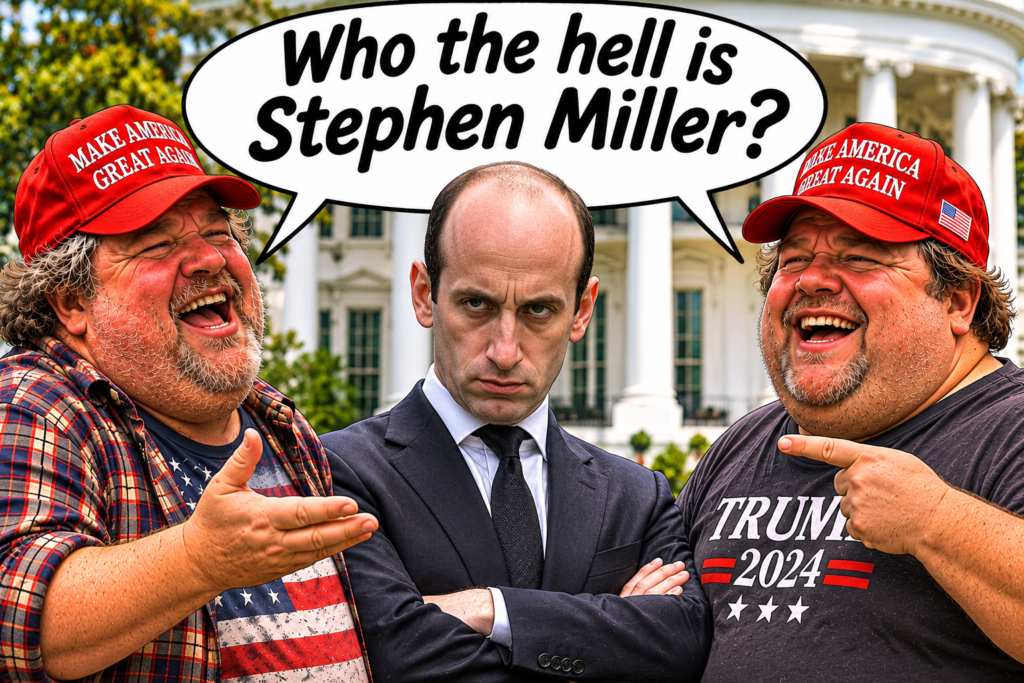
I’ve been looking for ways to insult stephen miller, and came up with this cartoon in the middle of it all.
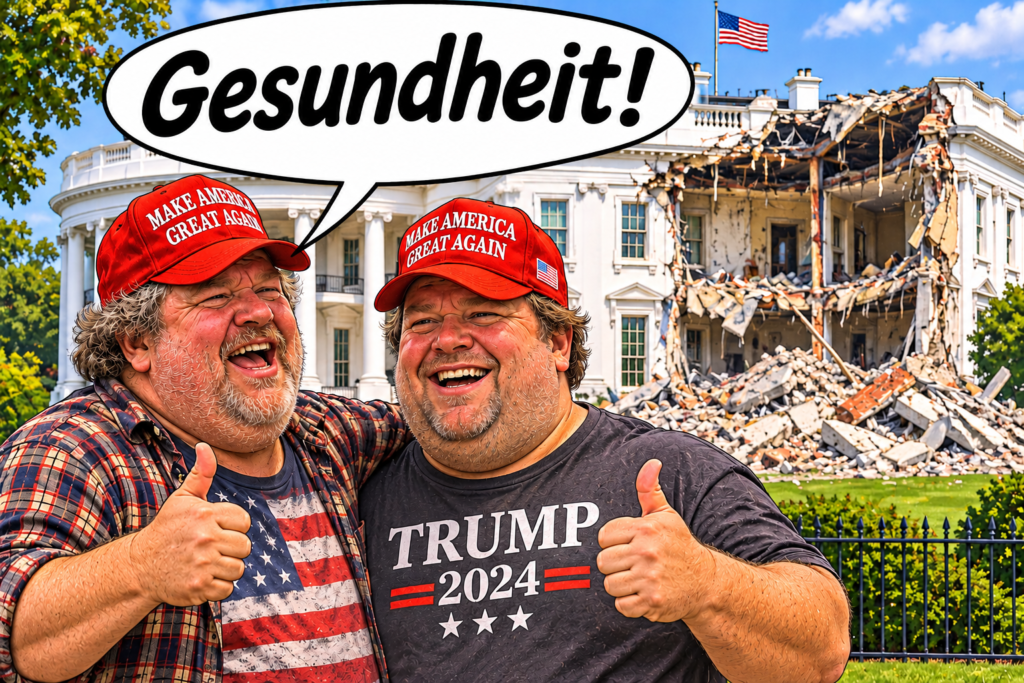
The thing is, when making a political cartoon, you have to have the punchline first. It’s not easy to come up with one out of the blue.
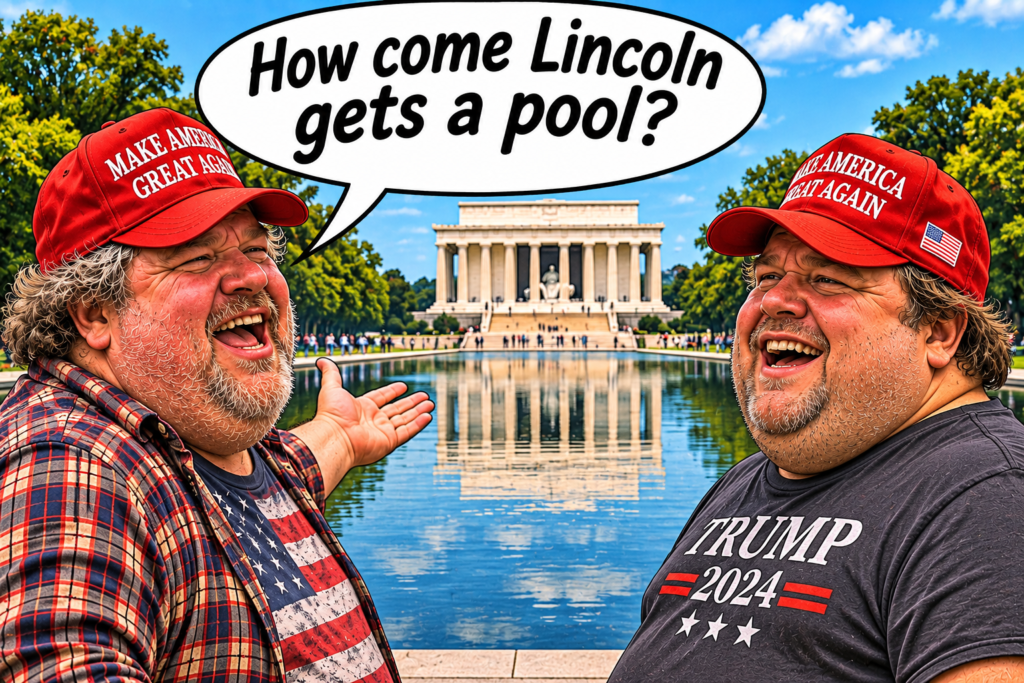
Once in a while, something will strike you. Most of the time, the line’s a dud. Keep working at it, trust in the process.
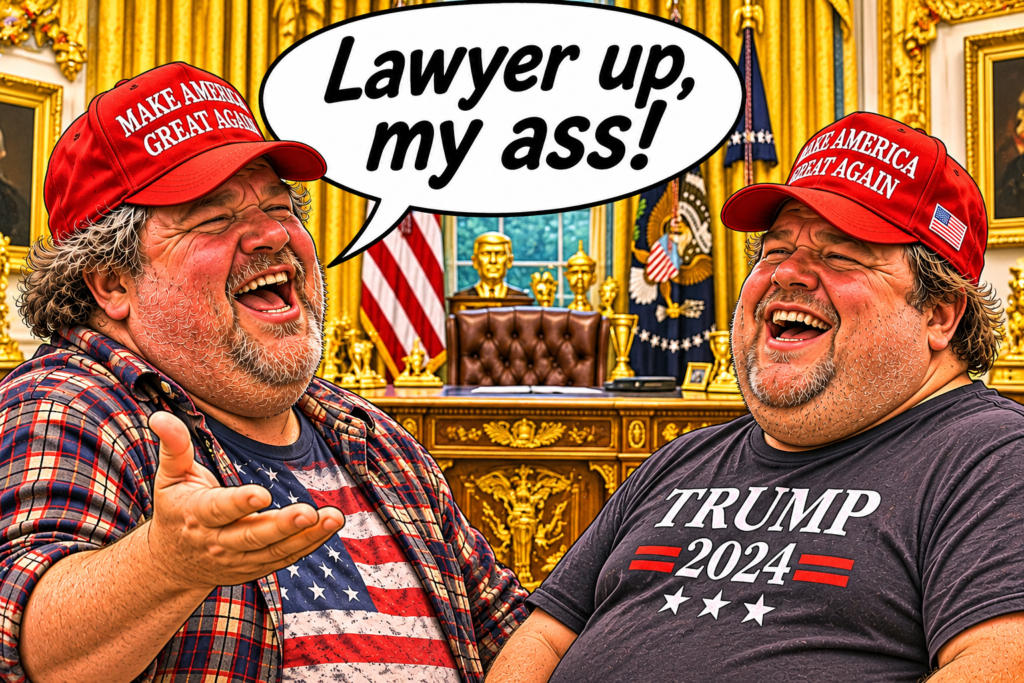
Remember that the joke has to be obvious or it won’t fly.
POLITICAL CARTOONING: THE FREEDOM TO LAUGH AT POWER
editorial By E.J. Gold
Political cartooning is one of the most remarkable freedoms enjoyed by citizens of a democratic society. It is also one of the least appreciated.
Throughout history, kings, emperors, dictators, religious authorities, and political rulers have generally taken a dim view of being ridiculed. Making fun of the wrong person could mean imprisonment, exile, confiscation of property, or even execution.
The political cartoon is therefore much more than a joke. It is a public demonstration that authority can be questioned, criticized, exaggerated, and laughed at without requiring the permission of the person being ridiculed.
In the United States, political satire enjoys substantial protection under the First Amendment. A president can be portrayed as a clown, a fool, a tyrant, or an incompetent without the cartoonist having to prove that the caricature is literally true.
This is an extraordinary privilege, historically speaking, and by no means universal today.
Political cartooning has a long tradition, from the biting illustrations of James Gillray and Honoré Daumier to Thomas Nast, Herblock, and the editorial cartoonists of our own time. Some faced censorship, prosecution, or political pressure. Their work reminds us that freedom of expression has never been entirely secure.
Now artificial intelligence has placed a new instrument in the cartoonist’s hands. A single individual can produce elaborate visual satire that once required a professional illustrator, photographer, film crew, or animation studio.
The technology has changed. The fundamental principle has not.
The right to ridicule authority is one of the practical tests of a free society.
A government that tolerates criticism but cannot tolerate laughter has not fully accepted the principle of free expression.
Political cartoons do not have to be polite, fair, tasteful, or even particularly clever. They are allowed to be outrageous, ridiculous, insulting, and absurd.
That is precisely the point.
Freedom of speech is not demonstrated by our ability to praise the powerful. It is demonstrated by our ability to laugh at them.
And whenever we exercise that freedom, we participate in a rare and historically hard-won human achievement.
Couldn’t resist one more gag, which I append below:
===========================================================================
Here’s the Bardo bus now!
===========================================================================
See You At The Top!!!
gorby