
I hear you asking, “What are the stages of Coinlightenment?”, but shouldn’t you first be asking, “What the hell is Coinlightenment, anyway???”, or “How the hell do I use Coinlightenment?”, or “Why should I bother to mess with Coinlightenment???”.
I’ll answer your third question first. There’s money in them-thar hills, is why.
Coin Knowledge means cash in the pocket and a feather in the cap. You’ve found something, discovered something, uncovered a treasure in a penny.
Let’s take a look at your “Pilgrim’s Progress” toward Coinlightenment:
- IT’S JUST A PENNY — This is the first dawning of an awakening consciousness. There is a realization that a penny is present, and that it is a penny, although at this stage, it’s JUST a penny, meaning that it is insignificant and generally unworthy of special notice.
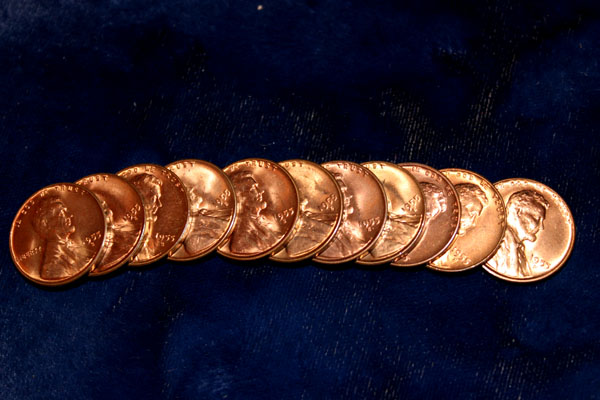
- IT’S A LINCOLN PENNY — In the Second Stage of Coinlightenment, one becomes dimly aware that there is an entire run or set or collection or something, related to pennies that look similar to this one.
- IT’S A LINCOLN CENT — Now in the Third Stage, the consciousness is becoming aware of the fact that this is a particular issue of a particular type of currency.
- IT’S A CIRCULATED LINCOLN CENT — In the Fourth Stage of Coinlightenment, the awareness of many different possible states and applications of a U.S. coin becomes somewhat present, along with a general concept of how U.S. copper coins are manufactured.
- IT’S A CIRCULATED LINCOLN WHEAT-BACK CENT — In this Fifth Stage of Coinlightenment, one becomes aware of the special set of Lincoln cents that were made from 1909 until 1958, when the reverse design was changed from the double wheats to the memorial building. It is presently a shield, but this is soon to change once again.
- IT’S A TEEN DECADE LINCOLN WHEAT-BACK CENT — Now the dawning of true Coinsciousness is breaking upon your shining intellect — you are acutely aware that Lincoln cents can be sorted into decades, and that each decade has its own unique characteristics and expectations, such as distribution patterns, with the first year, fifth year, sixth year, seventh year, eighth year and ninth year being dominant in numbers, with the second, third and sometimes fourth year being on the scarce or downright rare side.
- IT’S A 1912 LINCOLN WHEAT-BACK CENT — At last, you’ve taken the time and spent the energy to look more closely at the coin, now taking note of the date, but is there more?
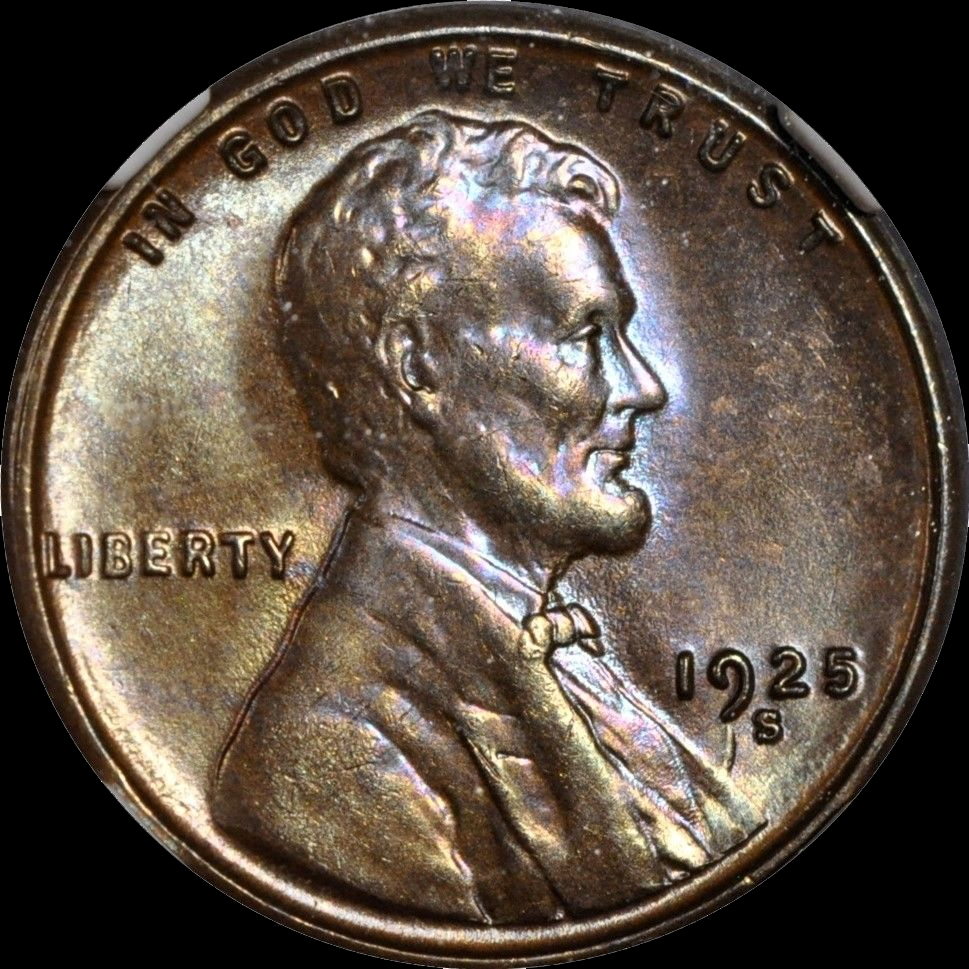
- IT’S A 1912-S LINCOLN WHEAT-BACK CENT — Aha! Now you see that it is not merely a common Lincoln cent, but a mint-marked coin, notably from the San Francisco Mint, noted for their continual screwups, resulting in many wondrous error coins, so many of them that you might wonder how they got past the guards at the gates, and most of them didn’t.
- IT’S A HIGH-GRADE 1912-S LINCOLN WHEAT-BACK CENT — Okay, you can SEE that there’s grade here, but how much grade, exactly?
- IT’S AN MS-65 RD 1912-S LINCOLN WHEAT-BACK CENT — Congratulations, you’re almost home! Keep struggling! Peer more keenly! Penetrate the Mystery!
- IT’S AN MS-66 RD 1912-S LINCOLN WHEAT-BACK CENT WORTH ABOUT $13,000! — Now you’re just one step from the Ultimate Realization:
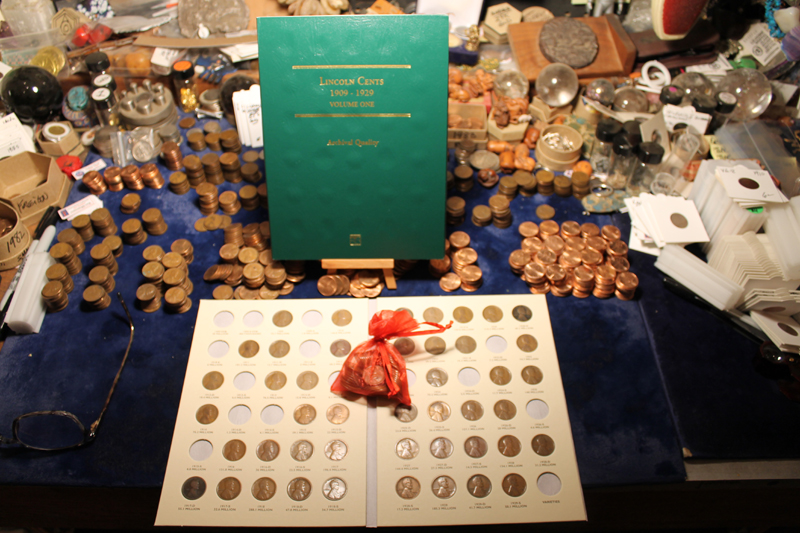
- WOW! IT’S AN MS-66 RD 1912-S LINCOLN WHEAT-BACK CENT, POP 1, I’M KEEPING THIS!!! — You have finally gone completely over the top. You’re fully initiated and ready to handle the Bardos like a pro, and you are now doomed to be a hopeless Lincoln Set collector with no hope of recovery!