

I’m going to show you how to hide a spiritual practice right in front of a government goon looking for anything suspicious — like freedom.
The New Dance Craze: Angel Callings
Straight from the underground scene and already tearing up dance floors worldwide, Angel Callings is the sound you didn’t know you needed. Imagine a deep, hypnotic rhythm wrapped around a vocal track that feels both timeless and brand-new — like you’ve stumbled onto a lost groove from another dimension.
Nobody can quite explain it, but once you hear it, you’re in. The beats are tight, the hooks stick in your head for days, and the flow keeps pulling you back for “just one more track.” It’s the perfect collision of mystery and motion — the kind of sound that works as well in a packed club at 2 a.m. as it does on a road trip with the windows down.
The moves? Simple. Let the pulse hit you, follow the flow, and see where it takes you. People are calling it the most addictive new sound since lo-fi went viral. DJs are slipping it into their sets, dancers are swapping clips on socials, and every night the circle gets bigger.
They say every Angel Callings track carries a secret energy — but whether you believe that or not, the effect is undeniable: you can’t stop moving.
==========================================================================
Why We Conceal the Spiritual Layer in Our Work
In times of cultural openness, spiritual exploration can move in the daylight — open workshops, unguarded publications, public events. But when political and social climates turn hostile, when fear and suspicion are the currencies of the street, those same practices can draw unwanted attention.
In such periods, discretion becomes not only wise but necessary.
Today’s environment — marked by an emboldened fringe willing to exert social pressure, harassment and violence, or worse — has created an atmosphere where nuance is lost and difference is weaponized.
Spiritual work, especially anything even slightly unconventional, can become an easy target of religious fanatics, and it doesn’t take much to make a fanatic out of a believer.
Those who thrive on control often seek to suppress anything that encourages independent thought, personal empowerment, or a shift in consciousness.
1. Historical Precedent
History is clear: in moments of authoritarian lean, art and spiritual practice often go underground. From the salons of occupied Europe to the coded songs of oppressed peoples, truth has survived not by confrontation in the open square, but by disguising itself in forms acceptable to the prevailing power.
The persecuted found ways to hide meaning in plain sight — allegory in paintings, double-entendre in folk songs, philosophical teachings disguised as children’s tales. This wasn’t cowardice; it was a strategy of preservation.
2. The Present Reality
When “the goons have taken over the streets” — whether literal enforcers or cultural bullies — public displays of spiritual autonomy become risks. An offhand remark at the wrong time, the wrong gathering of people at the wrong venue, can be twisted into grounds for harassment.
Under such conditions, direct teaching or obvious mystical expression can be shut down, mocked, or actively sabotaged. The work may survive, but the practitioners become mired in constant defense instead of progress.
3. Concealment as Strategy
Concealment doesn’t mean abandonment. It means finding containers — cultural, artistic, even humorous — that can carry the work forward undetected. A progressive jazz record. A dance craze. A fashion trend. A podcast “about music” that is actually about attention and awareness.
The casual listener hears a great tune. The attentive listener finds a door.
By embedding the work in accepted cultural forms, we slip it past the gatekeepers without triggering their alarms.
4. The Ethical Imperative
Some may argue that hiding the work dilutes it. The opposite is true: it protects the transmission. If the aim is to keep the spark alive for those who can receive it, then masking it in an acceptable form is an act of stewardship. We are not here to sacrifice the work to make a point; we are here to make sure the work survives.
In practice, this means the Angel Callings track might be a hit at a lounge show, while carrying its full power for those who know how to listen. The uninitiated simply dance. The initiated receive the calling. And the “goons” see nothing but another band on the bill.
5. The Long Game
Cultures shift. Regimes rise and fall. Street power changes hands. But the survival of the work depends on its ability to adapt and persist through every season — sometimes in the open sun, sometimes under deep cover. The current season calls for the latter.
In short: we hide the work not out of fear, but out of a disciplined commitment to its survival. The streets may belong to the goons for now, but the future belongs to those who keep the flame alive long enough to pass it on.
Why do I publish this? You need the information, and there’s nothing anyone on Earth can do to me to affect me. I am the Avatar of the Western Realm, but that doesn’t get you a free ride on a city bus.
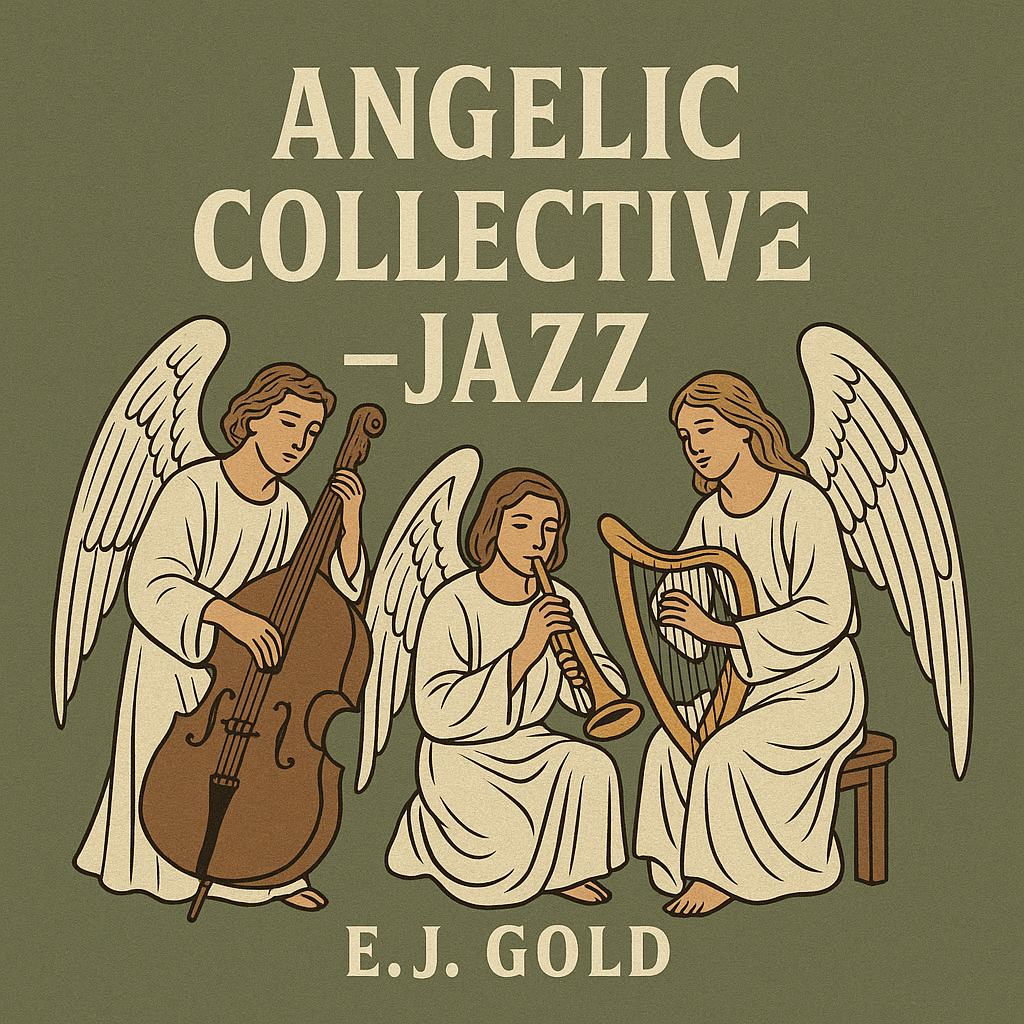
Never admit that this stuff is spiritual. It’s just dance music. Be cool. We’ll be previewing the Satin Swing Society’s album, “Angelic Collective — Jazz”.
Here’s a sample of that album. Listen carefully to the lyrics — they’re “Affirmations on Steroids” and will do you a world of good.
==========================================================================
Satin Swing Society
The Satin Swing Society is a progressive jazz ensemble with one foot in the golden age of Capitol-era sophistication and the other stepping boldly into modern improvisation. Their sound blends the elegance of mid-century lounge with unexpected harmonic turns, shifting time signatures, and a sense of playful exploration that keeps every performance alive and unpredictable.
Built around a tight rhythm section, the band layers warm upright bass, brushed drums, and lush chord voicings on guitar and piano, accented by horn solos that move effortlessly from smoky balladry to angular bursts of invention. Their arrangements nod to the glamour of vintage Vegas and the polish of studio A sessions, but they’re never locked in nostalgia — every tune is reimagined in the moment.
Whether they’re sliding into a late-night ballad or tearing into an uptempo burner, Satin Swing Society delivers the kind of set that turns a room into its own world. It’s music for the candlelit table, the back booth, and anyone who believes jazz should be as alive and unpredictable as the night itself.
===========================================================================
See You At The Top!!!
gorby