
How to Actually SELL Your Shit

selling bardo challenge coins at gallery
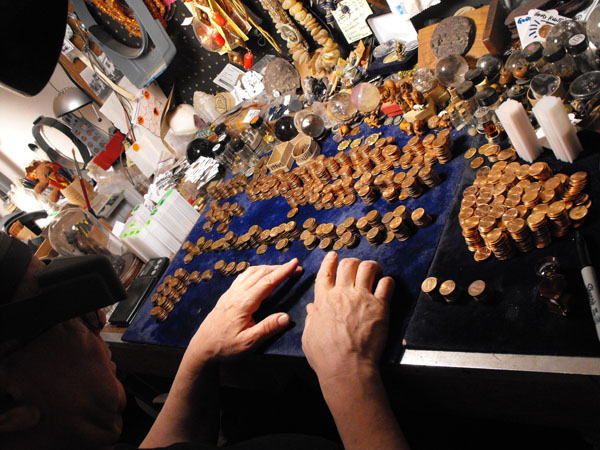
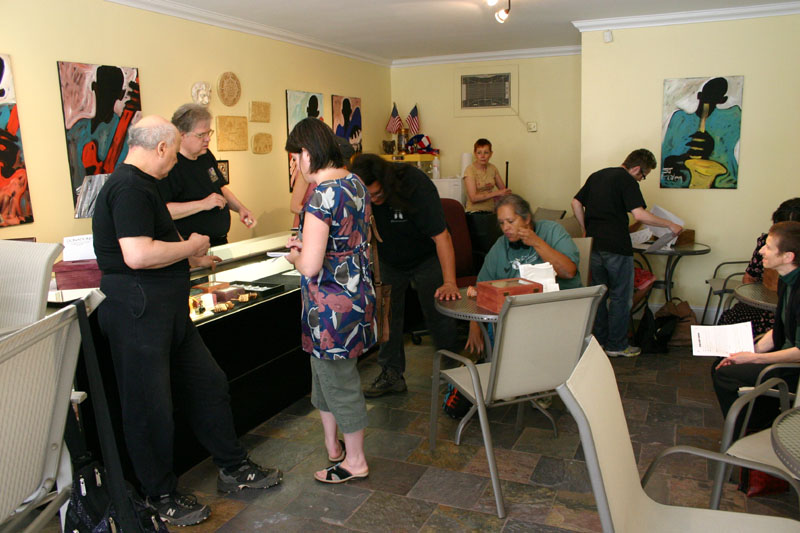
Selling Hand-Carved Bardo Challenge Coins at the Gallery

How to sell your shit…back in the day, I’d never have used the word “shit” in any context, in any company, “mixed” or not, meaning men and women together in the same room, in which case, there were no “dirty” or “blue” stories, jokes, riddles, puns or gags.

These days, we’ve gone so far across the arc on the pendulum of Robot Life that we’re now in a world in which “shit” is GOOD, in fact, it’s the greatest, so I’m calling your Carved Coins “shit” and hoping that you now have a good plan for their production in your home studio.

What is the “shit” you’re trying to peddle, anyway?

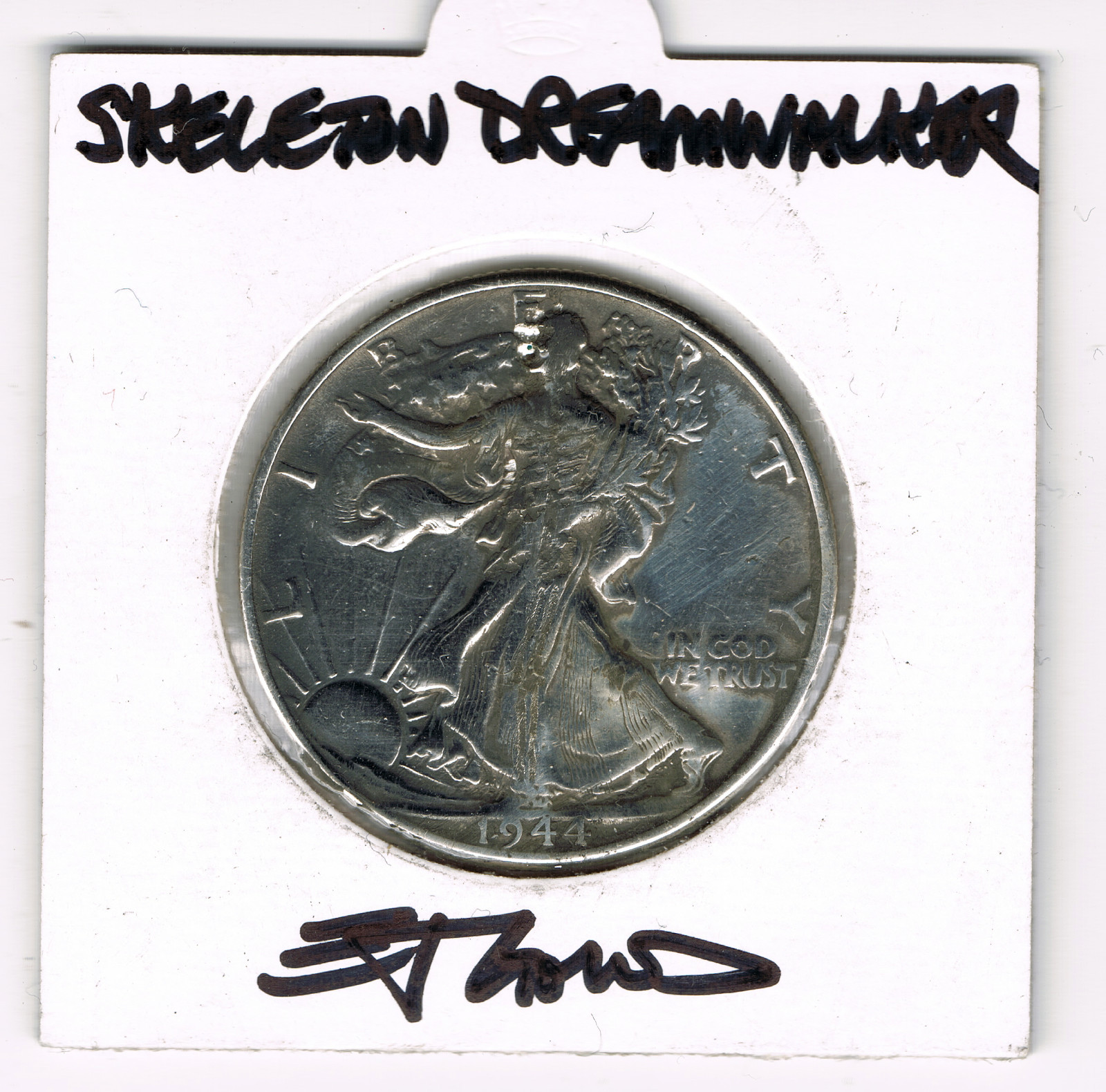
It’s a Spirit Coin, a Bardo Challenge Coin, if you will, and it’s a formerly ordinary copper, silver or gold coin that has been carved to show a skull under the skin, usually by an exaggerated set of teeth, a bold jaw, an open eye-socket and a few upper vertebrae, while the pretty part of the face remains intact. The whole is polished and finished, blessed and packaged to sell or ship, but one fact remains, and this is what you’re really here on planet Earth to do:

At the first moment that you show a Bardo Challenge Coin of any kind to anyone, they will receive and feel a powerful shock.

The coin carries with it not only Shakti-Pat as a result of the Blessing, but also sports a stunning visual reminder of one’s mortality, of everyone’s mortality, in the form of a ruler, king, noble, lord or goddess of liberty.

This shock does not spread through the system. It is quantum, and hits the whole body-mind all at once. The effect is astounding, predictable and certain. The subject’s REACTION to that shock will be one of three possible results:
Continue reading

Death, Spirit, Remembering, Awakening, Enlightenment

Why my coins are not hobo nickels:

Simply put, I have a fine-art approach to the coin carving, not a numismatic one. I don’t care much for hard-edge art and care even less for literalism and so-called “realism”, which isn’t anywhere close to realness. I use a free-form line, more drawing and sketching than the tightly repressed world of gravure you generally see, although there are more artists discovering coin engraving every day, and more artistic renderings are available.

Look on eBay to see many examples of recent hobo nickel art and other coin carvings.

The story of the hobo nickel arising out of the hobo jungles of the 1929-1939 Great Depression is simply that when you got hold of a spare nickel, you could carve it into a dollar’s worth of food and lodging. I like to use the same spirit in carving my coins as the hobos enjoyed in their day, meaning that I scratch at it — I don’t slice and cut the way a modern engraver would and should do. My approach is more “Paleo”, more basic, more street-wise and less technological, less dependent on civilization to maintain it.

Most hoboes used an ordinary 6-penny nail or a broken file to scratch their carvings into the nickel, and it’s those moves I’m trying to duplicate. Continue reading

Essence Comedy in Theory & Practice

aanewz06

Comedy is a serious business. As in Magic in the Mirror, Comedy Laughs are provoked, but beneath the obvious chatter and trivial pursuits, Great Truths prevail, and the audience is open to the Uplifting Force, an as-yet unknown major player in the Quantum Dimensions.

Comedy is a great way to penetrate past the defenses and get to the core, and can be used to slide up the scale of Being to the God State. As you climb the dimensions, the nature of your problems will change, but the problems will never completely go away.

Here are a few of the subjects we’ll be covering in next week’s upcoming Comedy Workshop, to be held both in-person and online (both are available) on Memorial Day Weekend, May 27th, 28th, 29th and 30th: Continue reading

Checkers Basics for Beginners

checker championship at the WonderCon in 1978.
Checker championship was won by Shaggy at the WonderCon in 1978.

BASIC RULES OF TOURNAMENT CHECKERS:

  1. Players flip a coin to see who goes first. Black always leads the moves and is considered a handicap position.
  2. Place all 24 checkers on the black squares of the board, avoiding the two horizontal strips of black squares on “No-Man’s-Land” in the center of the board.
  3. Pieces can make diagonal moves only, one square at a time except during jumps.
  4. Each player moves one piece in turn.
  5. Initial moves are only forward unless the piece has been crowned king by reaching the opponent’s back line.
  6. If a piece can be taken, it must be taken. Forced moves cause forced captures.
  7. Pieces are taken by jumping over them, from empty square to empty square. Pieces cannot land on top of other pieces.
  8. You can only jump a piece if your piece is directly next to the opponent’s piece.
  9. You must land on an empty square when jumping.
  10. Multiple jumps may be made if conditions are right.
  11. “King Me” is spoken aloud when reaching opponent’s back line, after which that piece can move either forward or backward on the board, but always diagonally.
  12. The game is over when all the pieces of one player are gone. A play can end in a draw.

Those are the very basic rules of checkers. Watching a few games on youtube will give you the confidence you need to try playing a game with a friend. Continue reading

So You Think Checkers is for Chumps???

3083

Most people have the impression that checkers is a simple game, while chess is a horrifically complicated game. Actually, both games have extraordinary levels of deepness if you are inclined to pursue the craft at all. I’m posting a few examples of just how incredibly complex the game can be, and how extraordinarily sophisticated the analytical and theoretical levels really are, in the “simple” game of checkers — you know, the cracker or whiskey barrel variety of slow countrified game between two players too lazy to see if it’s rainin’, so they send the dog out and see if it comes back in wet. Continue reading

Harnessing Quantum Effects for Time Travel & Beyond

ejg-bd-70_2538_600

Time is a function of space. I’ve been reminding folks about that for a long, long time. Time isn’t what you think it is. It’s possible to travel in time, but you won’t go to anywhere that you’ve been before, nor will you return to the present you’re in right now, so time travel in and of itself does nothing — the net result is always zero — Einstein had it right.

Nature is not natural. You’re on a grid. Think of this universe as a sort of 37th century simulation that goes far beyond the computer simulations of “your” time period.

The entire time period is a single unit. They all are. They’re sort of like Orbs in the sense that you can only pack so much into each scene. After that, it’s all wasted energy, something no self-respecting universe would or could tolerate for very long.

Yes, self-respecting. There’s no way to make a universe out of anything other than the Maker, so that’s how it’s done — with mirrors. But you already knew that. How to USE this information is the real question, isn’t it?

When you wake up from the dream, it’s the same as if you’ve entered a “New You” Habitat back in the 37th century and drew a two-hour Sim Session out of the Vaults of Time, a small library of previous civilizations on Planet Earth, so actually, in point of fact, you are time-travelling in the distant past right now, this very moment, as is. Continue reading

Coin Checkers is as old as Humanity

ej_pennie4

As far back as humans walked the Earth, there were games, many of which were played on a field that had been drawn in with a sharpened stick, or boundaried by rocks, and in the case of Kalah and similar “pocket” games, the landing places were scooped out of the dirt.

Pieces for those early “board” or “flat” games were typically made of wood, stones, shells and in fact anything that was traded as money, including beads. Yes, beads were used as game pieces, and I have a large collection of ancient board game pieces that show how broad the variation could be.

Historians today weren’t THERE, actually THERE, in the Old West, when people had nothing to do but play checkers after the daily chores were done. Who had checker pieces? But everyone carried SOME cash — you had to. Credit cards didn’t exist back then, and hardly did money.

Cowboys would bet penny against penny. Of course, it had to be “even money”, no such thing as nickels against pennies, unless one of the players was a pro gambler with some sort of edge that gave him the long-term win.

So who owns which penny?

The solution is so simple and so obvious that it was thought of thousands and thousands of years ago. Continue reading

Quantum Coin Magic

offcenterpenny

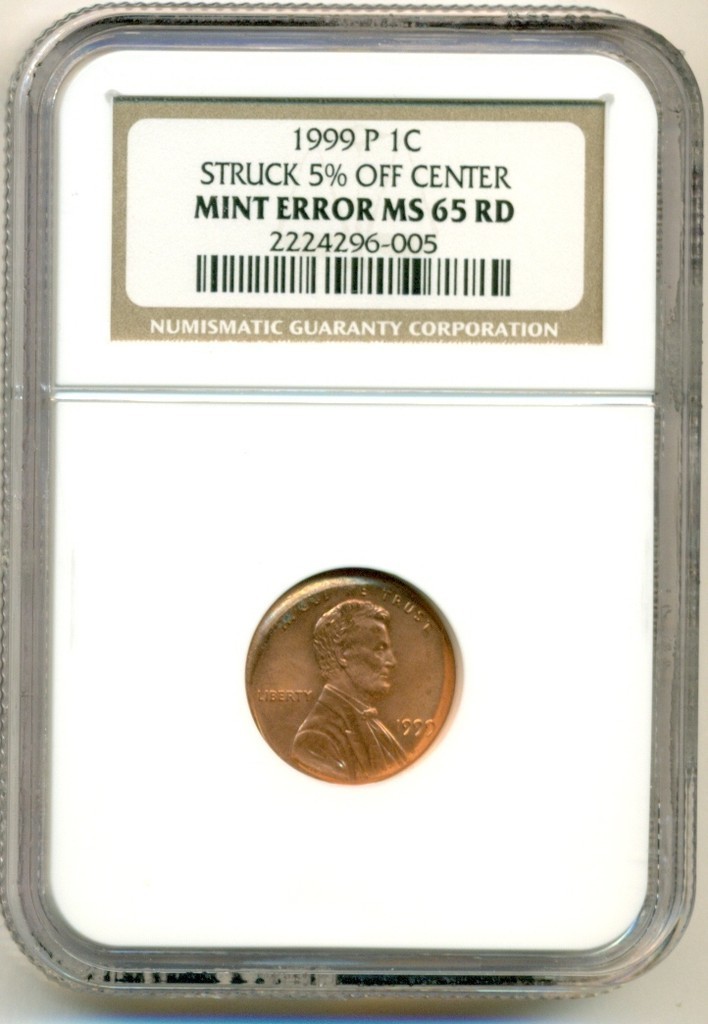
Take an “ordinary” penny and put it into a high-energy static electrical field, encapsulate it and surround it with a permeable foamy material, and you have the start of an improvised magical weapon, which can be set up and activated with a Cloud Chamber or any imbuing device.

Let me give you an example… Continue reading

The Zen of Checkers

http://www.vaultsoftime.com/coins/greek/graphics/50027q00.jpg

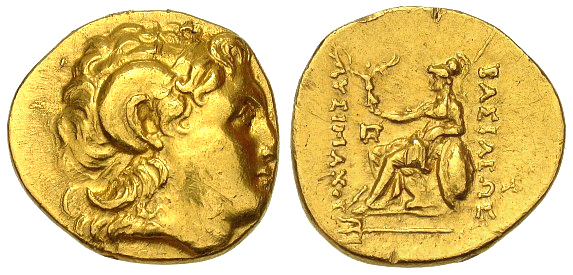
Checkers was for many years known as “draughts”, and was played actively and daily by Roman soldiers, of course for money, and the practice has continued right up to the present day, as you’ll see around any cracker barrel or its equivalent, in any small town, anywhere on the planet and beyond.

Roman soldiers had little to do other than road-building, and eagerly sought exciting ways to pass the little leisure time they had to themselves, and every game they played involved money, even hopscotch, where the purse was placed on the chalked or stick-inscribed game layout.

Chess was played by the sons of rulers, to teach elements of strategy and defense, and Tic-Tac-Toe was a murderous game where you could lose your shirt quicker than a five-card stud player can lose theirs.

Many games are considered stress-busters, and backgammon is probably the best-known relaxation board game ever invented, although kalah and checkers might be just as popular. Continue reading