Trip Tapes: The Lost Art of Guided Listening
There’s a difference between playing music and using music.
Most people today are surrounded by playlists. Endless songs, shuffled, skipped, sampled, half-heard. Music has become background, wallpaper, filler something to talk over.
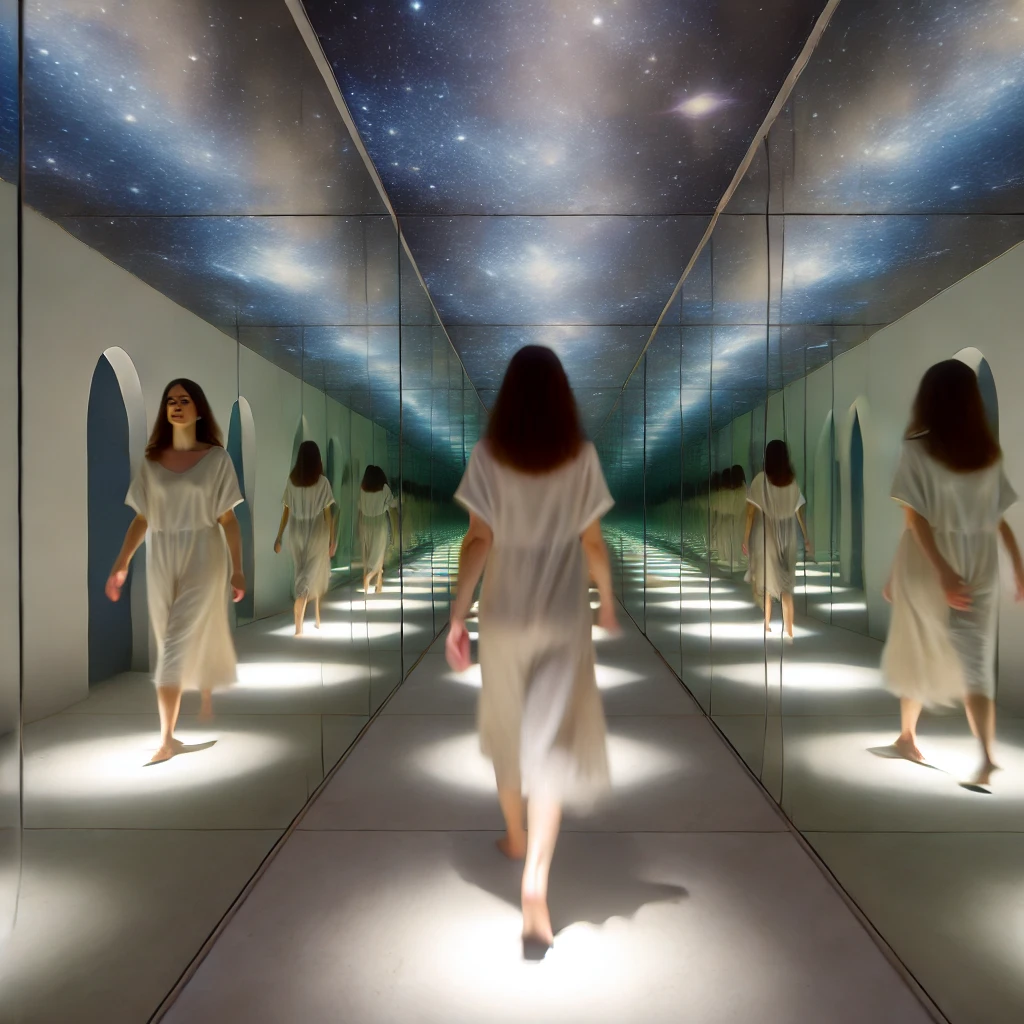
But there was a time when music was arranged with the intention of producing a trip, taking the listener away into a world of sound and emotion.
It was more than the arrangement, more than the instruments, more than the music.
It wasn’t just what to play, but exactly when and how to play it, and the composer knew what it would do to you, when it arrived. That was the trip tape. A trip tape is not a collection of songs. It is a carefully designed sequence of states.
Back in the reel-to-reel tape recorder days, you didn’t just throw tracks together. You built a path. The listener entered at one point and, if they stayed with it, arrived somewhere else entirely.
There was an entry.
A settling.
A deepening.
A shift.
A peak.
And a return.
Not theory. Not metaphor. Actual experience.
The listener thought they were hearing music. In reality, they were being moved—subtly, steadily—from one internal condition to another by sounds that they interpreted as music.
Breathing changes.
Attention gathers.
Emotions reorganize.
Time stretches or collapses.
This is entrainment by any definition.
Music is structured vibration. When presented in the right sequence, it doesn’t just entertain—it organizes the listener through vibrational intonation — influence similar to that of two similar tuning forks. Striking one makes the other one also vibrate when they are brought close together.
A playlist plays music. A trip tape plays you. A trip tape is not made the same way as an ordinary song or piece of instrumental music. It must be deliberately constructed with knowledge.
Of course, it’s not a tape — it’s an mp3 on a hard drive, but they’re still called trip tapes even today, long after tape technology went the way of the dinosaurs.
Now here’s something that’s mostly been forgotten. This idea didn’t start in the 1960s. Go back to the 18th century. People didn’t attend a performance the way we do now. They didn’t go for “background music.” They didn’t go to casually sample. They went to be taken somewhere, transported — they expected an experience, and the music of that time was equivalent in their ears to the music you listen to today.
An evening at the opera, a long-form concert, a structured musical presentation—these were immersive events. The audience settled in, gave their attention, and allowed the sequence to unfold.
Composers were the rock stars of their day, and they most certainly understood progression. They knew how to introduce a theme, develop it, complicate it, break it apart, and bring it back transformed. Movements weren’t random. They were deliberate stages of an experience.
In a very real sense, the audience expected to be carried away from the dull dreariness of daily life into some magical mystical realm. In short, they went on a trip.
They didn’t use the word “trip.”
But that’s exactly what it was — what we call “a trip”.
A guided passage through emotional and psychological states. And just like the reel-to-reel era, there was one critical factor: You stayed with it.
You didn’t skip from movement two to movement five. You didn’t jump out halfway through and come back later. The continuity was the mechanism.
The sequence did all of the work.
Today, we have more music than ever—but less of this experience. Too much access. Too much interruption. No commitment to the arc. The result is that music loses its deeper function. It no longer organizes the listener—it just decorates the moment. But the mechanism is still there. It works exactly the same way it always did. If you go with the flow, move along with the sequence, the sequence will move you.
Now here’s where things get interesting.
With modern tools, we’re no longer limited to a single version of a track. A single piece of music can exist in dozens of arrangements—different tempos, different instrumentation, different emotional tones. That means something new becomes possible.
Not just a single trip tape—but multiple entry points into the same journey. One version might not land. Another one suddenly clicks. Same underlying structure. Different doorway. Each arrangement is a different angle on the same signal. Each arrangement is a different doorway into the same experience.
When the angle matches the listener’s state, the door opens.
That’s precision. That’s design. That’s the next evolution of the trip tape. A modern trip tape doesn’t just guide—it adapts.
It offers multiple paths into the same arc, increasing the chances that the listener will find the entrance that works for them. And once they’re in the flow and starting to dig it, the sequence takes over.
This has many practical uses.
A trip tape can calm the system. It can focus attention. It can open emotional space. It can carry a person from confusion into clarity. It can function as a voluntary induction. You don’t have to force anything.
You listen.
You stay with it.
You go with the flow.
And the sequence does all the work.
This is not new. It’s very old. It’s just been forgotten. From the concert halls of the 18th century to the reel-to-reel tapes of the 20th, the principle has always been the same:
Music, properly arranged, is a vehicle. And once you understand that, you begin to realize: You’re not just making songs. You’re building pathways. You’re designing experiences.
You’re creating trip tapes.
And if it’s done right, the listener doesn’t need to understand any of this.
They just need to press play…
and stay on in the groove.
===========================================================================
Hey! Here comes the Bardo bus! Get on board! I hope you have exact change!
===========================================================================
See You At The Top!!!
gorby