


Natasha the Acid Queen did not arrive in San Francisco so much as appear there. By the time anyone noticed her in the Haight-Ashbury district in 1966, she already seemed established, as if she had been there all along, moving quietly through the streets, barefoot, dressed in flowing fabrics that caught the light like stained glass. No one could say where she came from. Some said New York, others London, a few insisted they had seen her overseas, but nobody could pin it down, and she never offered an explanation.
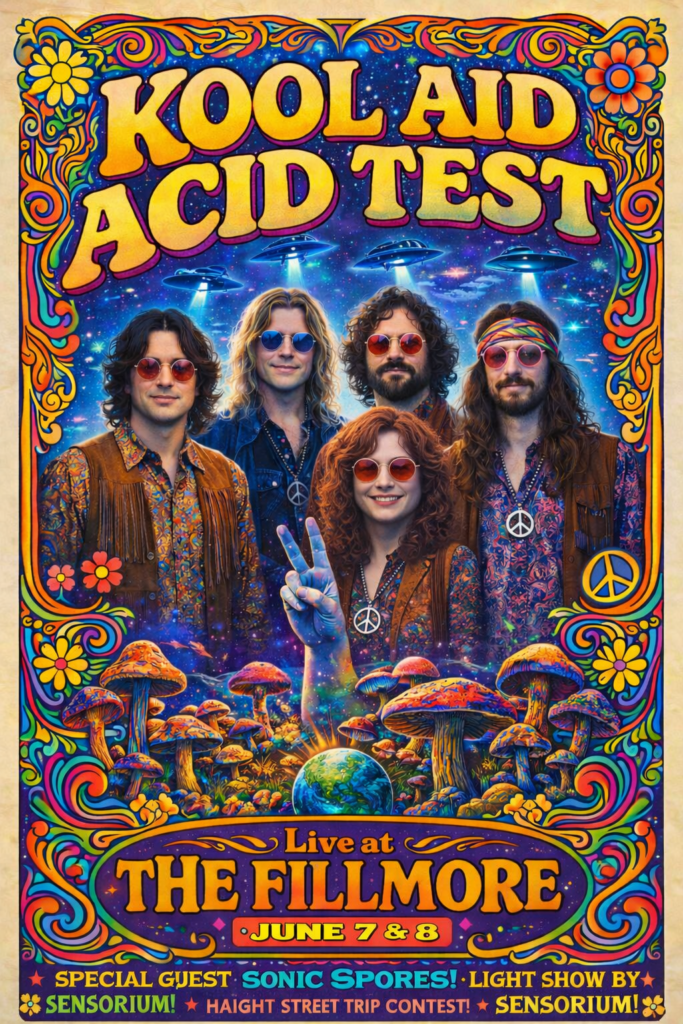
In the Haight, names traveled quickly, and hers spread without effort. Not through posters or performances, but by word of mouth. People would lean in and say, “Have you seen her?” Not a singer, not yet, not even a performer in the usual sense. What she did was something else. They called her Natasha the Acid Queen, not because of anything she sold or promoted, but because of what happened when she moved.
Her trance-dance became a quiet centerpiece of the early Love-Ins. She would stand at the center of a loose circle in Golden Gate Park while someone tapped a drum or strummed a guitar, and then she would begin. Slowly at first, almost imperceptibly, her hands tracing patterns in the air, her body following a rhythm that didn’t seem to come from the musicians. People gathered without being called. Conversations stopped. Time stretched. Some said they felt calmer, others said they felt exposed, a few claimed they saw things they couldn’t explain. Whether any of that was true didn’t matter. What mattered was that nobody walked away unchanged.
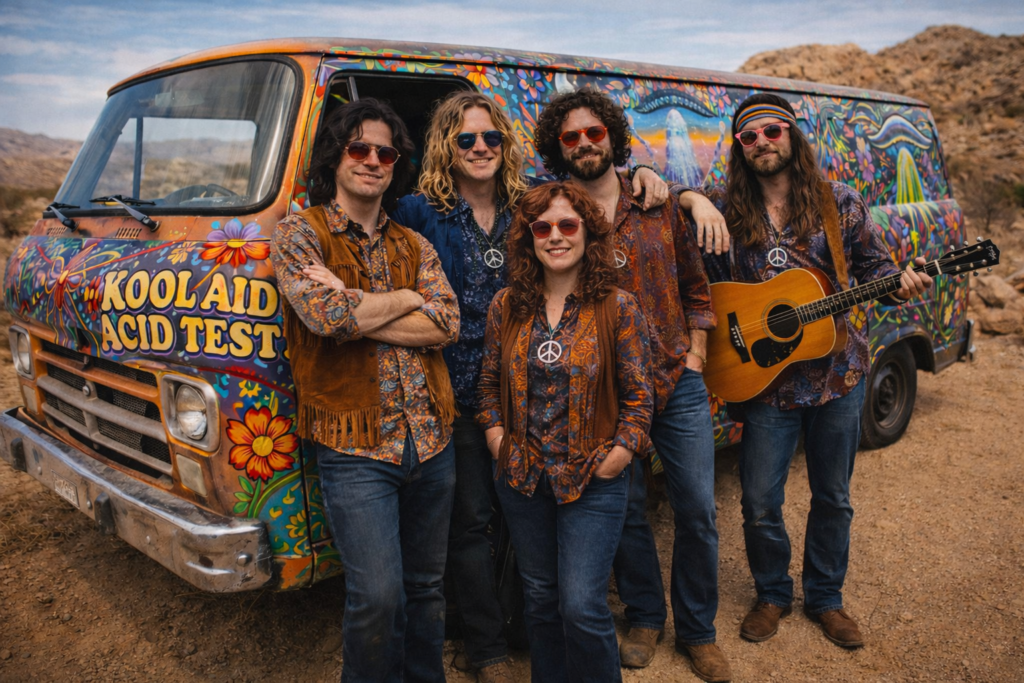
At that time, there was no band. Just fragments. A blues guitarist who had drifted west, a bassist with jazz leanings, a rhythm player out of the garage scene, and a folk guitarist who carried a twelve-string and a head full of songs. They moved through the same neighborhoods, the same parks, the same late-night rooms, each of them aware of her, each of them drawn in without quite knowing why.
The moment everything shifted came without warning. One night, with fog settling in over the park, the four of them found themselves behind her while she danced. No introductions, no rehearsal, no agreement. One struck a chord, another followed, a pulse formed, and suddenly there was structure beneath her movement. Natasha turned, looked at them, and without a word adjusted to the sound. It locked. Something aligned that none of them could have planned.
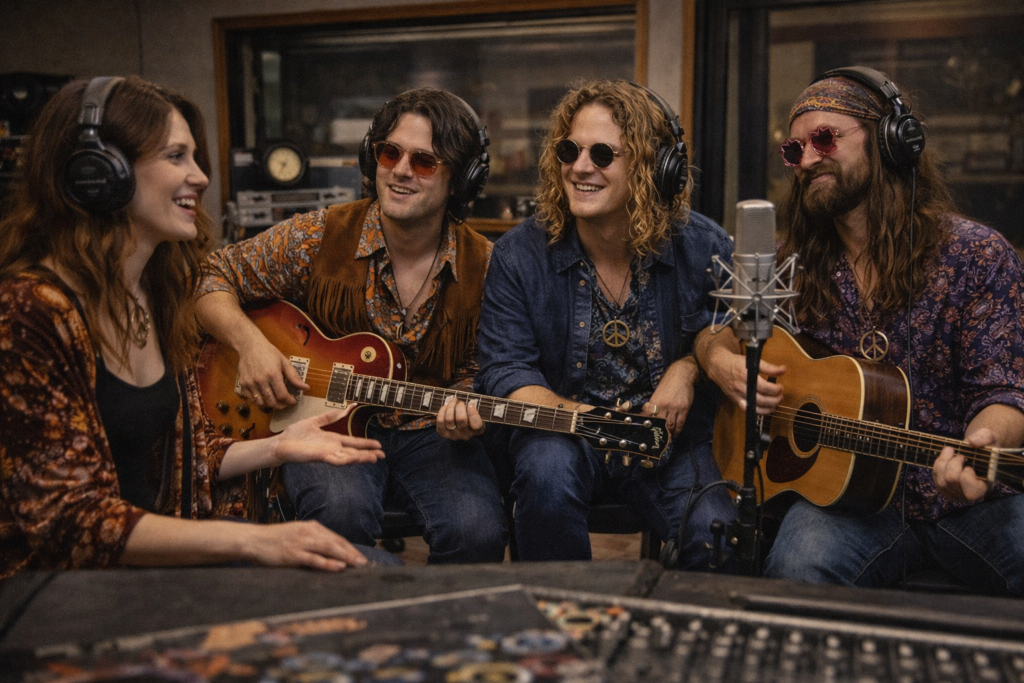
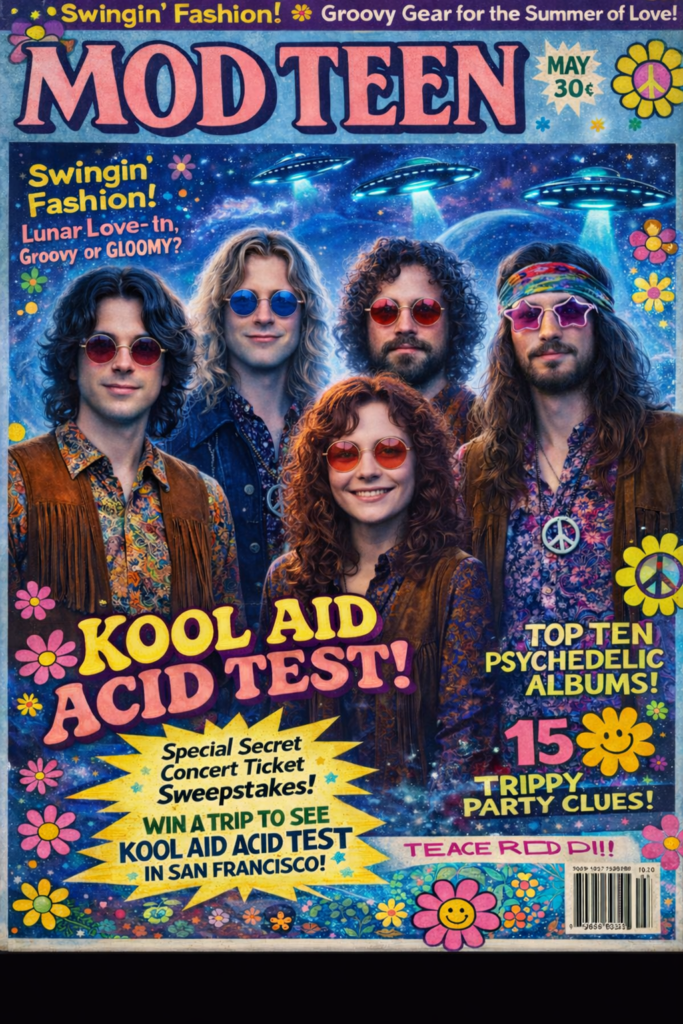
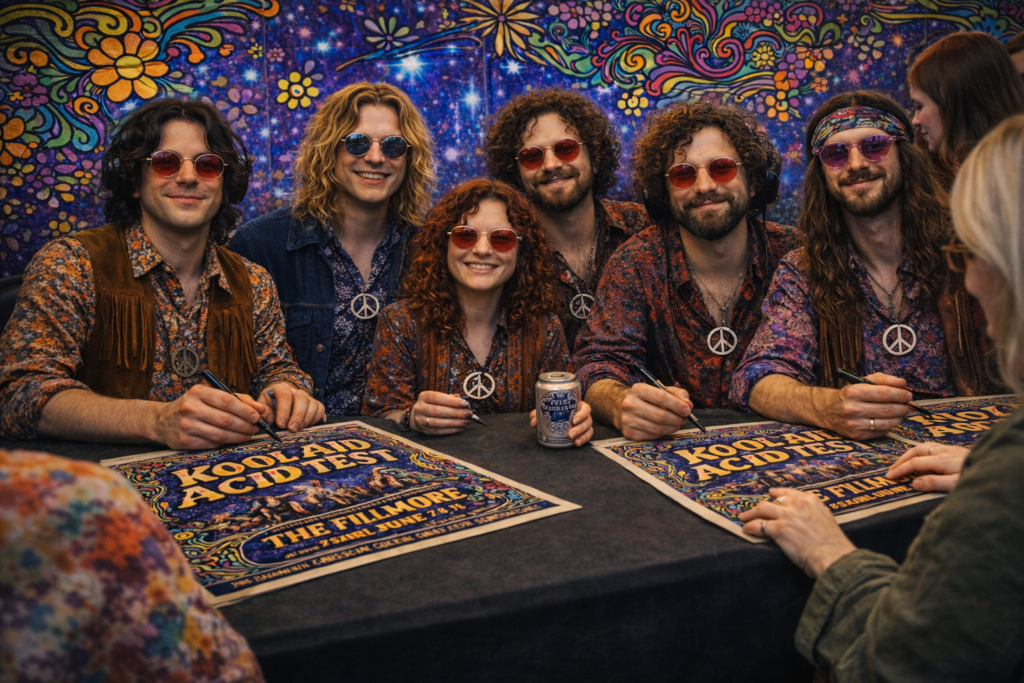
From that night on, when she appeared, they were there. Not as backing musicians, not as a separate act, but as part of the same field. The music began to form around her, not leading, not following, but responding. The name came later, almost as a joke, almost as a warning. Kool Aid Acid Test. A shared experience. A shift in perception. A line crossed together.
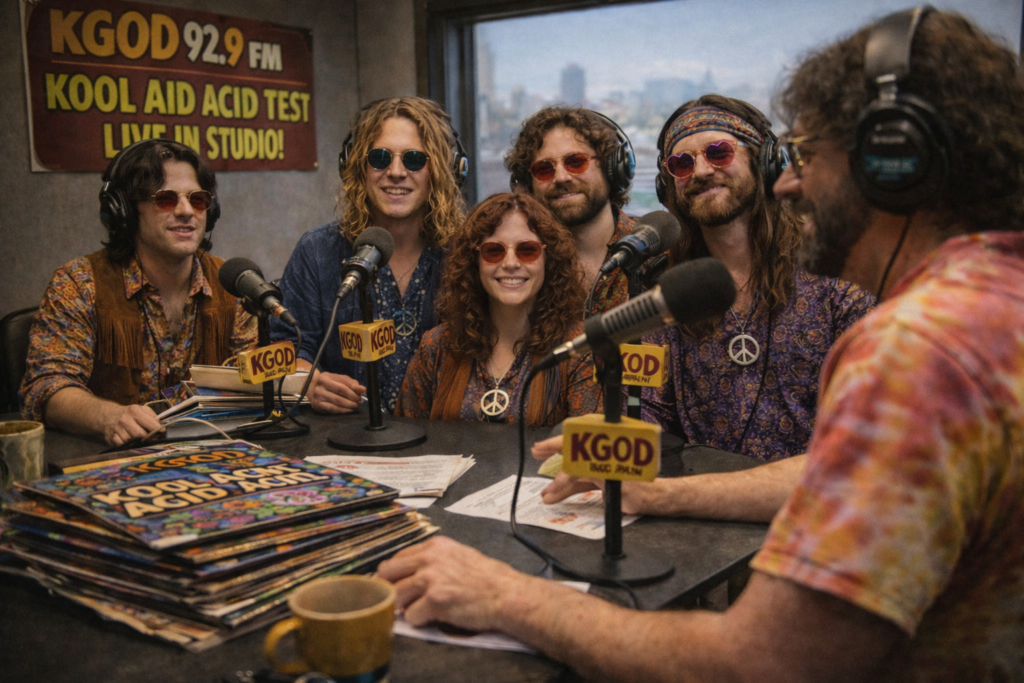
Her first recording, Natasha Sunspell, was never really a formal release. Bardotown Records caught wind of what was happening and brought in equipment, but what they captured was closer to a document than an album. Long, drifting passages, hand percussion, voices that came and went, and Natasha’s presence woven through it all, sometimes singing, sometimes speaking, sometimes just there. The record circulated hand to hand, played in rooms where people were already listening for something more than entertainment.
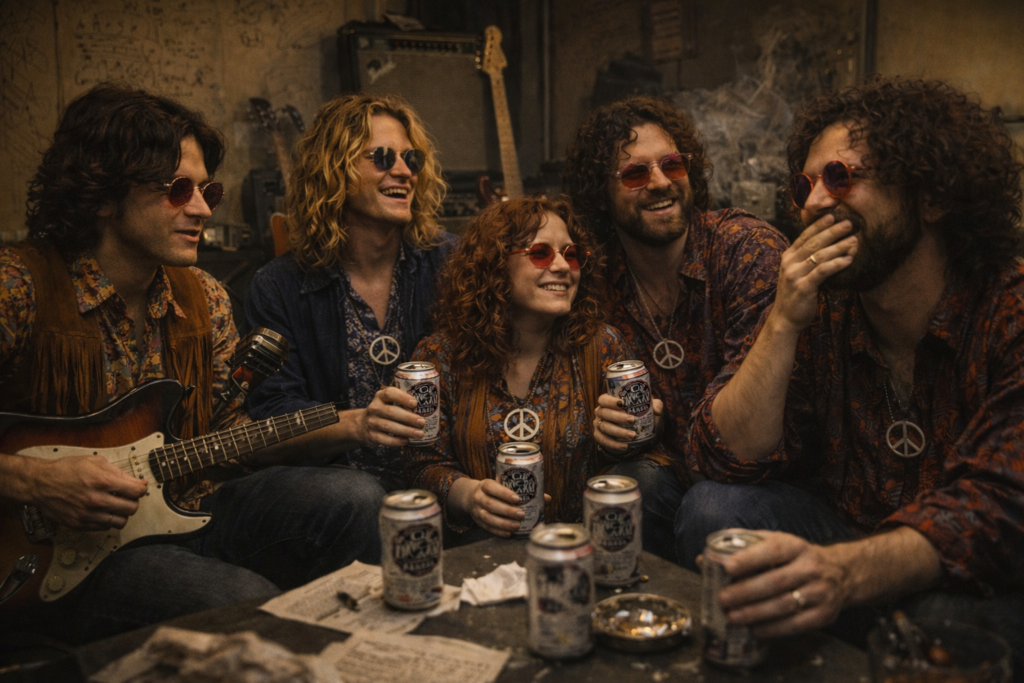
By the time they returned to Bardotown to record what would become 20 Minutes Left in Hell, the energy had changed. The band had tightened, the sound had weight, and Natasha’s voice had come forward. Still hypnotic, still controlled, but now unmistakably intentional. The drifting had given way to direction. The sweetness of the early days was still there, but something else had entered the picture, something sharper, something that didn’t turn away from darker edges.

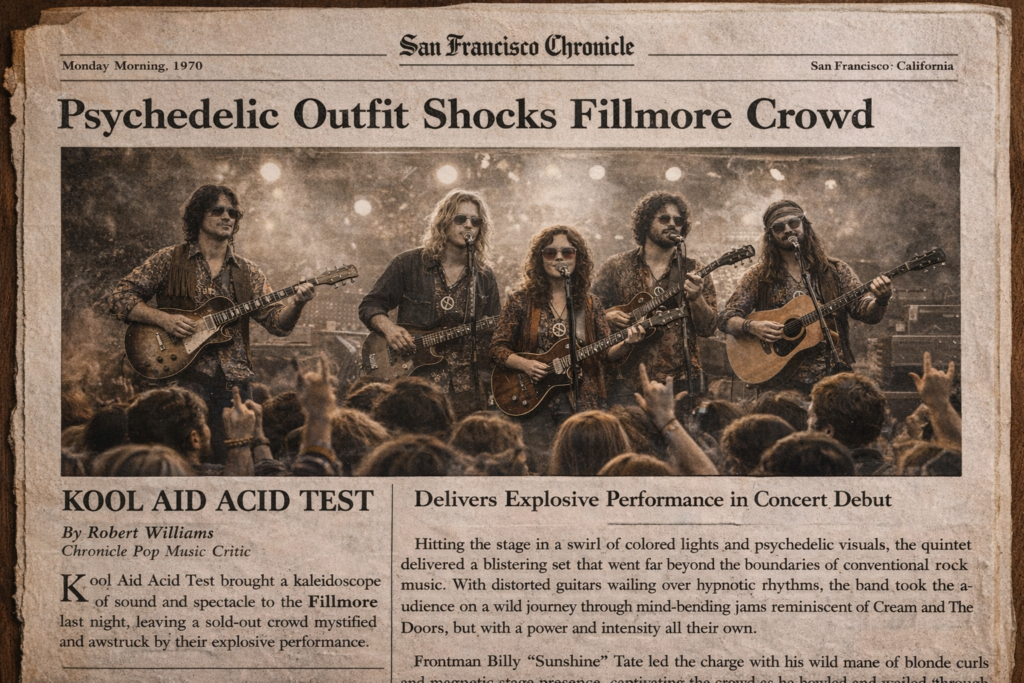
Natasha remained the center of it all, not as a frontwoman in the usual sense, but as a point of gravity. Calm, focused, almost still at times, yet everything around her seemed to move differently because she was there. Those who saw her in those days said the same thing they had said from the beginning. You might not understand what you were seeing. You might not even like it. But you would not forget it.
===========================================================================
Here comes the Bardo bus! Grab hold as she passes!
===========================================================================
See You At The Top!!!
gorby